English
 Español
 Français
 Deutsch
 Italiano
 Português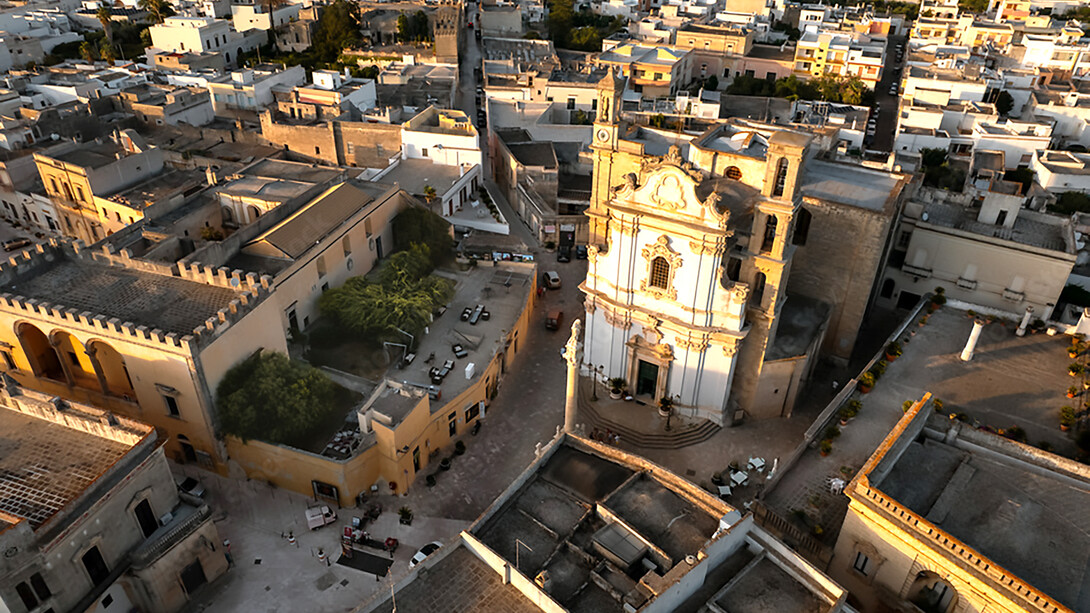
In Salento, the beautiful Apulia area known for its famous beaches and Lecce’s baroque architecture, there is a small town that was once very important all over Europe, because it was here that the lampante olive oil was exported to give light to the lamp posts of Paris, London, Oslo, and Amsterdam. It is fascinating to think that this town, for decades, almost had a double life, one on top of the ground and one underground. Men are underground working in oil production, and mostly women and children are waiting for fathers and husbands to come home. It was almost a continuous wait, in the summer, waiting for men to come back from the sea where they fished, in the olive season, to come back up from underground.
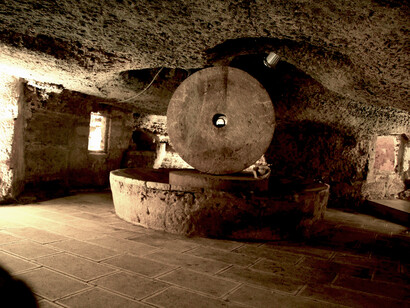
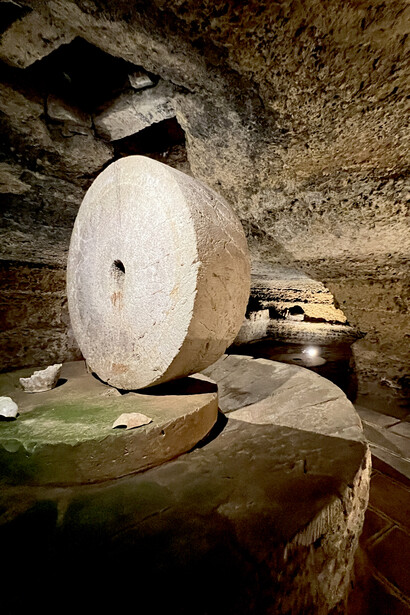
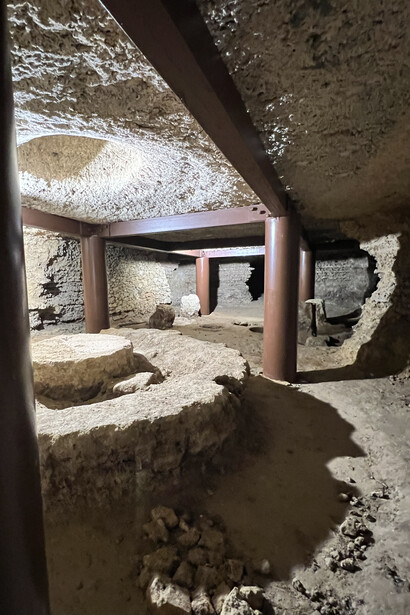
The origin of the name of Presicce, according to historian Giacomo Arditi, possibly derives from the Latin praesitium, built because of thirst, which could be supported by the fact that the symbol of the city is a deer drinking at a spring, or because there was an ancient Roman praesidium. Known as the city of hypogea, Presicce, recognized as one of the most beautiful Italian hamlets, is home to underground oil mills that originally numbered at least thirty and were located beneath the entire town, giving rise to the nickname "the underground city." Twenty-three of these are still existing today, and eight, all connected among them and with a way out into the main Church, can also be visited today. Originally, they were called green gold mines and had been built by digging in the soft limestone rock underground to prevent theft by pirates and to ensure the oil was of great quality, thanks to the temperature and the darkness.
They probably date back at least to the Middle Ages and have been created since the 8th century B.C., the Messapian barns. The people who worked underground were mostly the fishermen who entered them in November and, except for the main holidays, only came out in May at the end of the season, creating a whole community who lived under the town following its own rules. It is for the seafaring terms that the group of workers was called ciurma (crew) and the leader nachiro (owner of the boat). In one of the hypogea is a cistern called “Pozzelletta” connected to a love ritual according to which people in love would throw a ring in the cistern as a symbol of eternal love.
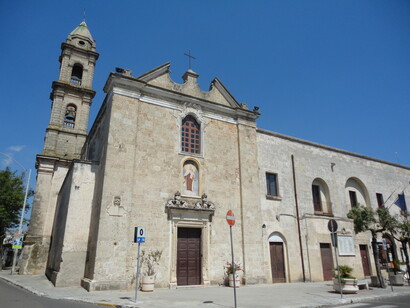
A typical frantoio ipogeo consists of several interconnected chambers and passageways, including areas for crushing the olives, a stable for the donkey that, completely blind because of living in darkness, turned the mill, a room for pressing the olives, and a space to store it. According to word of mouth, these oil mills were in use until the end of the 19th century and the beginning of the 20th century, and were then abandoned and oftentimes filled in with leftover building materials. Even later, there was the idea, luckily quickly abandoned, of using these grottos as trash dump areas. Today, they are a tourist attraction. Today, Presicce is still an agricultural center and one of the Apulian oil-producing towns. Located in a valley of olive trees, with the typical red soil and dry walls of Salento, it is a jewel of baroque architecture with aristocratic palaces and 16th-century houses with a courtyard in common.
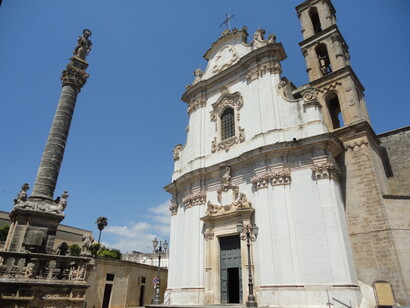
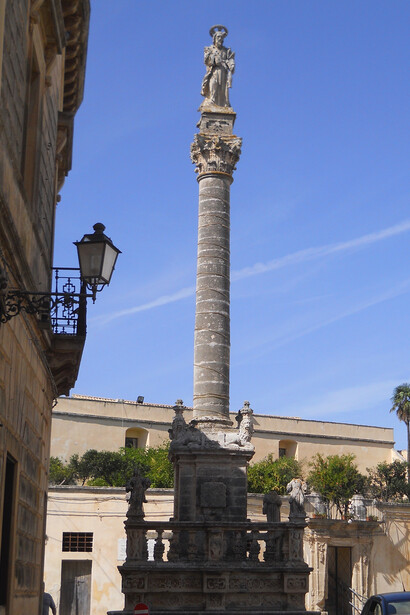
In 1532, only 110 families lived in Presicce and they had their homes along the via pubblica, public way, which was the urban crossing of the ancient road that connected Lecce and Leuca and that was protected by the 11th-12th century castle built during the Norman domination. Today, only 5000 people live in Presicce, and the administration has been offering economic incentives (up to 30,000 euros) for those who buy a house built before 1991 and become residents. The main church and the votive column in front of it are dedicated to Saint Andrew.
On the main square, Piazza del Popolo, is also located the ducal palace, more than a thousand years old, adorned by a roof garden, where one can visit the Museo della Civilta’ Contadina (Museum of Paesant Civilization). From these Italian-style gardens with a central well and a beautiful wisteria plant, it is possible to overlook the Piazza Villani, the Chiesa Matrice, the Saint Andrew column, and several aristocratic palaces. We got our tickets to visit the underground oil mills at the Pro Loco office on the main square (one can only visit this site with a guide), and we were lucky to have Angela Ponzo as our guide. With her detailed explanation, she made old Presicce come to life and, through alleys and tunnels, she guided us through the sites that lie beneath the central area of the town, making them come back to life.
Angela explained all the aspects of the hypogea and the architecture of Presicce as well as the daily life through the artifacts at the museum and told us of a legend from which derives the fact that Presicce inhabitants are called “Mascarani.” In the 17th century, the prince of Presicce enjoyed the ius primae noctis, “right of the first night”, which gave the ruler the right to bed any female subject regardless of social rank on her first wedding night. Subjects were tired of this custom and so, in 1655, during a town festivity, some say during Carnival, but in reality it happened in November during the patron Saint Andrew’s celebration, when the prince appeared at the palace balcony to greet his subjects, a man wearing a mask (mascara in local dialect) shot and killed the prince. Probably this was never true, but the legend still lives.