English
 Español
 Français
 Deutsch
 Italiano
 Português
There is a particular kind of nostalgia attached to restaurants. Not always to the food itself, but to the feeling of being there.
Sometimes it is the memory of sitting by a rain-covered window with a cup of coffee slowly turning cold while conversations stretched for hours. Sometimes it is the smell of butter and garlic that reminds us of birthdays, family dinners, or late-night meals after exhausting days. Sometimes it is simply the warm lighting of a small café that makes an unfamiliar city feel comforting for a moment.
Years later, we may not remember exactly what we ordered. But we remember the atmosphere.
That is because restaurants today are no longer spaces built only around food. They are carefully designed emotional experiences. Every detail, from lighting and music to furniture textures, scent, plating, spatial layout, and even silence, contributes to how customers feel within that environment. Restaurants do not merely serve meals anymore. They design moods, memories, and emotional connections.
In today’s experience-driven culture, dining has evolved into something far more immersive than consumption. People no longer go to restaurants only because they are hungry. They go there to celebrate, to escape stress, to feel inspired, to connect with others, to romanticize ordinary moments, or simply to experience a certain atmosphere. Dining spaces have become emotional destinations.
Donald Norman’s concept of emotional design explains that humans do not experience design only through functionality; they experience it emotionally (Norman, 2004). Objects, spaces, and environments influence human behavior, memory, and emotional attachment. Restaurants embody this principle deeply because they engage nearly every human sense at once. Customers do not just taste food; they absorb sound, lighting, scent, textures, movement, and social interaction simultaneously.
This is why entering a restaurant often creates an emotional reaction before the food even arrives.
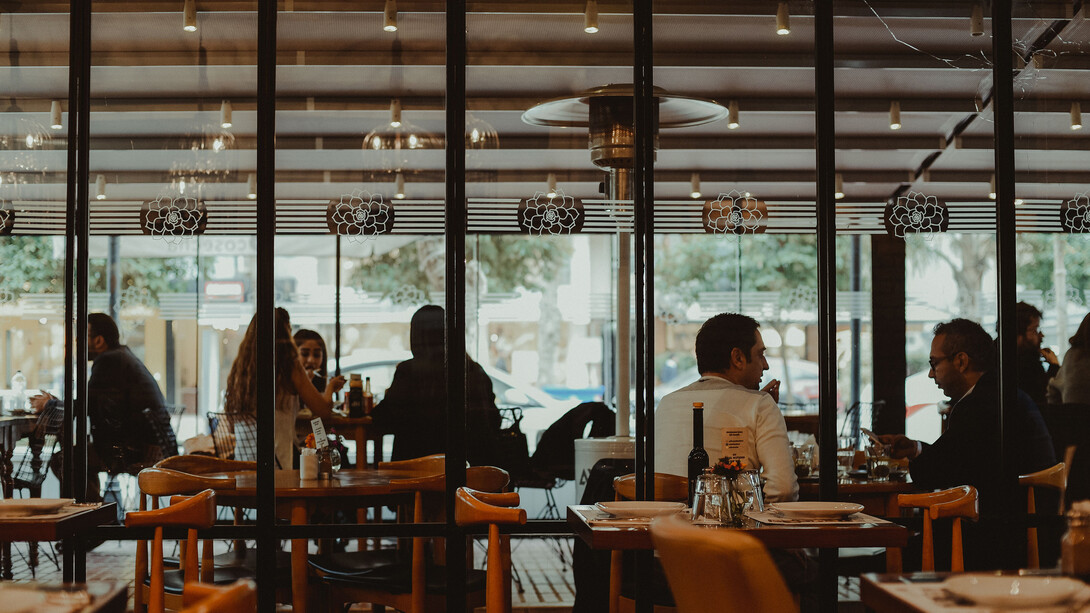
A softly lit café with wooden interiors and acoustic music may instantly feel comforting and intimate. A luxury fine-dining restaurant with marble surfaces, dim amber lighting, and carefully spaced seating may communicate elegance and exclusivity. Bright neon diners can create excitement and energy, while minimalist Japanese interiors often create calmness and mindfulness. The emotional response begins the moment customers step inside.
Research on dining experiences strongly supports this idea. Dining is described as a multisensory experience involving visual, olfactory, auditory, and emotional stimuli, where atmosphere significantly shapes customer perception and memory (Maulana et al., 2025). The study also explains that modern restaurants increasingly function as spaces where consumers seek comfort, uniqueness, exclusivity, and emotional value rather than simply food (Maulana et al., 2025).
This shift is visible almost everywhere today.
People photograph restaurant interiors before tasting the food. Cafés become famous because of ambience and aesthetics on social media platforms. Customers choose restaurants for dates or celebrations based on how the place “feels” rather than just menu quality. Fine-dining restaurants are often discussed in terms of atmosphere, storytelling, and experience as much as cuisine itself.
The emotional environment surrounding food has become inseparable from the meal.
One of the most fascinating aspects of restaurant design is how atmosphere can actually alter food perception itself. Environmental psychology studies suggest that lighting, sound, aroma, and spatial design influence how humans perceive taste, satisfaction, and comfort (Han & Ryu, 2009). Warm lighting can make food feel richer and more indulgent. Softer music encourages customers to stay longer and perceive the dining experience as luxurious. Certain colors stimulate appetite, while others create calmness or sophistication.
This means two restaurants serving nearly identical dishes can create entirely different emotional experiences depending on their atmosphere.
One may feel forgettable.
The other may feel magical.
This is why restaurants today invest heavily in emotional and sensory design. Designers understand that customers are not evaluating food in isolation. They are evaluating how the entire environment makes them feel while consuming it.
Wallpaper Magazine’s feature on Mazarine in London describes interiors inspired by marine tones, softness, and sensory calmness that create an emotionally immersive environment rather than a visually overwhelming one (Wallpaper, 2024). The restaurant’s atmosphere itself becomes part of the dining memory. Similarly, many luxury restaurants today use architecture, texture, scent, and lighting strategically to create emotional storytelling experiences.
This directly connects to Norman’s idea that design functions across visceral, behavioral, and reflective levels (Norman, 2004). Viscerally, customers react instantly to visual aesthetics and ambience. Behaviorally, layouts, seating, acoustics, and lighting affect comfort and interaction. Reflectively, the experience later becomes attached to memory and meaning.
That is why certain restaurants become emotionally personal.
A small bakery may remind someone of childhood mornings. A crowded student café may become associated with friendship and ambition. A luxury rooftop restaurant may symbolize achievement or celebration. Restaurants often become emotional markers within human life experiences.
Interestingly, nostalgia has become one of the strongest tools in restaurant atmosphere design today.
Many restaurants intentionally use vintage aesthetics, retro typography, old music, handwritten menus, tungsten lighting, rustic textures, or home-style serving methods to create emotional familiarity. These choices are not random decorative decisions; they are psychological triggers. Nostalgia creates emotional safety and warmth, especially in increasingly fast, digital, and overstimulating lifestyles.
People are often not searching only for food.
They are searching for comfort.
This emotional need became even more visible after the pandemic, when consumers began valuing experiences, connection, and atmosphere more deeply. Restaurants transformed into spaces of emotional relief. The ambience became just as important as the menu because customers wanted spaces where they could feel calm, understood, inspired, or socially connected.
As a result, many restaurants are now designed around emotional moods rather than cuisine categories.
Minimalist cafés create focus and serenity. Rustic bakeries create warmth and authenticity. Mediterranean restaurants often emphasize openness and communal comfort. Luxury restaurants focus on theatricality and exclusivity. Japanese-inspired interiors frequently communicate precision and mindfulness. The design language becomes part of the emotional identity of the dining experience itself.
Research on restaurant atmospherics further highlights how physical environments shape emotional attachment and brand image. The study found that atmosphere significantly influences both dining experience and customers’ perception of a restaurant’s identity (Maulana et al., 2025). In fact, the researchers concluded that customers are “not just buying food; they are investing in an experience” (Maulana et al., 2025).
This explains why many independent cafés and small restaurants build loyal communities despite limited marketing budgets. Customers return because they emotionally connect with the environment. The restaurant begins to feel familiar, comforting, or representative of a lifestyle they value.
People often describe their favorite restaurants emotionally rather than functionally:
It feels cozy.
It has good energy.
It feels peaceful.
It feels warm.
It feels alive.
These emotional reactions are not accidental.
They are designed carefully through sensory and spatial decisions.
Even tableware plays a surprisingly important role in emotional dining experiences. Research on emotional tableware design explains that the shape, texture, material, and visual presentation of plates and utensils influence emotional satisfaction and sensory perception (“Enhancing the Dining Experience Through Emotional Tableware Design,” 2022). A handcrafted ceramic plate may create feelings of intimacy and authenticity. Minimal monochrome tableware may communicate sophistication and elegance. Wooden serving boards may create rustic familiarity.
The object holding the food becomes part of the emotional storytelling itself.
Restaurants today therefore function less like food-serving businesses and more like emotional ecosystems where every detail contributes to mood creation.
This evolution becomes even more apparent in experiential dining spaces. Restaurants such as Alchemist in Copenhagen transform dining into multisensory narratives involving projections, soundscapes, performance art, scent design, and storytelling (The New Yorker, 2024). Here, food becomes one component within a much larger emotional and theatrical experience.
Even smaller local cafés now curate playlists, typography, packaging, scent branding, uniforms, and furniture intentionally to create emotional consistency.
Everything becomes part of atmosphere design.
What makes restaurant atmospheres particularly fascinating is that customers often do not consciously notice most of these design choices. They simply experience the emotional outcome.
A customer may never specifically observe the lighting temperature, acoustic softness, table spacing, or scent layering, yet all these factors shape how they emotionally interpret the experience. Humans absorb atmospheres intuitively.
This is where restaurant design intersects strongly with UX design and emotional design principles. Just as digital products are designed to guide user behavior and emotional response through interfaces, restaurants guide human experience through physical environments.
The customer journey begins before the first bite.
It starts at the entrance. The smell. The host interaction. The sound levels. The menu material. The seating arrangement. The pacing of service. The lighting transitions from outside to inside. The visual rhythm of the space.
Restaurants design anticipation.
They design intimacy.
They design calmness.
They design energy.
They design memory.
And perhaps that is why some restaurants remain unforgettable for years.
Not because the food was objectively the best we ever had, but because the atmosphere quietly held a certain version of ourselves. A tired student escaping stress in a warm café corner. Friends laughing loudly at midnight over comfort food. Families gathering during celebrations. Someone healing silently after heartbreak with coffee and music in the background.
Food satisfies hunger.
The atmosphere satisfies emotion.
In the end, the most successful restaurants understand something incredibly human:
People rarely return only because they were fed.
They returned because they felt something there.
Comfort.
Belonging.
Warmth.
Excitement.
Peace.
Nostalgia.
Because restaurants today are no longer simply serving food.
They are designing experiences people emotionally carry with them long after the meal is over.
References
Enhancing the dining experience through emotional tableware design. (2022). ResearchGate.
Han, H., & Ryu, K. (2009). The roles of the physical environment, price perception, and customer satisfaction in determining customer loyalty in the restaurant industry. Journal of Hospitality and Tourism Research, 33(4), 487–510.
Maulana, I., Nurwati, E., & Nugroho, S. D. (2025). Creating a memorable dining experience: The influence of taste, ambience, and luxury perception through brand image. Asian Journal of Management Entrepreneurship and Social Science, 5(3), 1345–1369.
Norman, D. A. (2004). Emotional design: Why we love (or hate) everyday things. Basic Books.
The New Yorker. (2024). Can your stomach handle a meal at Alchemist?
Wallpaper. (2024). Mazarine Restaurant London Review.
Nidhi Jain Associates. (2024). The psychology of restaurant design.