English
 Español
 Français
 Deutsch
 Italiano
 Português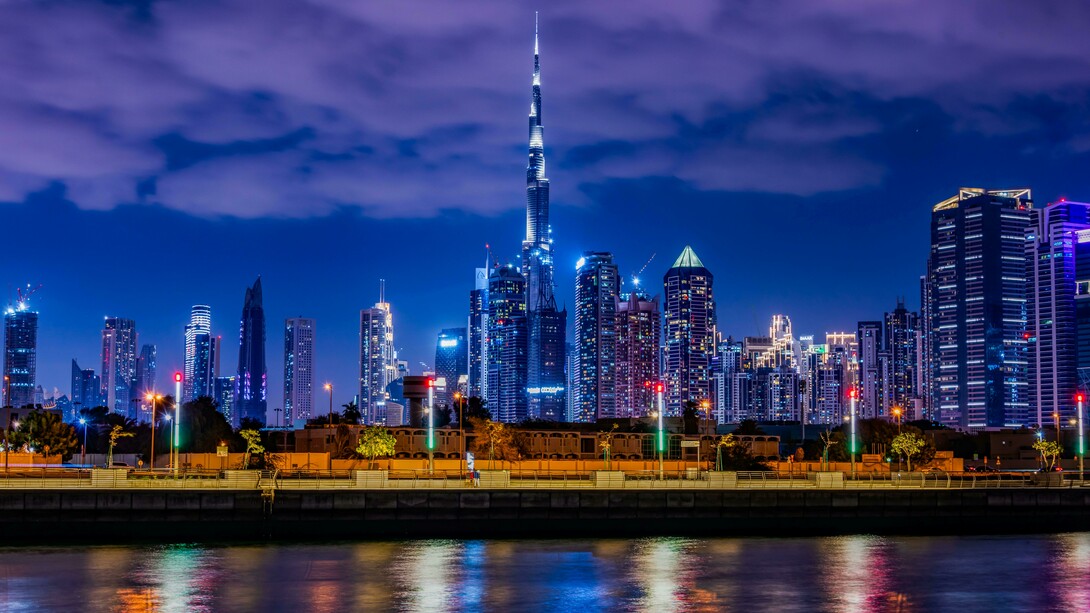
The ground beneath a structure demands as much attention as its visible form. Every tower, bridge, or cultural landmark depends on creative vision and how well it responds to the terrain that supports it. Most professionals already recognize the value of connecting design with geotechnical insight. However, that understanding often stops at compliance, which is treated as a mere technical checkpoint instead of the creative partnership it should be.
Climate changes continue to influence water tables and destabilize soil conditions. True sustainability can only begin when design listens to the earth it stands on and when structures evolve with their sites, not against them.
What the ground brings to design
Structural engineers typically handle everything related to foundations, but when geotechnical input is incorporated into the sketch, the site becomes part of the design language. It can influence the choice of systems, materials, energy profile, and long-term resiliency of the building, as soil, rock, and groundwater behavior are taken into account so the built environment functions in harmony with its base.
Take the Burj Khalifa, for example. Dubai has notoriously weak soil, yet despite being constructed on loose desert sand and siltstone layers, the tower remains stable. Its base rests on a 3.7-meter-thick reinforced concrete raft1 supported by over a hundred piles that are each about 43 meters long and 1.5 meters in diameter. Extensive laboratory testing and subsurface modelling allowed engineers to control differential settlement and resist uplift from groundwater.
Settlement behaviour is not the only issue it mitigates. Debris from steep slopes and loose dirt has caused economic losses of over $50 million2, with potentially greater impacts if interventions based on insufficient or inaccurate soil modelling worsen the damage. Architects who embrace this dimension discover the ground as an active informant in their projects.
How design responds to the earth
Understanding the ground is only the first step. The real challenge and opportunity lie in how design responds to it. Professionals must translate geotechnical insights into practical strategies that ensure the performance, efficiency, and long-term sustainability of projects.
Site investigation affects performance
Before finalizing layout or form, a geotechnical site investigation provides data on bearing capacity, settlement behaviour, lateral load resistance, soil thermal properties, and groundwater dynamics. It isn’t enough to place a grid of piles and hope for the best. Instead, planners should build decisions around the results of the report and question how the dirt will behave decades later.
Soil and water dynamics inform building systems
Beyond providing support, the earth bed also influences a building’s energy and water strategies. For example, the Salisbury Square development in London used over 60 boreholes3 at 240 meters deep for a closed-loop ground-source heat pump system.
Foundation design as a sustainable strategy
Geotechnical realities shape sustainable base strategies worldwide, with designs responding to what the site allows rather than a one-size-fits-all approach. General foundation repairs can be costly, typically ranging from $2,218 to $8,1104 depending on the project size, so addressing these factors early can save clients significant expenses.
In some cities, deep excavation may be viable, but a network of factors could affect the integrity of built infrastructure for reclaimed land. Odaiba in Tokyo Bay illustrates the long-term risks of development5 without geotechnical foresight.
It was originally constructed in the 1850s using loose dredged materials for defence purposes. It now faces persistent settlement and liquefaction issues exacerbated by the 2011 earthquake—problems that modern soil engineering could have anticipated and mitigated.
Today, engineers are addressing these challenges through ground improvement methods such as sand compaction piles, cement deep mixing, and advanced drainage systems, alongside deep pile foundations that anchor new buildings to more stable layers. Continuous geotechnical monitoring also helps manage seismic risks in the area.
Had advanced geotechnical assessments been available during Odaiba’s creation, its foundation could have been stabilized from the start. Early, data-driven ground design can minimize expensive retrofits and guarantee the long-term sustainability of reclaimed land developments.
Why this matters to your practice
Understanding soil-structure interaction helps the terrain be part of the whole architecture planning and more:
Material optimization: Geotechnical site investigations guide foundation design, showing where ground improvement or soil stabilization is necessary. This ensures retaining walls, piles, and other elements use only the materials necessary, reducing waste in concrete, steel, and other heavy resources.
Carbon reduction: Limiting unnecessary excavation and over-design in foundation work lowers embodied carbon and supports more sustainable construction.
Life cycle performance: Understanding soil behaviour allows teams to anticipate settlement, heave, and lateral ground movement, ensuring structures remain functional and safe over their intended lifespan.
Risk mitigation: Early analysis of subsurface conditions and slope stability helps prevent structural damage and reduces the likelihood of costly repairs.
Cross-disciplinary collaboration: Architecture rarely thrives in isolation. The relationship between design, geotechnics and sustainability demands teamwork. Draftsmen, structural engineers, and specialists collaborate to make informed decisions on slope stabilization, foundation technique and soil interventions, thereby aligning the building with site realities and enhancing overall project outcomes.
Strategizing the soil to strengthen structures
When architecture makes friends with geotechnics, the outcome is more than an aesthetically focused structure. It marries science and beauty that is grounded in sustainability. To create buildings that last and perform in tandem with their site, designers must treat the subsurface as part of the aesthetic, foundational, and environmental equation.
Notes
1 Burj Khalifa, Burj Khalifa’s unbeatable structural design, 11 September 2023.
2 Access Limited, What Is Debris Flow? Causes and Challenges Explained, 23 July 2024.
3 City of London, First geothermal borehole completed on innovative Salisbury Square Development – the first Square Mile scheme to use a stand-alone borehole cooling and heating system, 12 July 2023.
4 Renovated, What is a Pier and Beam Foundation?, Evelyn Long, 13 June 2025.
5 Sustainable Social Development, Geotechnical solutions for urban centers: Bridging engineering innovations with socio-economic development, Ali Akbar Firoozi, 14 December 2023.