English
 Español
 Français
 Deutsch
 Italiano
 Português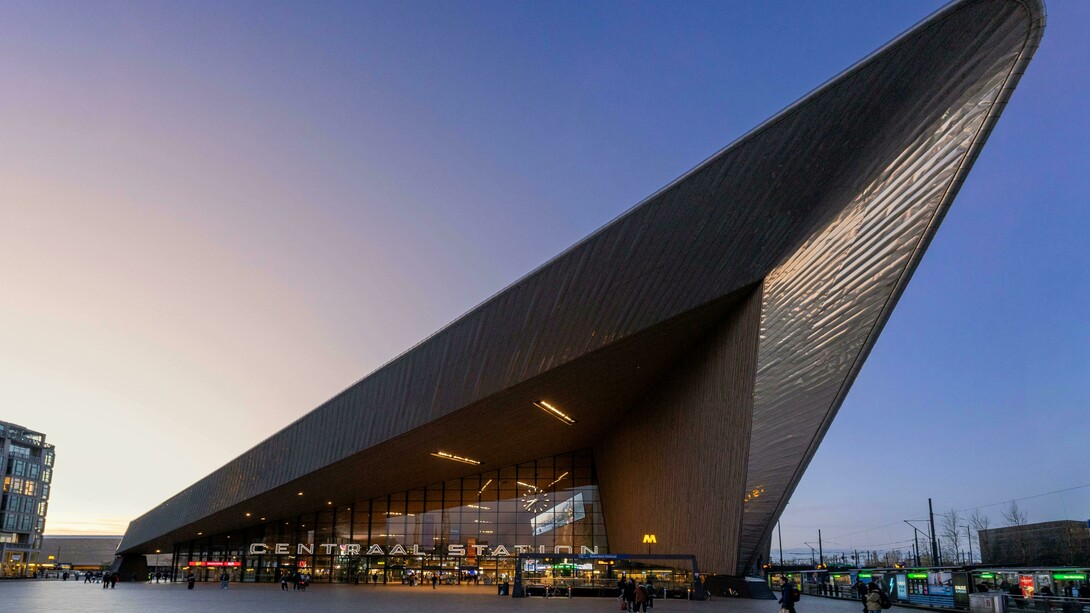
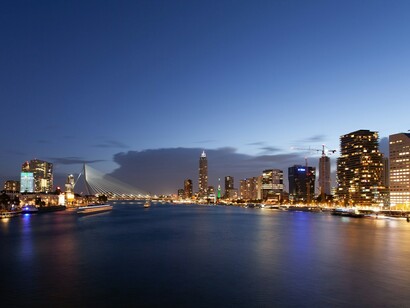
To disembark in Rotterdam is to experience a deliberate jolt to the senses. If the rest of the Netherlands often feels like a meticulously preserved, golden-hued oil painting from the 17th century, Rotterdam is a dynamic, high-fidelity render of tomorrow. It is a metropolis that actively refuses to dwell in the past, largely because, for a tragic period in its history, it was robbed of it. Following the devastating bombardment of May 1940, the historic heart of Rotterdam was almost entirely reduced to ashes. Instead of choosing the comforting path of painstakingly recreating what was lost, Rotterdam made a radical, courageous decision: it would become an open-air laboratory for the future. Today, it stands as Europe’s most unapologetically modern city, a place where experimental architecture and sheer industrial might converge on the banks of the sweeping River Maas.
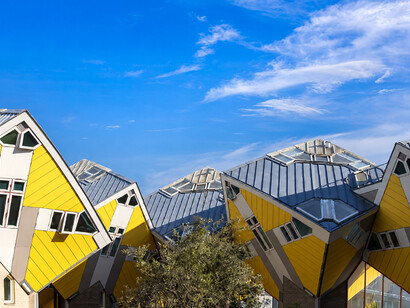
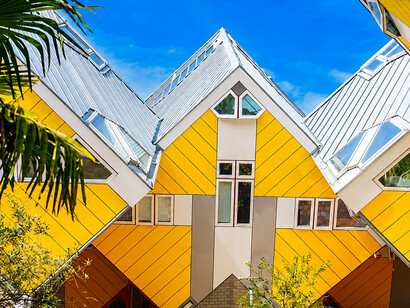
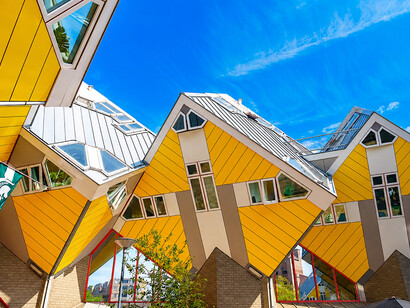
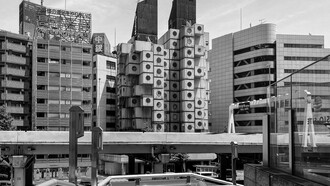
Stepping out from beneath the gleaming, titanium-clad, angular canopy of Rotterdam Centraal station, the visitor is immediately struck by the city's sweeping verticality and open spaces. The skyline is a jagged, ever-evolving testament to structural audacity. Walking through the city centre is akin to navigating a sprawling, real-world exhibition of structural physics and radical spatial design. Buildings here do not merely occupy space; they actively manipulate it. Consider the iconic Cube Houses (Kubuswoningen), designed by Dutch architect Piet Blom in the 1980s. Tipped at impossible 45-degree angles and resting on hexagonal pylons, they challenge the very logic of gravity and conventional living, looking less like housing and more like a stylised, geometric forest rising above the urban concrete.
Just a short walk away lies the Markthal, an immense, horseshoe-shaped edifice where a vibrant indoor food market is entirely enveloped by luxury apartments. The architectural physics required to support such a cavernous structure are mind-boggling, but the eye is immediately drawn upward to the ceiling—a massive, brilliantly coloured digital mural of fruits, flora, and insects known as the "Horn of Plenty". The seamless integration of colossal scale, meticulous lighting, and vibrant colour creates an atmosphere that feels entirely cinematic, enveloping the visitor in a surreal, larger-than-life dreamscape. Further south in the Museumpark, the recently opened Depot Boijmans Van Beuningen resembles a giant, futuristic mirrored bowl. As the world’s first fully accessible art storage facility, it is clad entirely in curved, reflective glass that bounces the light and the city’s skyline back onto itself, bending the environment in fascinating, distorted ways that change with every passing cloud.
Yet, to understand the true, driving heartbeat of Rotterdam, one must look beyond the striking facades and turn toward the water. Rotterdam is definitively shaped by its port—the largest in Europe, stretching continuously for over 40 kilometres from the city centre directly into the turbulent waters of the North Sea. But to view the port merely as a harbour is to profoundly misunderstand its nature. It is, in reality, a staggering, living showcase of multimodal connectivity.
To stand on the shores of the Maasvlakte, or to take a swift water taxi past the towering, alien-like silhouettes of the container cranes, is to witness a masterclass in operational synchronicity. Here, the integration of maritime, rail, and road networks operates with a flawless, almost beautiful rhythm. Massive, ocean-going vessels glide gracefully into dock, their monumental cargo swiftly and silently transferred onto waiting freight trains and autonomous electric trucks. This awe-inspiring movement is not a happy accident; it is an intricate dance governed by an unseen but palpable framework of rigorous administrative law and advanced logistics regulation. Every container lifted, every barge navigating the intricate inland waterways, and every freight train departing for the European hinterland relies on a meticulously crafted web of policy and structural connectivity. For the observant traveller, the port transcends its industrial purpose; it is a monumental triumph of human cooperation, proving that the most profound achievements in urban planning are often found in the seamless, regulated execution of global movement.
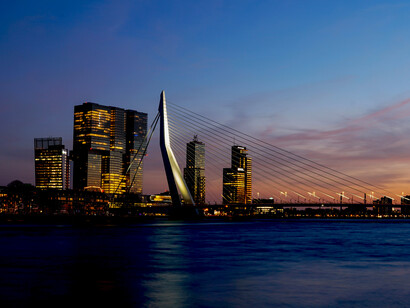
This industrial heritage and relentless momentum permeate Rotterdam’s cultural fabric. It is a city that does not do "quaint"; it does raw, authentic, and vibrant. Across the dramatic, asymmetrical sweep of the Erasmus Bridge—affectionately known by locals as "The Swan"—lies the Kop van Zuid and the Katendrecht peninsula. Once a notoriously rough sailors' quarter and the site of Europe's oldest Chinatown, Katendrecht has experienced a spectacular rebirth. Historic warehouses like the Fenix have been transformed into dynamic cultural landmarks, celebrating the city's complex history of global migration. The area now pulses with a gritty, creative energy, home to artisanal coffee roasteries, independent art galleries, and the Fenix Food Factory, where the scent of international street food mingles with the salty, bracing air of the Rijnhaven.
The people of Rotterdam embody this environment. They are famously direct, hard-working, and fiercely proud of their city's continuous evolution. A popular local saying goes: "In Amsterdam they have it, in The Hague they think about it, and in Rotterdam they make it." This ethos of tangible creation is the very soul of the city.
Rotterdam is a city in perpetual, glorious motion. It is a place that demands active engagement, asking its visitors to look up at its daring, physics-defying towers and look out at its ceaseless tides of global commerce. It lacks the hushed, museum-like reverence of older European capitals, replacing it with an infectious, forward-looking vitality. It is a destination not for those seeking the quiet comforts of the past, but for those who want to feel the exhilarating, unyielding pulse of the future.