English
 Español
 Français
 Deutsch
 Italiano
 Português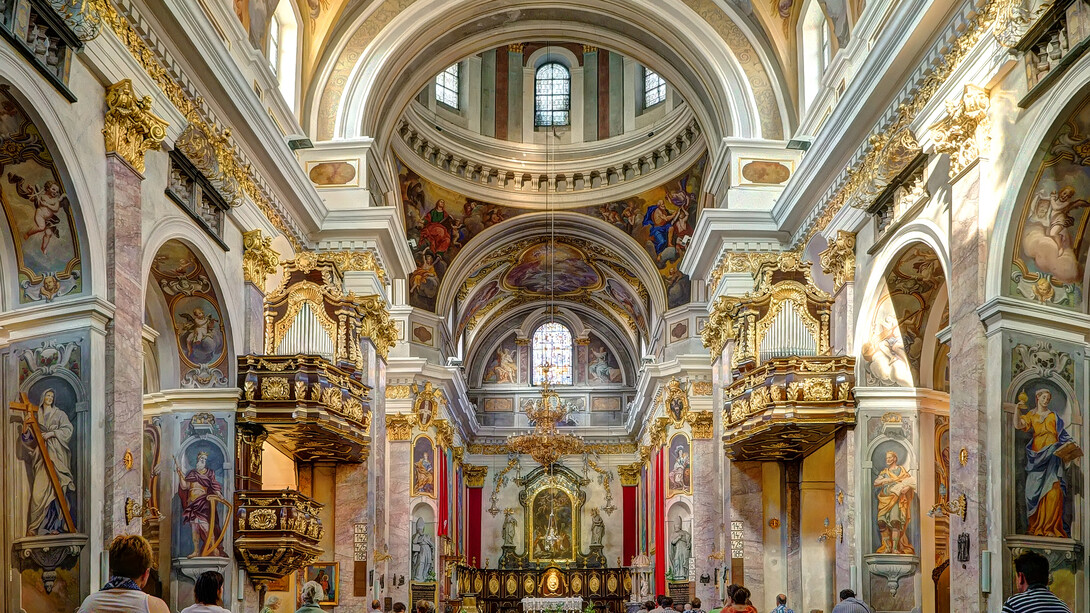
My interviews with Professor Sabine Frommel have aimed to give us a sense of the many reasons why artists and architects migrated to different countries during the Renaissance period.
So what was the cultural migration in Italy?
Frommel: Cultural differences between Italy and the countries where its models had been assimilated were expressed in all the arts, but mainly in architecture, where functions, materials, and the building guilds hindered the advance of new influences. Like a book, a building can talk about such tensions.
To what extent has Italian architecture been affected? Can you elaborate?
Frommel: At the façade of the entrance courtyard of the castle of Fontainebleau, the contrast between the archaic local style of Gilles Le Breton and the classic idioms of Francesco Primaticcio, based on prototypes from Sebastiano Serlio’s treatise, collide abruptly in a dissonant manner. In the Seventh Book of his treatise, referring to the project of the ballroom of the same castle, Serlio accuses the French master’s narrow mindset of lacking any experience of ancient heritage and of its revival by the Renaissance. While cardboard and canvas are 'patient,' even idealized, a building site is a reality of its own, and often problematic issues emerge when a design passes into the hands of local craftsmen. In order to complete the cathedral of Milan, which was still missing the crowning of the crossing by the typical Lombard tiburio, the patrons called an experienced master from Basilea, Giovanni Nixemberger.
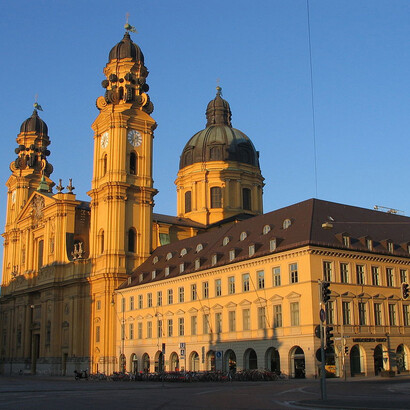
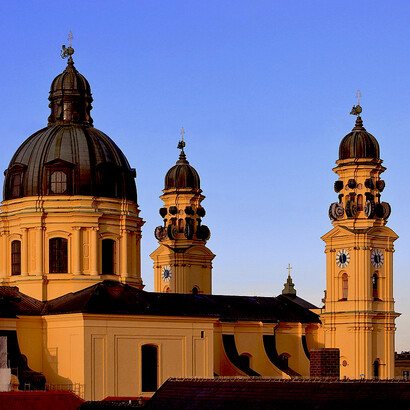
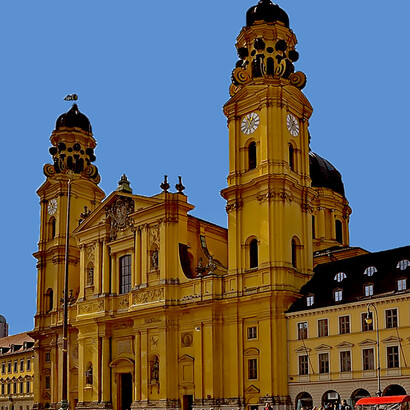
As soon as he had erected the tower-like structure in 1487, it collapsed. He wasted no time in leaving the city as quickly as possible. In 1662, the Bolognese Agostino Barelli was appointed by the Bavarian princess Henrietta Adelaide of Savoy, the Prince-Elector’s wife, convinced that Germans were “idiots when it came to constructing such an important building,” to realize in Munich the first church of the Theatine order. The Italian architect adopted the proportions of the mother church of Sant’Andrea della Valle in Rome, according to the project of Carlo Rainaldi, but failed by using the units of measure of Bologna and not the Roman ones. The result was compromised, and the poor architect had to accept the guidance of a supervisor at the building site who made life difficult for him.
A complex genesis also gave rise to the new cathedral of Ljubljana (1701-1706) in Inner Austria, which had been commissioned to Fra Florenziano from Milan, an architect of the Capuchin Order. Uncertainty after his death prompted Bishop Franz Ferdinand Kuenburg, who was familiar with Roman architecture, to adopt the model of the mother church of Gesù and to appoint the famous painter Andrea Pozzo, a specialist in illusionistic painting, yet not experienced with an architectural project of this size. The designs that Pozzo sent to Ljubljana relied closely on the rules in Vignola’s treatise La Regola and launched in this way a new style.
Were military architects vital during this cultural migration?
Frommel: As for military architecture, Italian engineers of the 16th century had such an authority and prestige that the more illustrious patrons, mainly in Northern and Eastern Europe, appointed them to build outstanding fortresses and ideal cities. Following the destruction wrought by the troops of Charles V, Francis I charged Girolamo Marini in 1545 to realize the new fortified city of Vitry-le-François. After the German city of Jülich had been destroyed by a fire in 1547, the Bolognese Alessandro Pasqualini designed an impressive reconstruction provided by bastioned fortifications and a square citadel around the castle.
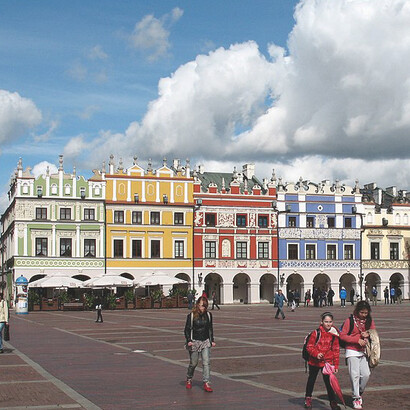
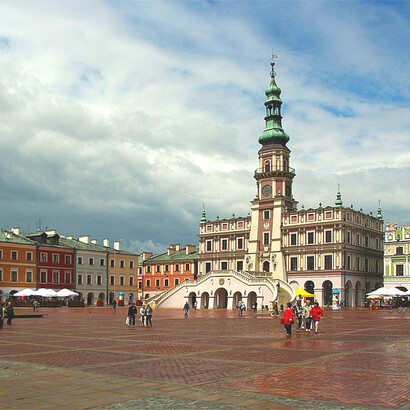
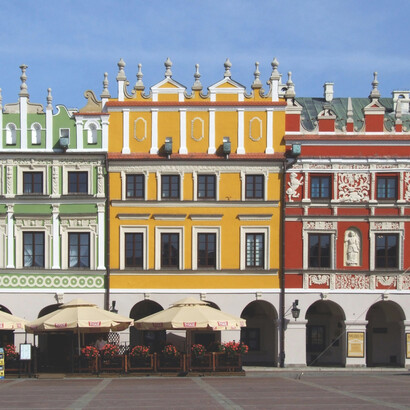
He was one of the first architects to introduce the Italian Renaissance in the Netherlands and northwestern Germany, and maybe he took the opportunity to accept an invitation from a patron during the Coronation of Charles V at Bologna in 1530. Military considerations also had motivated Jan Zamoyski, chancellor and head of an army, to charge in the late 16th century the Paduan architect Bernardo Morando with a fortified ideal city. The Italian piazza of Zamość retains its original layout, but the citizens' desire for a more individual expression in terms of color and decoration compromised the unified character of the façades.
While no Portuguese architects are known to have been active during the Italian Renaissance, how did migration play a role in this?
Frommel: The Iberian Peninsula provides insightful examples of migration processes. Jean de Rouen, whose training took place in the cathedrals of northern France, found in Portugal an open field that permitted him to become the busiest architect for decades. In his first works, he combined late Gothic patterns from France with naive classical inspiration, but around 1530, he realized the Porta Especiosa of the old cathedral from Coimbra, commissioned by the bishop Jorge de Almeida, inquisitor of the kingdom by Paul III. Certainly, under the influence of this highly educated patron, it marked a turning point, introducing a Renaissance style inspired by modern Roman models, who emphasized the cultural superiority of this important humanistic center.
Generally, doorways were highly appreciated for giving a classical flavor and new meaning to traditional buildings and old-fashioned façades. Architects, also with little or no experience with Renaissance innovation, could so conciliate patterns from treatises such as the Libro Straordinario from Serlio with local taste, often linked to cultural identity. In this way, Andres de Vandelvira, one of the more famous architects of the Andalusian Renaissance, conceived extraordinary portals adorned by Vitruvian orders, both for sacred and private buildings, without weakening ancient iconographic conventions.
What about the artistic migration in the United Kingdom?
Frommel: Processes of artistic transfer could also happen in indirect ways, such as in England. Patrons from the high aristocracy were gifted amateurs, designing their own castles, having sought advice from architects. Models were not usually taken directly from Italy but from drawings and engravings, particularly from the Frenchman Jacques Androuet Du Cerceau. He had learned about Italian models through a “second-hand method” consisting of copies and variations from Italian drawings. Serlio's ideal designs and other graphic material, which he had brought from Italy to Fontainebleau, provided him with the basis for countless new inventions, which spread throughout Europe. Specific assimilation came about through the importation of materials.
When Guillaume, Crown Prince and future Duke William V of Bavaria, built his grotto in the castle of Traunitz at Landshut, he had boxes of decorative details sent from Florence. Whether it was due to the artists that stayed in the host country or drawings, prints, and models, as well as the shipment of materials, the artistic and technical renewal of the early modern period would have been inconceivable without migration and transfer, inscribed in a vast network of dynastic relationships.
Without a doubt, the intersection and creativity between various artists and architects from different lands fundamentally shaped the lives, itineraries, and experiences of countless individuals during this period. They also left lasting traces of many other aspects of Renaissance life.
I would like to thank Professor Sabine Frommel for taking the time for this interview.