English
 Español
 Français
 Deutsch
 Italiano
 Português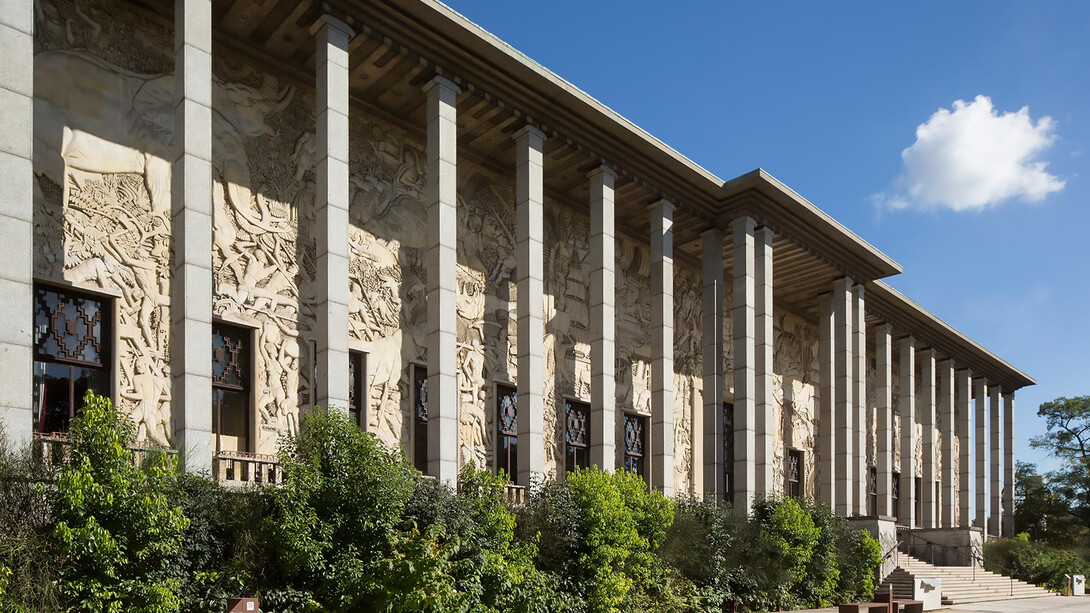
Emerging in the early 20th century, Art Deco was not only a design style but also a spatial reflection of the social and economic transformations of the period. Named after the 1925 Paris International Exhibition of Modern Decorative and Industrial Arts, Art Deco replaced organic forms with geometric order, bold material usage, and symmetrical compositions. The acceleration of industrialization, along with the introduction of modern cultural elements such as cinema and transportation into daily life, fueled the rise of Art Deco in both architecture and interior design.
The defining features of Art Deco extend beyond mere visual appeal; they shape spatial experiences, convey social status, and influence perceptions of modern living. In this way, Art Deco transforms space from a functional area into a symbol of prestige and power.
Social status and spatial prestige
One of the most notable functions of Art Deco is its ability to represent social prestige through spatial design. During the 1920s and 1930s, Art Deco buildings—particularly skyscrapers, hotels, cinemas, and theaters—served as status symbols. The rapid modernization of life, coupled with technological advances, was directly reflected in the design of Art Deco spaces. Luxurious materials and carefully arranged geometric compositions endowed these spaces with both aesthetic and social value.
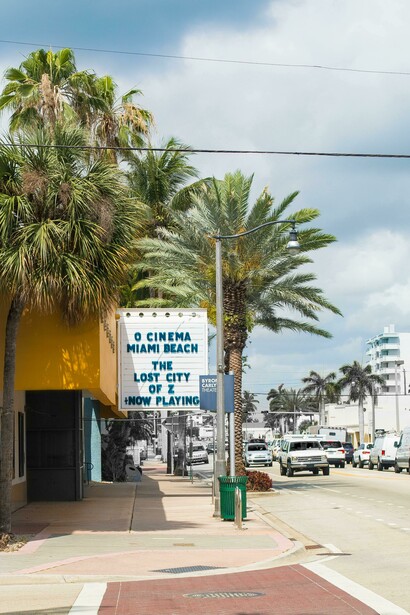
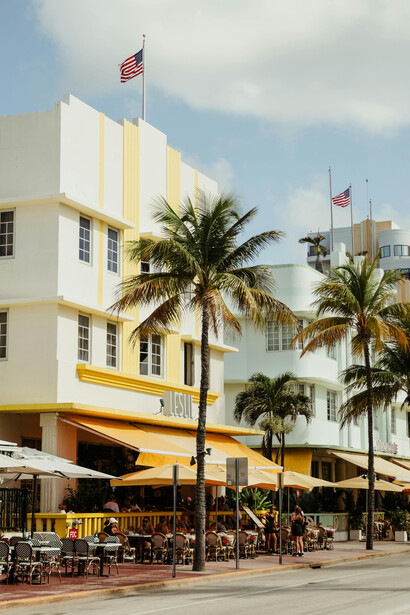
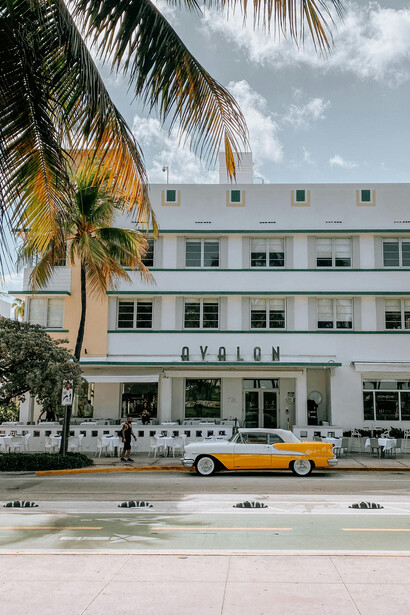
Art Deco conveyed prestige not only in elite private residences but also in public and mass-use areas. The Miami Beach Art Deco District (Florida), with its colorful façades and symmetrical layouts, symbolized modern lifestyle both for tourists and local residents. Similarly, Edificio Kavanagh (Buenos Aires, 1936) stood as a prestigious skyscraper reflecting high socio-economic status in Latin America. In India, Marine Drive (Mumbai) demonstrates how locally adapted Art Deco buildings enabled middle-class access to modern and prestigious urban living.
In interior design, pioneers like Émile-Jacques Ruhlmann (France) created bespoke furniture and decorative objects for the upper classes, merging luxury with aesthetic sophistication. Designers such as Joseph Urban and Donald Deskey integrated prestige and spectacle in theaters, opera houses, and hotel interiors, delivering a strong social message to the users of these spaces. Materials such as chrome, glass, lacquer, and exotic wood became symbols of modernity and affluence.
The social prestige of Art Deco extended beyond wealth signaling; it represented modern life as a design language accessible across different social strata. As a result, Art Deco functioned as a bridge between elitism and mass-modern living.
The Chrysler Building: an iconic skyscraper of Art Deco
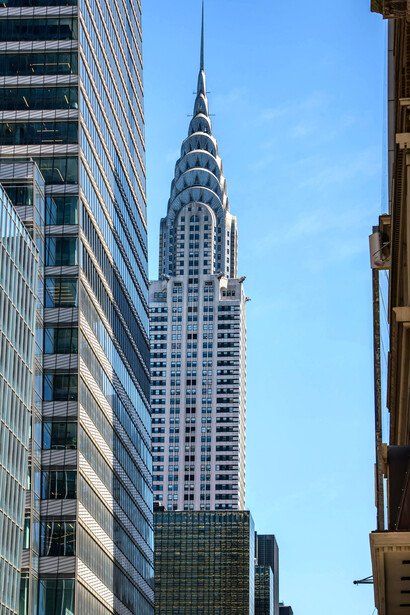
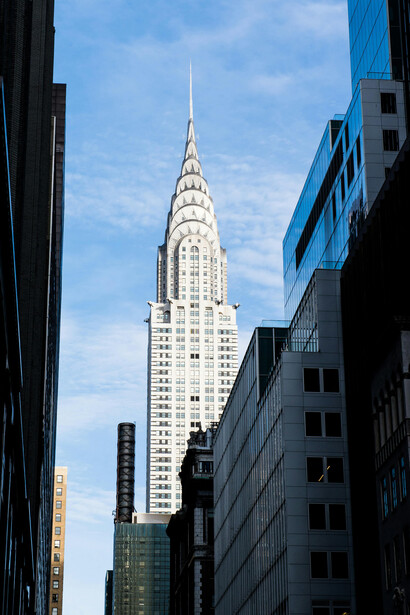
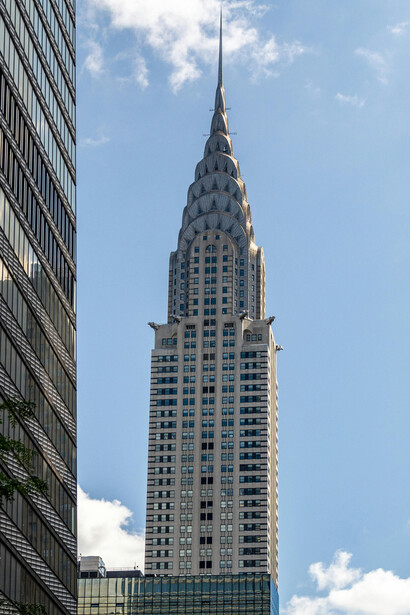
A prime example of Art Deco’s ability to manifest social prestige and spatial influence is the Chrysler Building (New York, 1930, William Van Alen). This skyscraper represents the characteristic features of Art Deco in both architectural and interior design.
Façade design: the Chrysler Building’s exterior, with its stainless-steel crown and reflective metal details, embodies the geometric order and visual boldness of Art Deco. Zigzag, chevron, and stepped motifs create rhythm and dynamism, making the building not only a functional office tower but also a symbol of prestige and modernity.
Interior spaces: the lobby exemplifies Art Deco’s concept of spatial prestige. Polished metal surfaces, marble floors, decorative bronze panels, and geometric motifs communicate both aesthetic excellence and social status. The lobby is more than a transitional space; it is a symbolic representation of the skyscraper itself, enhancing the prestige perceived by its users.
Materials and technology: stainless steel, chrome, and glass blocks reflect technological advancements of the era while contributing to both durability and visual impact. The crown’s reflective surfaces demonstrate Art Deco’s emphasis on light and visual effect, reinforcing the building’s status symbolism.
Social and cultural impact: the Chrysler Building was perceived not just as an office space but as a symbol of American modernism and industrial achievement. Its height and impressive façade reinforced societal perceptions of power and prestige, while the experience of occupying or visiting the building directly conveyed this status. The building’s completion marked a milestone in New York’s economic and cultural ascent during the early 20th century.
Global perspective: as one of the most iconic examples of Art Deco, the Chrysler Building conveys the universal language of the style. Its design inspired other Art Deco structures worldwide, from Miami Beach to Buenos Aires, influencing the representation of prestige and luxury in diverse urban contexts.
Spatial character and aesthetic principles
Art Deco’s spatial identity is defined by symmetry, geometric order, and material richness. High ceilings, marble flooring, and metallic and reflective surfaces create an impression of grandeur and prestige. Interior motifs, including zigzag, chevron, and stepped forms, produce visual dynamism and convey modernity.
Material selection plays a critical role in reinforcing prestige. Polished metals, chrome, glass blocks, and exotic woods not only enhance visual appeal but also reflect technological and industrial progress. Consequently, Art Deco transforms spaces into instruments for communicating social messages, not merely functional areas.
Global examples
Art Deco’s influence extends far beyond Europe and the United States, with notable examples including
Edificio Kavanagh, Buenos Aires: an iconic Latin American skyscraper symbolizing socio-economic prestige.
Miami Beach Art Deco District, Florida: colorful façades and touristic urban spaces reflecting modern lifestyle.
Marine Drive, Mumbai: locally adapted Art Deco façades for middle-class access to prestige.
Palais de la Porte Dorée, Paris: exhibition halls combining luxury and modern aesthetic principles.
Royal York Hotel, Toronto: a Canadian example of a high-rise Art Deco building.
These cases demonstrate how Art Deco globally represented both modernity and social prestige through architecture and design.
Conclusion
Art Deco in architecture and interior design was not merely an aesthetic movement; it was a spatial manifestation of social prestige and modern lifestyle. The use of luxurious materials, symmetrical and geometric compositions, and the integration of technological advancements materialized modern life within Art Deco spaces. Global examples, particularly the Chrysler Building, illustrate how Art Deco created a universal language capable of conveying prestige in both elite and public contexts, bridging social stratification through design.