English
 Español
 Français
 Deutsch
 Italiano
 Português
Acoustics sits at the intersection of engineering, design, and psychology. Despite its importance, you could go an entire lifetime without considering its role in architecture. This is on purpose. In a well-designed building, the acoustic environment feels and sounds natural.
The fundamentals of architectural acoustics
Architectural acoustics is the science and practice of controlling noise within buildings. It focuses on how sound waves interact with materials and spatial geometry. The goal is to dampen and amplify audio strategically.
There are four fundamental aspects of architectural acoustics:
Reflection: Sound waves bounce off surfaces, especially in enclosed spaces. They change direction, impacting clarity and timing.
Reverberation: If sound waves persist after they are produced, they can reflect multiple times before reaching you. When they stack up, they muddy the original sound.
Absorption: Soft, porous materials can absorb sound by converting kinetic energy into heat. While absorption controls reverberation, too much makes the space feel off.
Diffusion: Diffusion balances reflection and absorption by evenly scattering sound waves without over-reflecting or over-absorbing.
Everything from a room’s size to its furnishings impacts noise. Have you ever noticed an echo in an empty apartment? Once you fill it up with furniture, the echo disappears. Due to reflection, reverberation, absorption, and diffusion, how you arrange your space makes a difference.
What sounds best depends on the space. In a classroom or concert hall, you want one person’s voice to project throughout the room. However, in a cafeteria, you want to dampen noise. Generally, you shouldn’t “hear” the sound of space. If it dominates your attention, something is wrong. Great acoustic design is subtle.
The historical evolution of sound in architecture
Throughout history, humanity has achieved numerous acoustic design milestones. One of the most prominent examples is the evolution from ancient amphitheatres to modern concert halls. However, people have been considering acoustics since the early days of civilization.
Archaeoacoustics is the interdisciplinary field of archaeology and acoustics. It studies the relationship between people and noise throughout history. Some scholars have suggested ancient humans placed rock walls and cave paintings where reverberation was the most effective. Perhaps they wanted to enhance their singing and clapping during rituals.
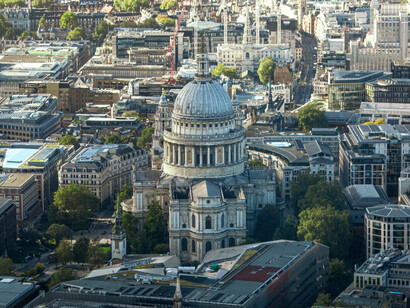
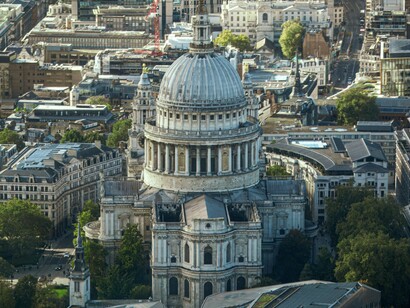
The Whispering Gallery at St. Paul’s Cathedral postdates cave paintings by thousands of years, but the fundamentals remain. It contains a circular walkway famous for amplifying whispers, hence the name. If you whisper along the wall, people up to 108 feet away will hear it.
Whispers produce sound waves just like shouts. However, they are low intensity, so distortion and interference are less likely. The Whispering Gallery works because the waves bounce along a subtle curve. This is why it is more effective to whisper along the wall instead of at it.
As time passes, acoustic design becomes more intentional. For instance, designers might even approach individual classrooms differently. If they are close to the gym or lunchroom, stronger soundproofing is important. Time of day and location also matter. Noise pollution is more noticeable near train tracks or on a road with heavy rush-hour traffic.
How acoustics influence architectural design
A common misconception is that acoustics are an architectural afterthought. In reality, even the most minor details—like vent placement or gaps under doors—have an impact. However, not all builders consider it. Luckily, you can retrofit almost any room with acoustic panels or soundproofing installation.
Architects design structures to achieve optimal acoustic performance—the best possible sound quality within a space. They often pay particular attention to diffusion. Projecting or silencing noises is vital in offices, concert halls, recording studios, classrooms, and hospitals.
Every aspect of a building influences its acoustic attributes. An element’s material type, shape, physical properties, and thickness can influence sound wave behaviour. Professionals strategically position them to enhance or dampen frequencies.
There is no one-size-fits-all approach within the built environment. Multipurpose spaces are particularly complex. Take an office, for example. The manager needs to hear the goings-on to check in as necessary. However, noise dampening is essential to keep others from eavesdropping on private conversations.
This is why the sound transmission class (STC) rating system exists. At 25 STC, you could hear and understand soft speech. Soundproof insulation could muffle most noises, achieving an STC rating of 40.
Contemporary approaches to acoustic design
Over time, the world has grown louder. With electricity and engines came nightlife, highways, and airports. Moreover, the population is growing. More people are living in cities than ever before. Acoustic design has to evolve to keep up.
Design trends like open-concept living complicate conventional methods. Designers have had to tweak contemporary techniques to make them effective. Take Bloomberg’s European headquarters, for instance. It is situated near St. Paul’s Cathedral, but it leverages an entirely different approach to acoustic design. It was built nearly 350 years later, after all.
Bloomberg’s London-based headquarters covers an entire city block. A suspended pedestrian bridge connects the two buildings. In other words, the noise pollution is inescapable. The sandstone façade has bronze fins of various sizes, scales, and pitches that improve the natural ventilation, reducing noise. There is also sound-dampening timber.
Inside, radial desks are arranged in clusters to optimize diffusion. Polished aluminium panels are hung on the ceiling. They act as acoustic attenuators, reducing the air duct noise by facilitating natural cooling.
Novel acoustic materials are increasingly popular among architects in high-density cities. Other contemporary buildings use digital simulation tools and sensor technologies. Their approach depends on their budget, material availability, and project size.
The future direction of acoustics in architecture
Sustainability and green buildings are becoming more popular. Instead of hyper-futuristic spaces, you may see an explosion of green. This trend has yet to catch on worldwide but is gaining traction quickly.
Builders may consider acoustics second to sustainability. However, its impact on diffusion is equally important. Research shows simply planting trees along roadways can decrease traffic noise by up to 24% in urban areas.
Technology is also becoming increasingly integral to acoustic design. Building information management systems can show you how noise impacts occupants. With digital twin simulations, you can visualize changes in real time.
Internet-enabled sensors have significantly influenced architecture, so it stands to reason that their future impact will be significant. Imagine a future where you could remotely make minute adjustments. For instance, if a concert is happening nearby, you could move external fins to dampen the noise. Artificial intelligence could shrewdly automate these changes.
Such developments encourage architects to take a longer look at acoustic design. Given that it significantly impacts mood—even more so than visuals—they can’t deny its importance. Some sounds are universally beneficial, so this change won’t be isolated. The whole world will realize the value of sound.
You can hear the difference in great design
Acoustic design often tends to go unnoticed. However, it has been the beating heart of architecture for as long as humans have been building structures. It is part of iconic and everyday spaces, from grand concert halls to simple office buildings.
New space, noise pollution, and sustainability challenges will emerge over time. Architects should be prepared to adapt conventional techniques. Developing a harmonious acoustic environment is complex but rewarding.
Notes
Soundproof Cow, Architect’s Guide to Designing Soundproof Offices, Drew McLaughlin, 20 April 2023.
Londonist, How Does The Whispering Gallery At St Paul's Actually Work?, James FitzGerald, 13 April 2023.
Architecture Lab, Bloomberg’s European HQ / Foster + Partners, Anton Giuroiu, 16 March 2025.
Renovated, What Are the Impacts of Noise Pollution on You, and How Do You Improve It?, Rose Morrison, 26 December 2024.
ScienceDirect, Impacts of nature and built acoustic-visual environments on human’s multidimensional mood states: A cross-continent experiment, October 2021.