English
 Español
 Français
 Deutsch
 Italiano
 Português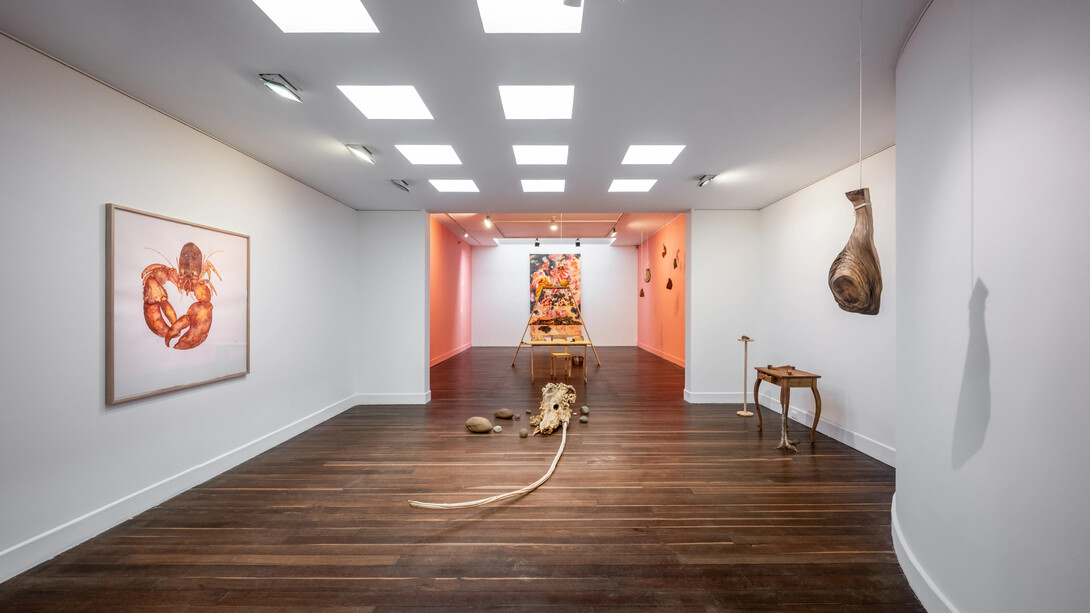
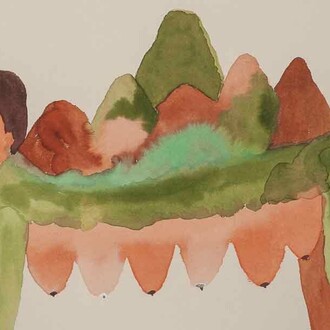
There is something in the works gathered in Fruto animal that seems to resist the need for naming. The forms that inhabit the exhibition present themselves as ambiguous presences: at times they recall seeds, organs, fruits, stones, fungi, or fragments of some unknown body; at others, they appear to be found remains, apparitions, or material accidents. Yet none of these associations fully fix them in place. They remain in a state of constant transformation, shifting between different orders of nature without belonging entirely to any of them.
Rather than producing recognizable images, Liliana Sánchez constructs conditions for observation. Her works invite us to linger before what has not yet found a stable definition; before forms that seem to be occurring prior to becoming anything identifiable. In this sense, the exhibition unfolds as a territory where the boundaries between the animal, the vegetal, and the mineral become porous, allowing a single form to be read simultaneously as fruit, body, fossil, sustenance, or creature.
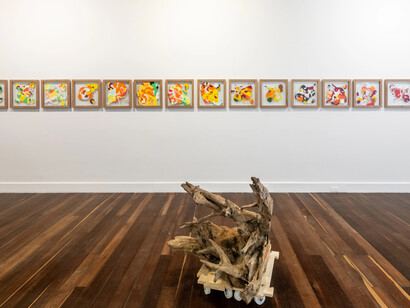
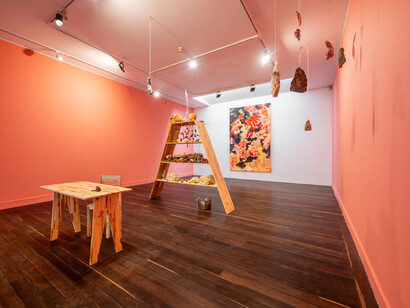
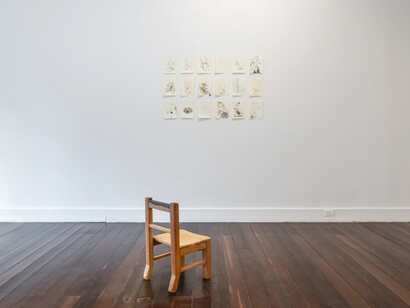
Throughout the space, drawings, paintings, objects, and fragments of wood establish relationships that follow neither narrative nor taxonomic logic. The eroded trunks, exposed roots, pigmented surfaces, and accumulations of organic forms seem to participate in a shared vital process. They do not function as representations of nature, but as manifestations of a matter that continues to transform. Even what appears still retains a latent energy, as if traversing processes of growth, erosion, fermentation, or mutation.
The exhibition's title points precisely to this hybrid condition. A fruit typically announces ripening, abundance, or reproduction; an animal evokes movement, desire, metabolism. By joining both terms, the artist proposes an impossible image that unsettles the categories through which we ordinarily order the world. The fruit ceases to be purely vegetal, and the animal ceases to be a recognizable figure, becoming instead a diffuse presence within matter itself.
In Fruto animal, things always seem to contain more than they reveal. Each object holds the possibility of another form; each surface suggests a process that continues to unfold beyond our gaze. The exhibition does not offer answers about the nature of these presences. On the contrary, it places us before the experience of watching how the boundaries between bodies grow uncertain and how, within that space of indeterminacy, a different kind of sensibility toward the material world begins to emerge.
(Text by Pavel Vernaza)