English
 Español
 Français
 Deutsch
 Italiano
 Português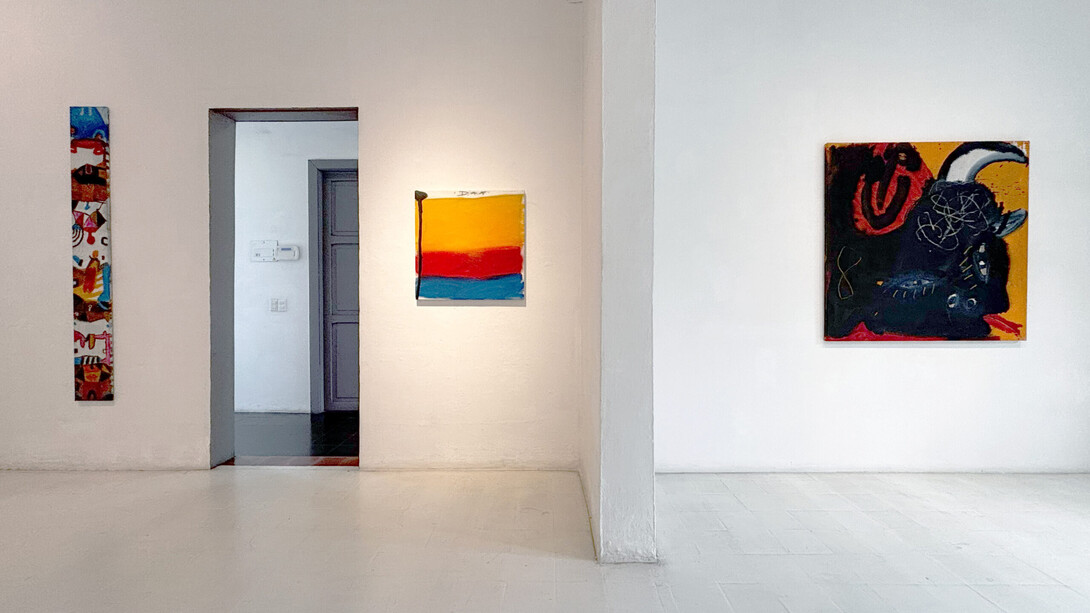
Often, the hardest part to find is what’s right in front of us. Even though it remains there—close, reachable, simple—it’s as if it were veiled by layers of external noise built from fantasies of a homogeneous order and a linearity of existence. From his studio, Diego Arango has dedicated himself to cleare out those layers of external noise to preserve that original sense of wonder at life, reminding us that those who dare to find their own path discover that these constructs are rarely mandatory or impenetrable.
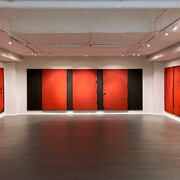
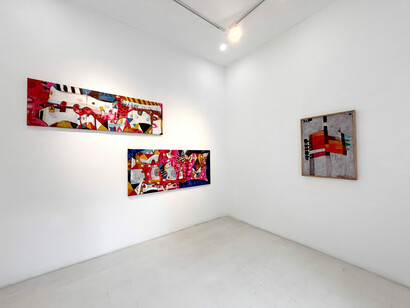
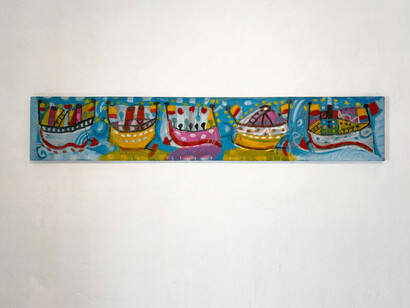
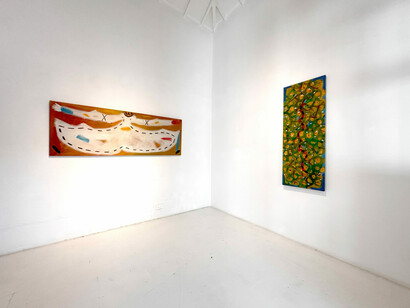
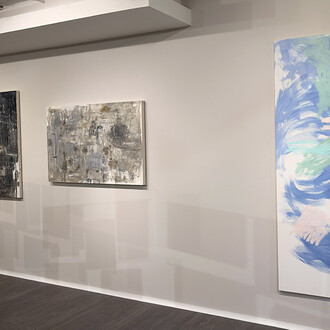
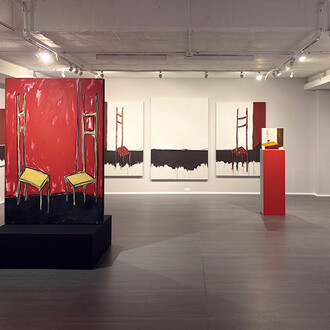
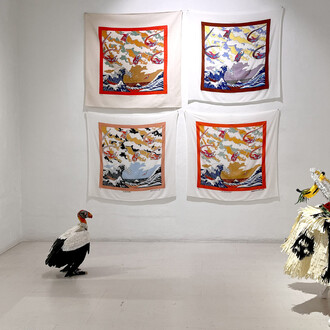
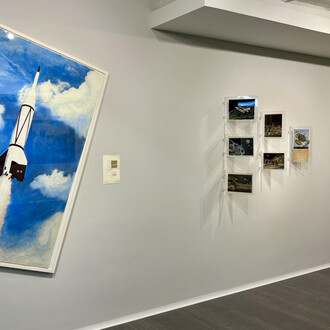
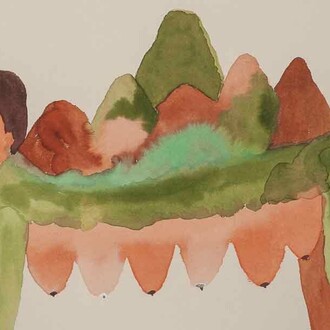
Júbilo brings together works from the last three decades that reveal the artist’s joy in the shapes and colors of his daily life, his memories, his imagination, and his innocence. While the forms of houses, paths, animal bodies, and boats remain constant, they are never definitive, as they appear repeatedly in different formats and configurations, at times resembling stills from a film with the colors of the Mediterranean—where he has lived for more than 40 years—and those of the exuberance of Colombia, his native country. These forms also suggest movement and a will of their own, occupying the surfaces of the canvases in such a way that they seem to want to break free from the rectangle in which they are inscribed.
Although painting is his most frequent medium, his practice is based on a close relationship with the line, which began in the printmaking studio more than six decades ago. There he discovered that this gesture—being continuous and condensed—is enough to separate a form from the surface. Then comes the color, the stain, and the manipulation of the canvas through shredding and layering, bringing together the richness of the inner world with a sense of wonder at what is close.
In this process, play—approached with childlike seriousness and dedication—is central, as is freedom of thought and hand, but above all, the joy of being able to paint the images that emerge from the space between her imagination and the canvas. It is from this, and from the decision to walk his life and work on his own terms, that the joy of her painting derives.
(Text by Andrea Domínguez Ramírez)