English
 Español
 Français
 Deutsch
 Italiano
 Português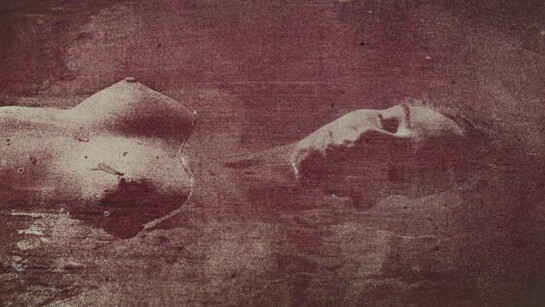
I began taking photographs in 1956 with the aim of capturing the whole man,
focusing on the intrinsic factor of human interest.(F. Florian Steiner)
The work of Florian Steiner (1936–2022), both for its approach and its technical experimentation, occupies a unique place within the visual arts of the second half of the 20th century. A tireless traveler, polyglot—he mastered eight languages—and deeply fascinated by Japanese culture, he made travel a form of knowledge and encounter with others. Connected to the intellectual and cinematic circles of his time, he developed a visual practice influenced by the language of film, where sequence, rhythm, and narrative expand the expressive scope of his work. Although his work was linked to travel, it transcends documentary record to become a reflection on the human condition.
His travels through Europe, Latin America, Asia, and Africa gave rise to a body of work focused on everyday life, prioritizing people's experiences over the spectacular nature of places. The camera acts as an instrument of intimacy, establishing relationships of trust with those he portrays and revealing a profound empathy for his subjects.
His production, with a marked humanist vocation, transforms the everyday into an experience of universal scope, where memory, dignity and poetry converge to affirm the power of visual representation as testimony and a form of permanence.
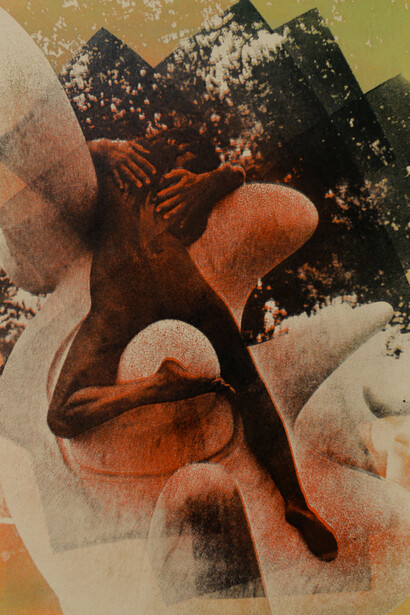
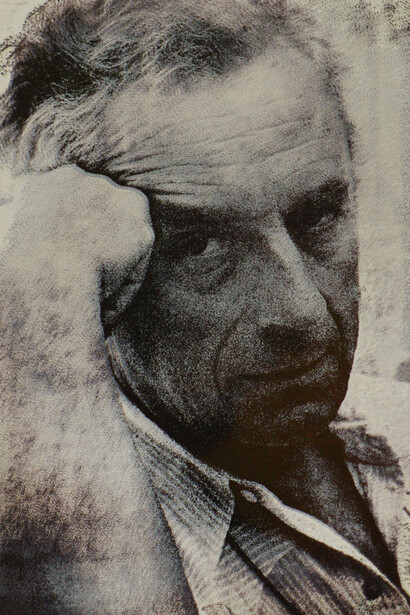
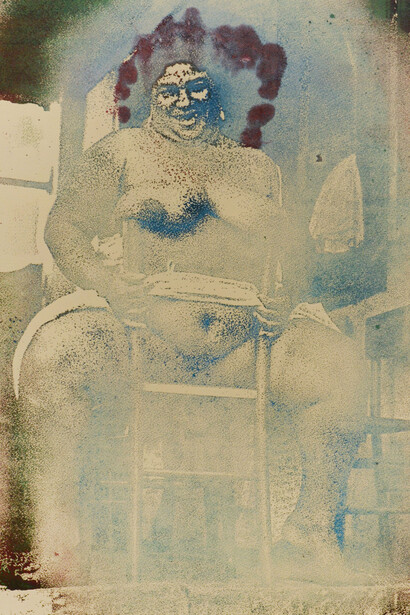
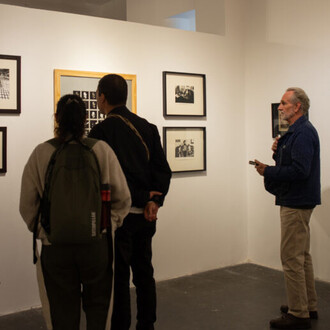
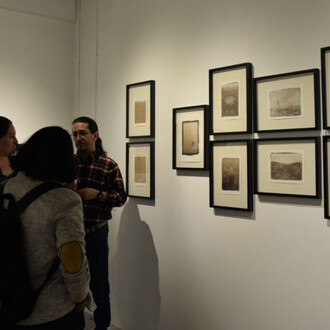
This exhibition brings together a selection of photolithograph monotypes that Steiner made between 1960 and 1973 and presented in Bogotá in 1985, at the El Callejón Gallery of the Librería Central, a fundamental space for the dissemination of modern and contemporary art in the city.