English
 Español
 Français
 Deutsch
 Italiano
 Português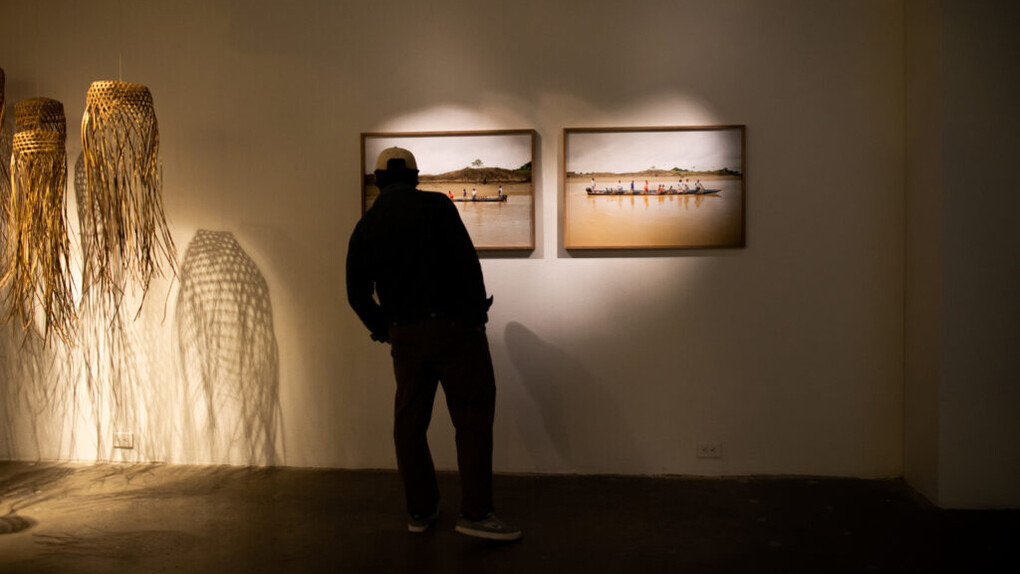
Colombia holds vast quantities of gold in its waterways, which, after centuries of exploitation, continue to be extracted to satisfy a growing demand. The rivers and the communities that surround them pay the price: dredges the size of dragons drill into their channels, dissolve their banks, and leave behind a landscape riddled with holes.
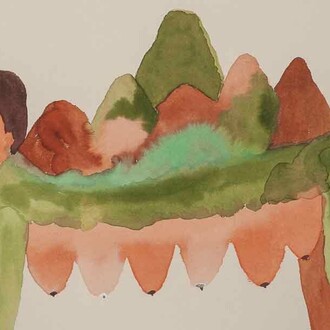
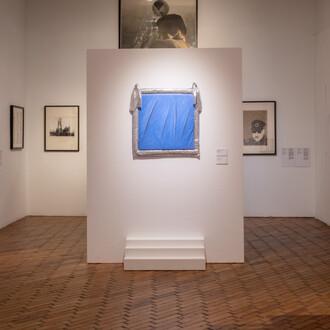
This exhibition views these rivers as living bodies, with skin, memory, and a beauty that persists even under extermination. Through these five projects, created between 2022 and 2026, Santiago Vélez presents them beyond their dimension as exploitable resources. Rain of flying rivers recalls, with sculptures made from calabash gourds, those other waters we almost never see, the waters that come from the transpiration of trees. Rivers of gold and All that glitters is gold trace from the air the golden glimmers that betray the mining wound on the Nechí River, and The Quito river captures the desolation of a riverbed devoured by dredges. Faced with this plunder, Caressors of the river, in collaboration with the Asomipiva collective from Villa Conto, Chocó, proposes a restorative and symbolic gesture: to return to the river, for an instant, the touch that mining has denied it.
The title is both a proverb and a warning: not everything that glitters is wealth. Sometimes, the golden sparkle is the reflection of a wound.
Rain of flying rivers
In February 2015, journalists Jan Rocha and Eliane Brum published a “Letter from life” warning that a single large tree returns more than a thousand liters of water to the atmosphere every day, and that the entire rainforest releases twenty trillion liters every twenty-four hours: more than the Amazon pours into the Atlantic. You don't need to be an expert, they said, to imagine what would happen to the planet without the rainforest.
This phenomenon, scientifically known as flying rivers , appears with particular clarity in the Amazon. There, suddenly, massive and powerful clouds form, so large and powerful that when they fall, they bathe and flood everything around them.
This installation views rain as the point where two notions of river meet: the one that flies and the one that sails. Totumos, containers used in the Amazon to hold liquids like masato, açaí juice, and, of course, water, function simultaneously as cloud and flow: a rain of chambira that silently integrates those other waters we almost never see.
Rivers of gold
Colombia holds enormous quantities of gold within its waters and lands, which, after centuries of exploitation, continue to be extracted to satisfy an unremitting demand. The rivers are among the largest suppliers, and for this reason, they are subjected to all kinds of mining practices to extract every last gram.
But that mineral wealth is only part of it. The Atrato, the Cauca, the Guaviare, the Inírida, the Nechí, the Orinoco, the Pocune, the Quito, and so many others are sources of resources that make them unique and vital to their surroundings. To care for them and understand what they mean, we must learn to see them as a living and latent reflection of our own existence.
River caressers
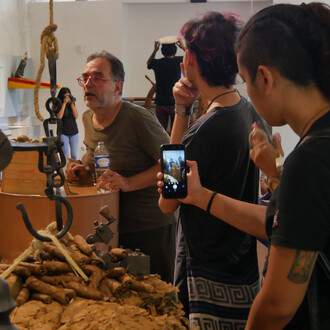
Santiago Vélez immersed himself in the artisanal processes of the Asomipiva collective in Villa Conto, Chocó. Through dialogues and conversations, connections emerged between the river, the surrounding environment, and environmental stewardship. For the artisans and the artist, the river became a primary source of creative inspiration and a meeting place, born from their shared concern about the environmental damage caused by mining.
At this point, the river has lost its banks. The riverbed is dissolved by the incessant drilling that drains the water for the dredges. The plants and trees that once grew along its banks vanished with the backhoes that deforested the hillside to make way for those absurd and excessive machines.
After learning the artisanal technique and wondering how to represent the river and mining tools, the need arose to make a restorative and symbolic gesture toward that same river which, near their village, appears riddled with holes and almost destroyed by mining activity. To somehow compensate for the absence of branches and their fruit, they collectively created river caressers that allow one, for a moment, to touch the skin of that river; a skin that, like many human skins, has ceased to feel the touch of other beings.
Everything that glitters is gold
The Nechí River is perhaps one of the rivers most severely impacted by mining, both legal and illegal. The rampant gold mining along its banks and waterways has left an indelible mark on the landscape. Digital mapping platforms record this activity from satellites and show how it advances, like a metastasizing cancer, year after year, until it has brought the environment to a state of total degradation.
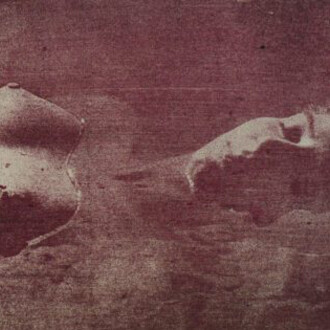
Against this backdrop, Vélez flew over the river. The resulting video reveals golden glimmers, the effect of light on threads of water that initially disappear and then, strained by their decline, rise above the other waters, revealing the true wealth of the region.
The Quito river
After several trips and flights along the Quito River, what remains is profound desolation. Death arrives in the form of dredges so large they are called dragons, and it doesn't unfold silently, as we've been told in stories, but thunderously: a monster with a thousand heads and long, excavating arms that drill relentlessly.
Faced with this shroud of death, there is nothing left to do but sing a hymn to this river which, despite its extermination, keeps its beauty alive.
Caudal
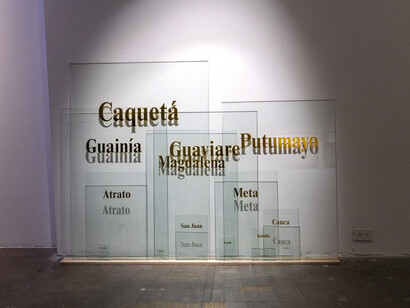
While investigating rivers, their environmental implications, and their impacts on the country's ecosystems, Vélez encountered a problem: it is very abstract to quantify their magnitude, the proportions between them, and their effect on the territories they traverse. Flow rate served as a comparative measurement strategy because it relates the amount of water to a specific period of time.
Based on a basic calculation of the area conversion of some of Colombia's rivers, he constructed an installation with transparent glass and gold lettering. This was not only to illustrate these equivalencies, but also to project the rivers' waters, names, and reflections.