English
 Español
 Français
 Deutsch
 Italiano
 Português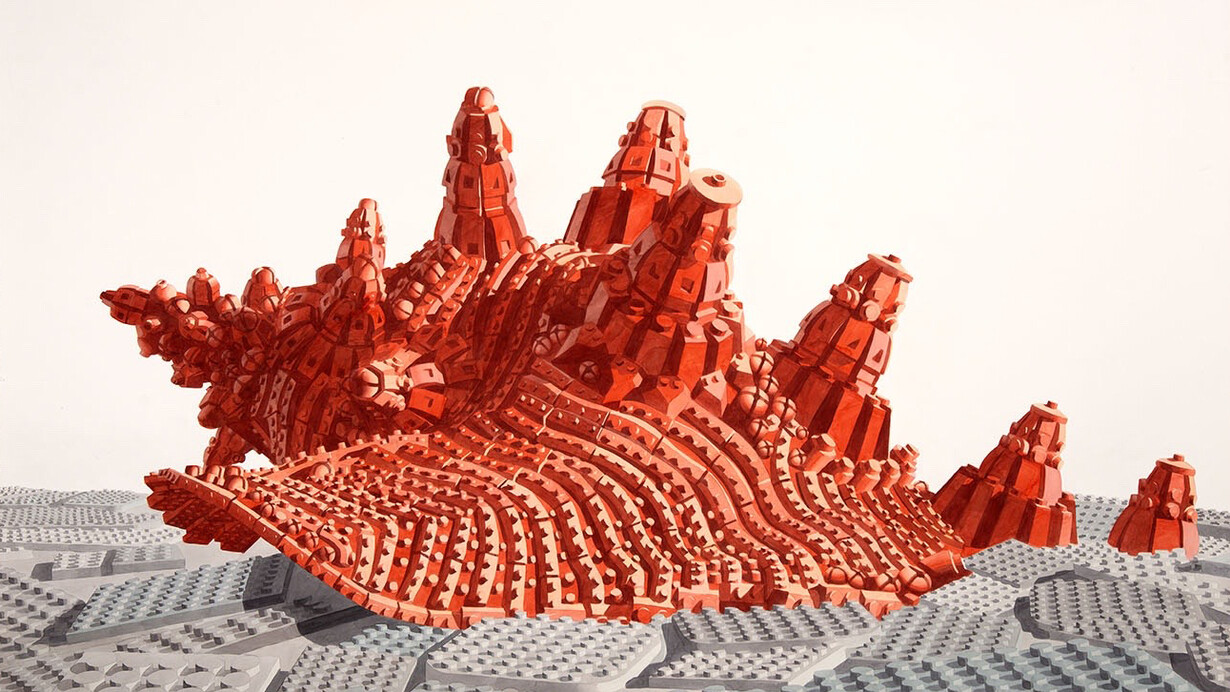
Casado Santapau Gallery presents Submersus, the new exhibition by artist Dagoberto Rodríguez, a project that unfolds as a sustained immersion into the material, symbolic, and temporal depths of the Caribbean marine imaginary. Through a collection of recent works—watercolors, paintings, and sculptures—Rodríguez not only represents the sea but also activates it as a device for thought, as a field of forces where history, memory, and perception converge.
Far from a landscape or descriptive approach, Submersus proposes an experience of decentering. The point of view dissolves, the surface ceases to be a boundary and becomes a threshold. To submerge here implies abandoning the stability of the visible in order to enter a realm of fluctuation, where light does not illuminate but disperses, where form is not fixed but emerges and recedes in continuous movement. Water is not the bottom, but the medium: a dense space that contains, distorts, and reconfigures everything it passes through.
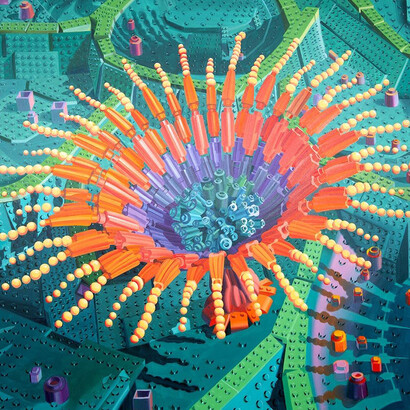
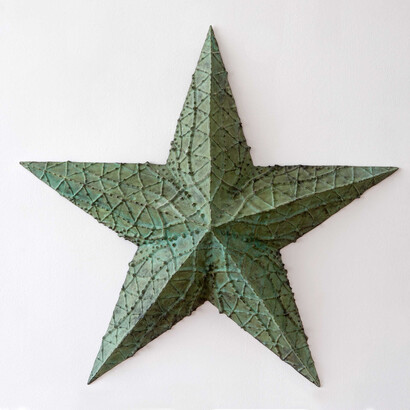
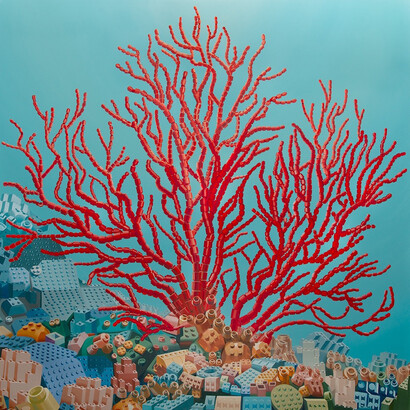
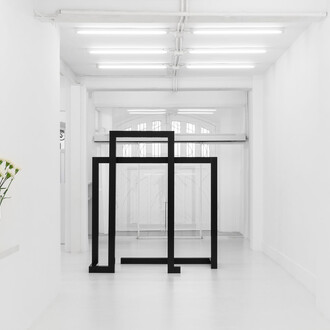
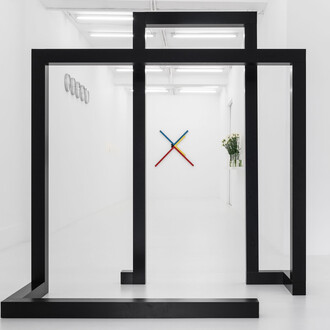
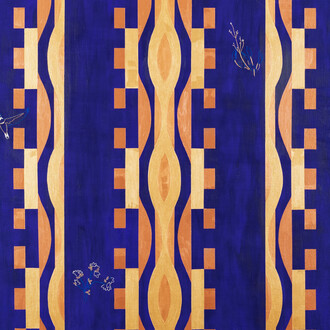
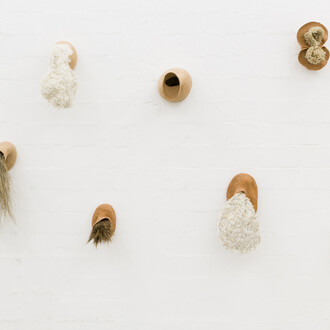
In this new phase, the artist incorporates a renewed exploration of color and pictorial matter. The oil paintings stand out for their chromatic intensity and meticulous execution, which reinforces the almost sculptural dimension of their surfaces. The watercolors, for their part, offer a more intimate and fluid approach, while the sculptures expand their language into the three-dimensional, maintaining the conceptual coherence of the whole.
In this context, Rodríguez’s technical practice reaches an almost paradoxical dimension. His virtuosity—evident in his extreme control of watercolor, in the material construction of his paintings, and in the formal precision of his sculptures—is not oriented toward the affirmation of the image, but rather toward its instability. Transparencies overlap until they become opaque; the pictorial layers generate depths that negate any immediate interpretation; the three-dimensional forms seem to capture transitory states, as if they were frozen fragments of a perpetually mutating process.
This shift toward instability is not foreign to the artist’s trajectory. Rodríguez’s practice has historically been permeated by a reflection on architecture, urbanism, and the construction of spatial imaginaries, especially those linked to utopian projects and their failed trajectories. In his previous investigations, the city appeared as an ideological structure, as a stage where collective desires and political tensions are projected. In Submersus, this interest does not disappear: it is transformed. The urban dissolves into the liquid; Architecture loses its rigidity and becomes an organism, a submerged ruin, or a floating vestige.
Thus, the Caribbean Sea presents itself as a critical extension of those utopian landscapes: a territory where the promises of order and control are eroded by the instability of the environment. The forms that emerge in the exhibition can be interpreted as architectures in transit, as constructions that have abandoned the logic of permanence to integrate into dynamics of flow, sedimentation, and drift. Utopia, far from disappearing, is reconfigured in a fluid, elusive state, where all projection is subject to contingency.
In Submersus, the Caribbean is presented as an expanded geography: not merely a physical place, but a fluid archive where narratives of displacement, violence, exchange, and survival settle. Beneath the apparent serenity of the water’s surface lie stories that are not always visible, yet persist like subterranean currents. In this sense, the works function as points of contact between the visible and the submerged, between what is shown and what resists being fully represented.
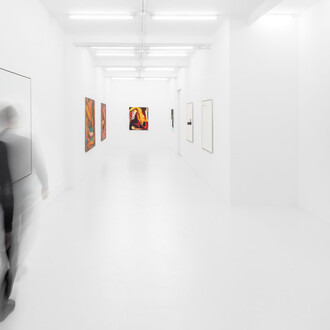
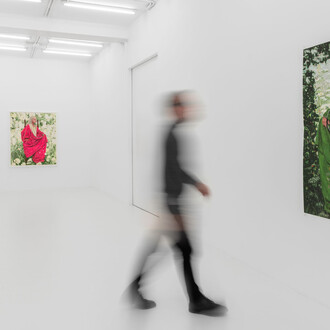
The notion of immersion permeates the entire exhibition, not only as a theme, but also as a methodology. The viewer does not stand before the works, but is progressively absorbed by them. The scale, composition, and spatial construction generate an immersive experience that appeals to both the body and the eye. Seeing becomes an act of navigation: an attentive drift in which every detail, every variation of light or texture, unlocks new layers of meaning.
Likewise, Submersus explores the tension between the organic and the artificial. The forms evoked—corals, currents, remains, ambiguous structures—oscillate between the natural and the constructed, suggesting an ecosystem in which traditional categories lose their clarity. This shift resonates with contemporary issues related to ecology, environmental transformation, and the fragility of the systems we inhabit.
In Rodríguez’s work, technical mastery is not an end in itself, but a condition for accessing the elusive. Painting water—and, even more so, painting from within the water—means confronting that which cannot be fully captured: light in motion, immeasurable depth, memory in constant reconfiguration. Submersus is situated precisely on this threshold, where the image ceases to be representation and becomes experience.
With this exhibition, Dagoberto Rodríguez deepens and shifts the lines of force in his artistic trajectory, articulating a continuity between his investigations into built space and this new exploration of the liquid as a critical field. The result is a proposal that not only expands his language but also redefines the ways in which the landscape—urban or marine—can be conceived, inhabited, and remembered.
With a consolidated international career, Dagoberto Rodríguez has developed his own language that lies between tradition and contemporaneity. This exhibition at Casado Santapau offers an opportunity to understand the keys to his recent practice, in which experience, technique and a unique perspective on space and memory converge.