English
 Español
 Français
 Deutsch
 Italiano
 Português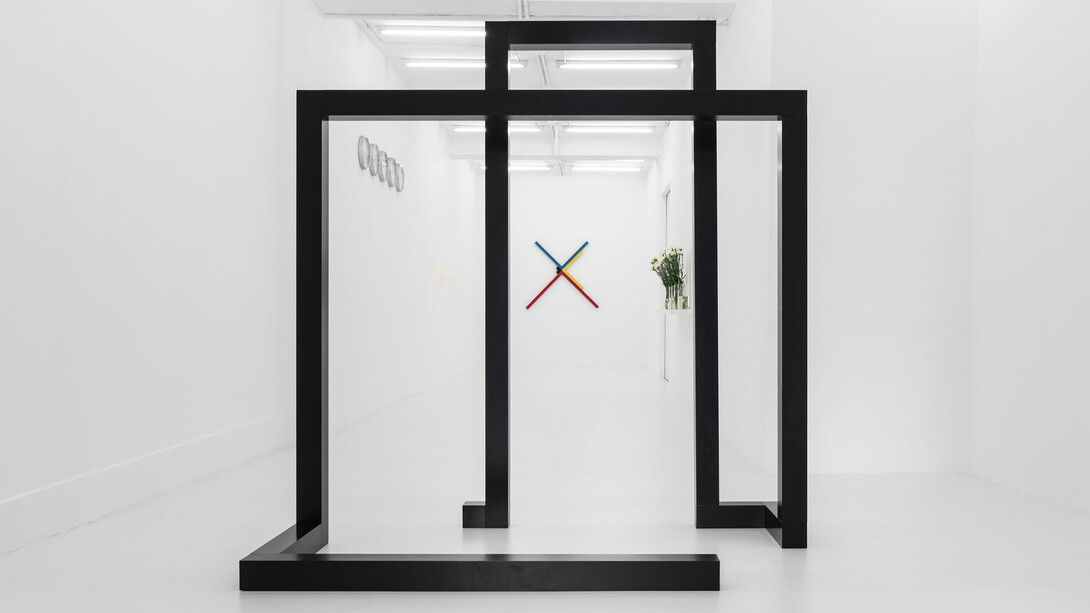
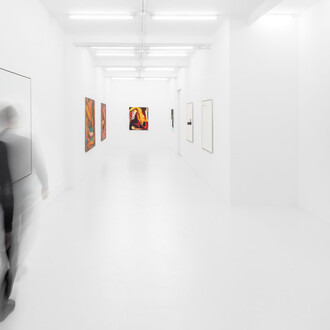
Casado Santapau is pleased to present Espacios de tiempo (Spaces of time), the exhibition by the artistic duo Detanico Lain, formed by Angela Detanico (Brazil, 1974) and Rafael Lain (Brazil, 1973). The exhibition marks the duo’s first presentation in Madrid.
Since 1996, Detanico Lain has developed a practice situated at the intersection of art, language, and systems of signification. Their collaboration brings together two complementary backgrounds, semiotics and linguistics on the one hand, and graphic design and typography on the other, giving rise to a sustained investigation into the codes that organize our experience of the world. Their work questions the apparent neutrality of systems of representation and examines how signs, graphic conventions, and cultural protocols shape our perception of reality.
Interested in structures that exceed the human scale, such as natural cycles, scientific data, astronomical configurations, or philosophical constructions, the artists devise precise methods through which they transform information into form. Language ceases to be solely a means of communication and becomes plastic and conceptual material. Through alternative writing systems, where traditional letters are replaced by objects, quantities, or phenomena, the sign acquires a spatial and physical dimension, shifting into the realm of experience.
Their approach is rooted in the tradition of conceptual art, where the idea precedes and structures form. By reducing visuality to essential elements, such as lines, grids, alphabets, structures, Detanico Lain make evident that all representation is mediated by cultural conventions. This formal economy does not imply austerity, but rather a perceptual intensification: the works require reading, attention, and time.
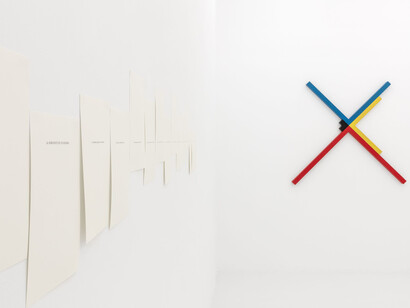
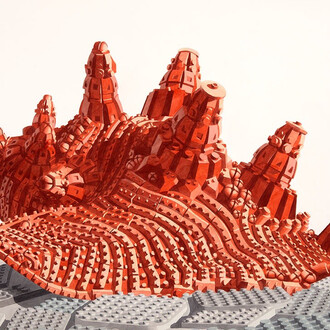
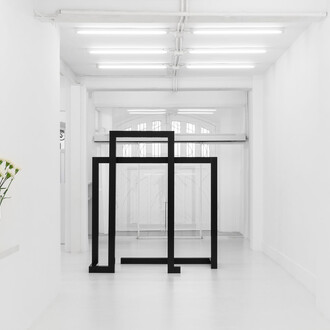
The works brought together in the exhibition develop these questions through different formal approaches. P.e.r.s.p.e.c.t.i.v.a presents geometric configurations that function as structural components of a visual vocabulary in which line, form, and space constitute meaning itself, removed from any narrative dimension. In A.h.o.r.a, time becomes the conceptual axis without resorting to the clock as an object, through animations, diagrams, or projections the work explores how duration can be represented, measured, or written, integrating perception and temporality into the experience.
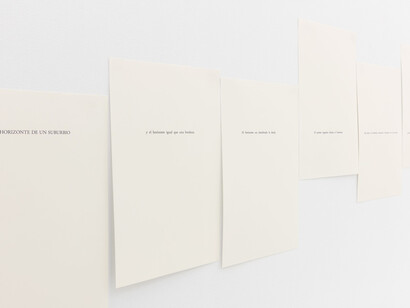
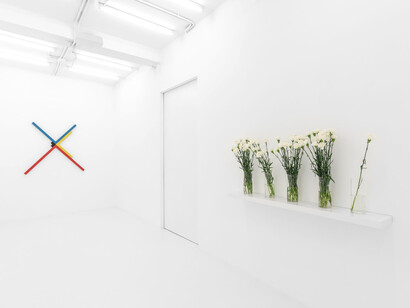
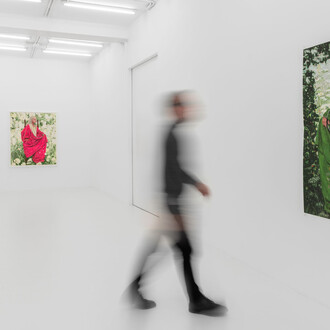
With V.i.s.t.a, several pieces with flowers arranged in vases are organized into alphabetical or conceptual sequences, the ordering of natural elements suggests a visual reading that links nature and symbolic system. In Horizonte, based on pages from books by Jorge Luis Borges in which the word horizonte appears, the artists select and isolate phrases that they arrange on sheets as reading devices. The work takes the horizon as both concept and visual figure, the boundary line between sky and earth that is always visible and unattainable, and employs a procedure of textual selection and erasure akin to concrete poetry, where language not only communicates but also organizes and determines what is visible and what is silenced. M.i.r.a, a composition in painted wood divided into four elements, works with the notion of canto, not as literal sound, but as visual and linguistic fragment. Geometric forms, color, and repetition operate as modular units of an abstract language, referring both to the structure of letters and to systematic patterns of organization.
Taken together, these sculptures and structures connect to a central question in the practice of Detanico Lain, how to remake writing, order, and reading from visual systems that also function as objects. Their work does not aim to represent words, but to create systems in which language, form, and perception intersect, as if each work constituted an autonomous visual grammar. This research resonates in recent projects, such as their current exhibition at FRAC Sud, where they propose installations that connect light, time, flowers, and universe. There, images of blossoming and celestial bodies are juxtaposed in immersive projections that invite reflection on vital and cosmic cycles, expanding the lines of inquiry present in Spaces of time.