English
 Español
 Français
 Deutsch
 Italiano
 Português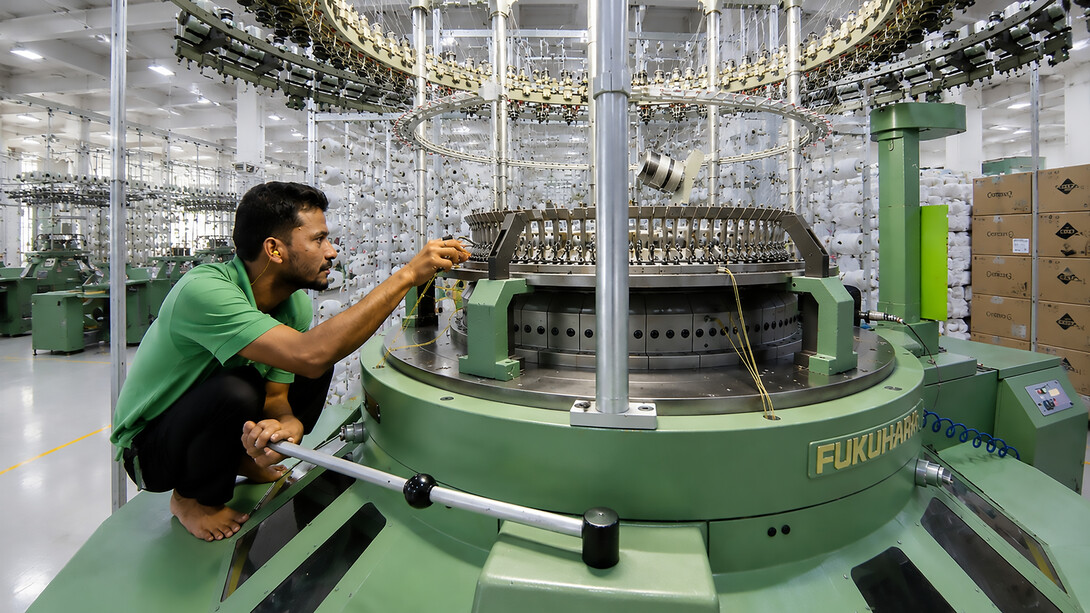
Living in the Western part of the world, many of us carry a set of assumptions about garment production in Asian countries, particularly Bangladesh. These narratives are often shaped by reports on fast fashion, labour conditions, and environmental concerns, most of them written from a Western perspective. What is noticeably less present in this discourse are the voices of those who actually work within the industry in Bangladesh itself and how they understand their work, their conditions, and the global systems they are part of.
This is one of the reasons I wanted to speak with my former colleague, Farzana. We met nearly ten years ago while working at H&M (I was based in Stockholm while she was working in Dhaka, the capital of Bangladesh). Despite the distance, our roles were closely connected. We worked on shared projects, exchanged daily updates, and maintained a steady professional dialogue that gradually developed into a long-lasting friendship. Over the years, we have both changed roles and locations, but the connection formed through that period of collaboration stayed the same.
This conversation is not intended to generalise or to resolve the complexity of global garment production. Rather, it offers a focused glimpse into one professional experience within it. Through Farzana’s perspective, the aim is to add a more grounded discussion.
How did you enter the fashion industry in Bangladesh?
I came to fashion through a genuine fascination with textiles — how fabric is made and how a print or embroidery technique can define an entire season. Bangladesh is the world's second-largest garment exporter, and building a career here means learning at the centre of global manufacturing. That proximity shaped both my curiosity and my ambition.
I started on the merchandising floor managing orders for EU buyers, then spent over twelve years at H&M — first as a print expert, later as a global component developer working across six sourcing regions. Along the way I built costing tools, trained supplier teams, and helped factories align with international sustainability standards.
The experience taught me that the most valuable thing you can bring to this industry is the ability to translate creative vision into something a factory can actually produce — on time, on budget, and at the right quality. That conviction is what drives my consultancy today.
How did you enter the fashion and textile industry?
I came to the fashion industry through a genuine interest in textiles, product development, and manufacturing. Bangladesh has a very strong garment sector — it is the world's second-largest garment exporter — and that proximity shaped both my curiosity and my ambition. I began in junior roles and built my career step by step, gaining experience working with suppliers, factories, and international buyers over time.
Can you describe your background and the kind of work you have been doing?
I spent over twelve years at H&M — first as a print expert, then as a global component developer working across six sourcing regions, including Bangladesh, China, India, Turkey, Indonesia, and Egypt. Before that, I worked in merchandising managing orders for major EU buyers. My work has always sat at the intersection of creativity and operations — coordinating product development, material sourcing, print execution, sustainability compliance, and supplier capability building.
What was most positive about your experience working at H&M?
H&M is known for values around sustainability, inclusion, and continuous improvement – which of those resonated most with me personally.
What does the garment industry look like from where you are based? Farzana: From Dhaka, the industry is all around you. Bangladesh is the world's second-largest garment exporter, and the sector employs millions of people across thousands of factories. It is a dynamic, fast-moving environment where global supply chains are managed on a daily basis. The industry has grown tremendously in sophistication — from basic volume production to innovation, sustainability, and digital transformation.
What does a typical career path look like in garment production or sourcing there?
Usually, people begin in junior roles such as merchandising assistant, production coordinator, or quality support. With experience, they move into merchandising, sourcing, product development, technical management, or leadership positions. The industry offers strong career growth opportunities for people who are hard-working, adaptable, and willing to continuously learn.
When a brand places an order, what does that process look like from your side?
Farzana: The process starts with product development and costing discussions. Once the order is confirmed, we coordinate raw materials, sampling approvals, production planning, and factory execution. Different departments work together closely — merchandising, sourcing, quality, printing, washing, and logistics — to ensure everything runs smoothly and shipments are delivered on time.
What are the most time-sensitive or difficult parts of meeting production deadlines?
Material sourcing and approval timelines are often the most time-sensitive parts. Delays in fabrics, trims, printing approvals, or sample feedback can affect the entire production schedule. Managing multiple processes simultaneously while maintaining quality standards requires strong coordination and teamwork.
How would you describe the structure of garment factories you’ve worked with?
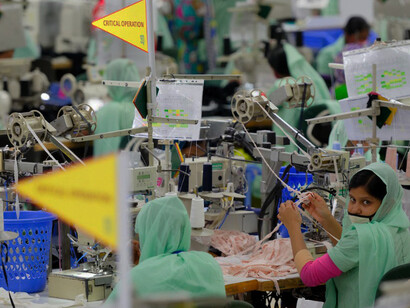
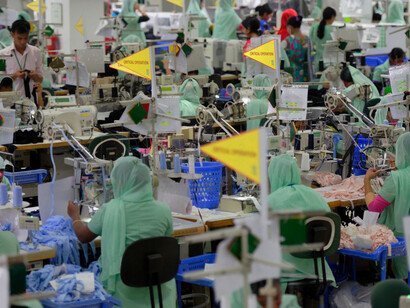
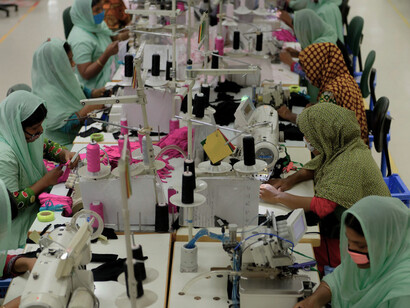
Most factories are highly organised with separate departments for cutting, sewing, printing, washing, finishing, quality control, compliance, and shipment handling. Larger factories now operate with advanced machinery, technical systems, and dedicated compliance teams to meet international standards.
What changes have you observed in working conditions or industry standards over the past years?
There have been significant improvements in workplace safety, compliance, worker awareness, fire safety systems, and factory infrastructure. Sustainability practices and ethical production standards have also become much stronger. Today many factories in Bangladesh are globally recognised for maintaining high environmental and safety standards.
How has production changed in Bangladesh since you started working in the industry?
Production has become much more technology-driven, quality-focused, and sustainability-orientated. Communication with buyers is faster, factories use more modern systems, and there is greater attention to compliance, efficiency, and environmental impact than before.
Are there visible shifts in sustainability or compliance requirements in daily operations?
Yes, definitely. Sustainability and compliance are now part of daily operations. Factories monitor water usage, energy efficiency, waste management, chemical handling, worker safety, and traceability much more carefully than in the past. Buyers also expect stronger transparency throughout the supply chain.
What improvements are still realistically difficult to implement?
Some improvements require large investments, especially advanced sustainable technologies, renewable energy systems, and complete circular production processes. Smaller factories may find these transitions financially challenging, but the industry is moving gradually in that direction.
What parts of factory work are often misunderstood by people outside Bangladesh?
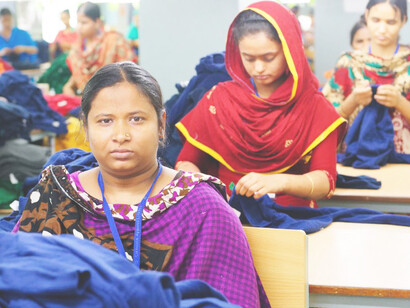
Many people do not realise how technically advanced and highly coordinated garment manufacturing actually is. Producing fashion products requires skilled workers, engineers, technicians, designers, planners, and quality specialists all working together under strict timelines and international requirements.
What is something people in Europe often misunderstand about garment production in Bangladesh?
Farzana: People sometimes assume Bangladesh only offers low-cost production, but the industry has evolved tremendously. Bangladesh now produces high-quality fashion products for many leading global brands and has invested heavily in sustainability, innovation, and compliance.
When you read Western discussions about fashion production, what feels accurate and what feels simplified?
It is accurate that the industry faces challenges around sustainability, deadlines, and global competition. However, discussions are sometimes simplified because they do not fully reflect the complexity of production management or the progress many factories and professionals have made in improving standards and innovation.
What has your experience working with international brands taught you professionally?
Working with international brands taught me the importance of professionalism, communication, problem-solving, quality consistency, and adaptability. It also helped me understand global market expectations and how collaboration across cultures can create strong results.
Right now many brands are removing middle functions between buyers and suppliers to have a more linear process. What is your point of view on this?
I understand why brands are looking to simplify their processes, but removing middle functions carries real risks. Those roles exist because managing production requires deep technical knowledge, cultural understanding, and constant problem-solving on the ground. A buyer in Europe cannot always anticipate a material delay in Bangladesh or a printing challenge at the factory level. The coordination layer is not just administrative — it protects quality, timelines, and relationships. Streamlining is positive, but eliminating expertise entirely often creates bigger problems down the line.
Since the rise of AI and new technologies, how do you see their impact on the textile industry in Bangladesh, especially in comparison to human expertise?
AI and digital tools are already improving efficiency in areas like sampling, forecasting, quality control, and supply chain traceability. These are positive developments. However, textile production still relies heavily on human judgement — reading fabric, assessing embroidery quality, and solving production problems in real time. Technology can support and speed up decisions, but it cannot replace expertise built through years of hands-on experience. The most effective approach is combining new technology with the strong human expertise that already exists here.
What are currently the main differences between the textile markets in Bangladesh and China?
China has a more diversified and technologically advanced textile industry, covering everything from raw fibre production to finished garments with strong vertical integration. Bangladesh is more focused on ready-made garments, particularly knitwear and woven products, and has built its strength on competitive manufacturing, a large skilled workforce, and strong compliance infrastructure. China's costs have risen significantly, which has made Bangladesh more attractive for volume production. However, Bangladesh is now moving beyond cost competitiveness and investing in sustainability, innovation, and product diversification — gradually closing the capability gap.
Bangladesh is currently the second-largest textile manufacturing market in the world, with thousands of brands producing in the country. How do you see the current situation and the next steps for Bangladesh from a political, educational, developmental, and economic perspective?
Bangladesh has achieved remarkable growth, but the next phase requires deliberate investment across several areas. Politically, stable trade policies and continued support for export infrastructure are essential. Educationally, there is a strong need for more specialised training in technical textiles, sustainable production, and digital skills so the workforce can keep pace with industry evolution. From a development perspective, factories need support transitioning toward renewable energy and circular production models. Economically, the industry must diversify its product range and move up the value chain — from basic volume production toward higher-margin, more innovative products. The foundation is strong. The next steps are about building on it strategically.
In your opinion, what is the best way for governments and decision-makers to truly understand the needs and realities of the textile industry in your market today?
The most effective approach is direct engagement — visiting factories, speaking with workers, managers, and technical teams, and listening without assumptions. Policy is often made at a distance from the production floor, which creates gaps between what is legislated and what is practically achievable. Governments should work closely with industry associations, invest in research, and create platforms where factory owners, workers, and professionals can genuinely contribute to policy discussions.
From your perspective, what are the most important shifts the fashion and textile industry should still make to move toward a more sustainable and circular model from the production side?
The most critical shifts are around material choices, chemical management, and end-of-life thinking. The industry needs to accelerate the adoption of sustainable fibres, reduce water and energy consumption at the factory level, and design products with circularity in mind from the very beginning. Brands also need to take genuine responsibility for their supply chains rather than placing the entire compliance burden on suppliers. Traceability, transparency, and shared investment between brands and manufacturers will be essential. Progress is happening, but the pace needs to increase significantly.
What would you want readers in Europe to understand about the clothes they wear?
I would want readers to understand that every garment is the result of teamwork, skill, effort, and dedication from many people across the supply chain. Behind every piece of clothing are professionals working hard to deliver quality products while continuously improving sustainability and ethical standards in the industry.
What part of your work are you most proud of?
I am most proud of contributing to product development and helping transform creative ideas into successful commercial products. I also feel proud when I can support teams through knowledge-sharing, training, and technical guidance.
What this conversation offers is a shared professional perspective shaped by years of working within the same global system from different locations. It brings together two viewpoints connected through collaboration between Stockholm and Dhaka and reflects on garment production as a coordinated process involving many roles, skills, and responsibilities across countries. Rather than drawing broader conclusions, it simply presents one exchange that highlights how closely linked teams operate across distances and how professional experiences can be both local in practice and global in scope.