English
 Español
 Français
 Deutsch
 Italiano
 Português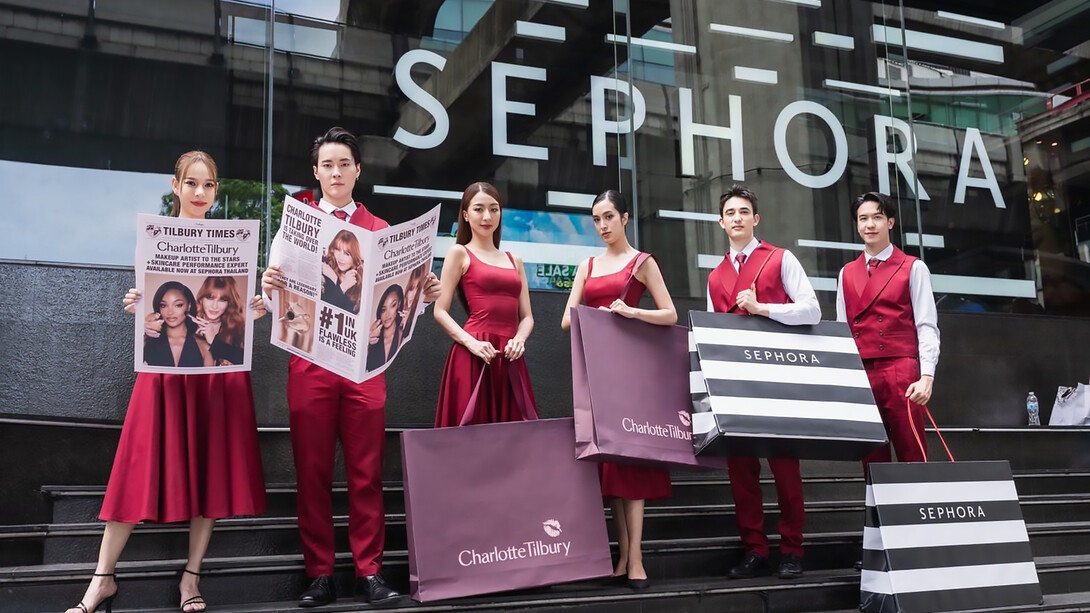
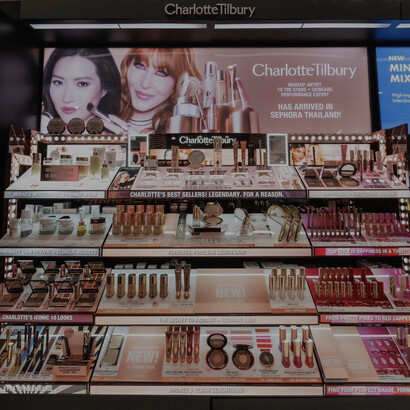
In an era where e-commerce dominates shopping behaviors and AI algorithms curate our cosmetic preferences, the allure of physical retail might seem like a relic of the past. Yet, as demonstrated by the Charlotte Tilbury x Sephora pop-up installation, the future of retail may lie not in obsolescence but in evolution—in immersive, sensory-driven environments that merge fantasy, functionality, and brand narrative. Located within the high-energy corridors of a contemporary shopping mall, this retail activation stands as a beacon of transformation, reflecting not only the ethos of the Charlotte Tilbury brand but also the shifting paradigms of luxury beauty consumption in the 21st century.
The experience economy meets beauty retail: the Charlotte Tilbury brand, founded by the British makeup artist of the same name, has consistently positioned itself at the intersection of old Hollywood glamour and modern empowerment. The brand’s identity is rooted in the belief that makeup is not just about surface-level beauty but about unlocking inner confidence—a mission that has found visual expression in this stunningly designed pop-up experience.
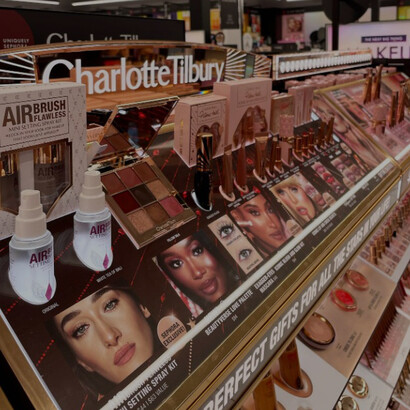
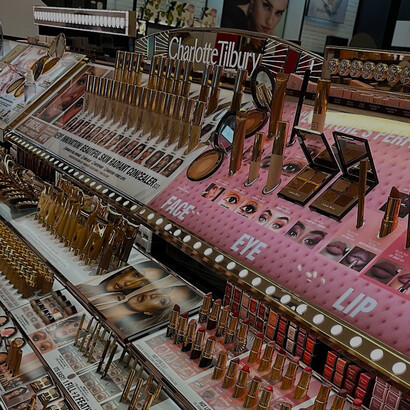
The installation featured in the image is not a typical kiosk or product stand. Instead, it’s an architectural and performative space: a theatrical, tunnel-like structure of concentric black rings with illuminated signage spelling out "CHARLOTTE TILBURY" under the Sephora banner. Visitors pass through this sculptural corridor as though entering a film set or a VIP backstage area, echoing the brand’s cinematic heritage. The entire installation is built to seduce the senses: soft pink lighting, luxurious seating, polished rose-gold surfaces, and glamorous makeup stations create an atmosphere that is both inviting and aspirational.
This move into experiential retail aligns with the broader "experience economy," a term coined by Pine and Gilmore in 1998 but now more relevant than ever. In this economy, brands don’t just sell products—they stage experiences. For Charlotte Tilbury, the promise is clear: step into this space, and you are no longer merely shopping; you are being transformed.
Spatial semiotics and emotional architecture: The design of the Charlotte Tilbury pop-up can be analyzed through the lens of spatial semiotics—the idea that physical environments can communicate meaning. The tunnel form, open yet directional, subtly invites a journey: a transformation from the external world into a curated realm of beauty. The circular rings create rhythm and progression, guiding the visitor toward an inner sanctum of makeup artistry. It is a pilgrimage of glamor, anchored in spatial storytelling.
Moreover, the layout facilitates not just browsing but interaction. Trained beauty advisors engage customers in personalized consultations; makeup is applied in real-time, with digital mirrors and lighting mimicking various environments—from red carpets to daylight. This tactile, visual, and emotional engagement contrasts sharply with the disembodied nature of online beauty shopping, making the pop-up a powerful site of affective consumer connection.
Retail as Theatre: Performance and Persona: One of the most compelling dimensions of this installation is its theatrical quality. Staff are not merely salespeople—they perform roles akin to makeup artists, stylists, and even confidence coaches. Customers themselves become participants in this drama, their transformations happening in public view, heightening the sense of occasion and social validation.
This theatricality aligns with the broader conceptualization of retail as performance, a theme discussed in cultural studies and fashion theory. As Joanne Entwistle notes, fashion spaces often function as stages where identity is both displayed and shaped. In the Charlotte Tilbury pop-up, this becomes literal: consumers act out beauty fantasies in front of an audience, framed by glamorous surroundings and encouraged by brand ambassadors who reinforce the narrative of empowerment and luxury.
Inclusivity in action: it’s also notable that the crowd gathered in the image includes diverse participants: children, families, and women of various backgrounds. This inclusivity aligns with both Sephora’s and Charlotte Tilbury’s branding efforts toward accessibility and representation in beauty. By positioning the experience in a public, high-traffic area—rather than an exclusive showroom—the brand democratizes luxury, making the glamour of Tilbury products available to passersby, not just high-end clientele.
This tension between aspiration and accessibility is key to the brand’s continued relevance. The pop-up acts as both advertisement and environment, allowing customers to physically inhabit the Tilbury fantasy, even if only momentarily. Through clever design, inclusive engagement, and strategic location, the pop-up becomes an egalitarian stage where anyone can be the star.
The role of technology and interactivity, though not overtly visible in the image, is important; many modern beauty pop-ups incorporate technology such as AR mirrors, personalized QR code activations, and digital skin analysis tools. These interactive features further deepen engagement and data collection while bridging the gap between physical and digital commerce. Charlotte Tilbury’s brand has been at the forefront of tech-beauty integration, from AI-based shade matching online to interactive e-commerce storytelling.
It is likely that this pop-up also serves as a data point for future campaigns: capturing foot traffic analytics, customer preferences, and dwell times—crucial metrics for optimizing future launches. In this way, the installation is not just experiential but informational, feeding consumer insights back into a larger omnichannel strategy.
A blueprint for the future of fashion and beauty retail, the Charlotte Tilbury x Sephora pop-up should be understood not simply as a commercial venture, but as a cultural artifact—a glimpse into how fashion and beauty brands are rewriting the rules of physical presence in a digital world. The combination of spectacle, story, and service forms a blueprint for fashion-forward retail moving forward. As traditional department stores struggle and online competition intensifies, this model provides a sustainable path forward: one based on meaning, memory, and the emotional resonance of place.
Moreover, for designers and fashion researchers, installations like this prompt broader questions: How can fashion spaces serve as interactive artworks? What does it mean to design for feeling rather than just function? How can temporary spaces leave lasting impressions?
In its meticulous curation, inviting design, and transformative ambition, the Charlotte Tilbury x Sephora pop-up exemplifies the power of immersive retail. It is not just a beauty stand—it is an embodiment of a brand philosophy, a communal experience, and a theatrical stage. In an increasingly digital world, it reminds us that the physical—when done right—still holds a magic that no screen can replicate.
As fashion and beauty industries continue to converge with technology, media, and performance art, such installations may well become the new temples of consumer culture. And if they continue to enchant like this one does, perhaps the future of physical retail is not only secure but also radiant.