English
 Español
 Français
 Deutsch
 Italiano
 Português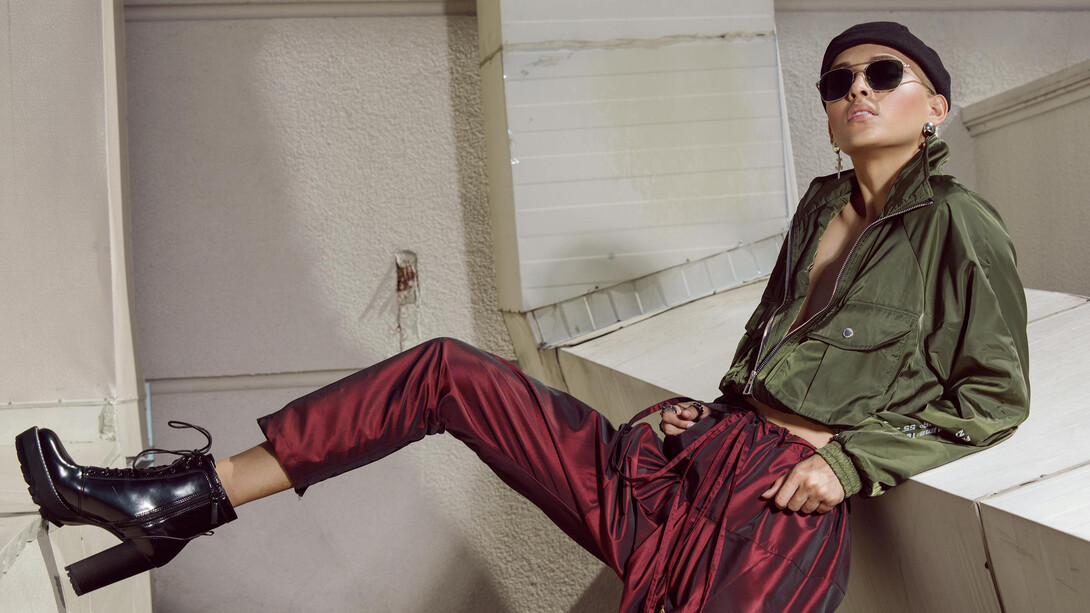
In a world dominated by patriarchal perspectives, the female gaze has emerged as a critical concept challenging how women are portrayed in the media. This concept, once limited to academic discussion in film studies, has found new life on social media platforms like TikTok, where users, particularly women and LGBTQ+ individuals, are redefining what it means to see and be seen beyond male objectification.
Beyond definitions: understanding the female gaze
The female gaze plays an important role in addressing the issue of female sexualization in society, films, and social media. The concept originated in film studies but has garnered renewed interest from feminists and queer theorists who criticize the portrayal of women in various media. One of the main obstacles that the female gaze tackles is the prevention of the oversexualization of women by men.
On the other hand, the male gaze is seen as a dominant narrative that spreads worldwide and reduces women to objects. As Lobo (2018) explains, the male gaze brings attention to the female body, not the woman in question; they are portrayed as people meant to be seen but not heard. In contrast, the female gaze can be seen as the opposite, "a path for women to claim control over their sexuality (body), as well as recreate masculine views of women" (Bowers, 1990).
As a matter of fact, "the female gaze has no true definition; it is currently seen as a feminist adaptation of the male gaze" (Kadeline, 2021). It is a term that can be defined by people in the way that suits them most.
Digital ethnography
To investigate how the female gaze is understood in contemporary culture, it would be good to focus on social media platforms that have allowed people to express themselves through many sorts of skills and interests they have, with users sharing videos with their preferred communities, such as TikTok.
Through analyzing videos where creators give explanations and opinions on the female gaze, I found varied interpretations. A creator stated that the "female gaze seeks to emphasize rather than objectify; it is a way for women to reclaim ownership over their body, and it is more emotional and intimate." They emphasize that the female gaze is not an aesthetic but about "asserting our rights to self-identity, being, and acting how we want" instead of trying to fit into predetermined molds.
During the summer of 2021, a trend emerged where creators on TikTok compared their appearance when "dressing for the male gaze" versus "dressing for the female gaze." There are over 50,000 videos under one single sound used for the sole purpose of comparing the female gaze to the male gaze. This reveals fascinating patterns in how users conceptualize these opposing perspectives. When presenting themselves through the female gaze, many users adopted less conventionally feminine styles: baggy clothes, vibrant hair colors, and fashion choices that prioritized comfort and self-expression over traditional attractiveness.
This evolution reflects a generational shift in how identity and gender are performed in digital spaces. For younger users, especially, TikTok offers not just entertainment but a stage for cultural critique, allowing them to challenge societal standards and contribute to redefining beauty, desire, and gender roles in real time. The platform becomes not only a mirror but also a canvas—one where collective values are reshaped post by post.
The male gaze persists
Despite growing awareness of the female gaze, the male gaze continues to dominate social discourse. One viral TikTok exchange exemplifies this tension: a male creator criticized women's gym attire for making gyms "appear like a strip club," implying women dress revealingly to attract male attention. A response video highlighted how this perspective demonstrates the pervasiveness of the male gaze—women in non-sexual environments are still viewed as performing for men, while men face no such scrutiny for similar clothing choices.
This double standard reflects what artist @ninaelcaos captured in her viral digital drawing depicting how the male gaze feels to women. Comments under her artwork reveal the visceral impact: "Feels like I'm being hunted" and "The feeling of my stomach dropping when they give me the 'look,' just hoping they won't come up to me." These reactions demonstrate how the male gaze extends beyond abstract theory into lived experience.
Conclusion
The female gaze represents an important attempt to reclaim control over how women's bodies and experiences are represented. Yet as this analysis of TikTok trends reveals, translating theoretical concepts into popular discourse can lead to oversimplification or misinterpretation.
The trend of "dressing for the female gaze" may help some feel empowered, but it fails to fully resolve the complexities of visual representation and objectification. Rather than definitively answering what the female gaze is, these social media expressions highlight the ongoing struggle to find modes of representation that truly liberate rather than simply invert existing power structures.
References
Bowers, S.R., 1990. Medusa and the female gaze. NWSA Journal, pp.217-235.
Kabeline, J. (2021). Understanding The Female Gaze in Media, Jemima Kabeline, Medium.
Lobo, C.V., 2018. In Search of the Female Gaze.