English
 Español
 Français
 Deutsch
 Italiano
 Português
Since its founding, Off-White has operated less as a conventional fashion house and more as a cultural translation system—one that moves fluidly between street culture, luxury semiotics, music, and political gesture. Under the creative direction of Ib Kamara, the brand has entered a distinctly new phase: one defined not by quotation marks or irony, but by emotion, romance, and interiority.
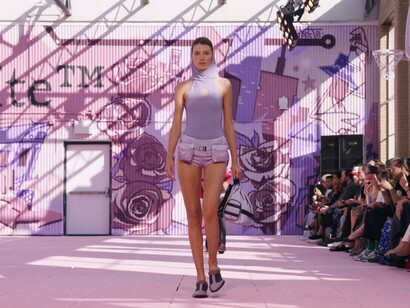
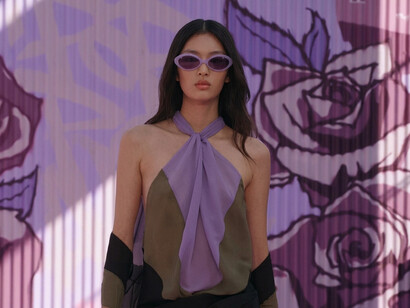
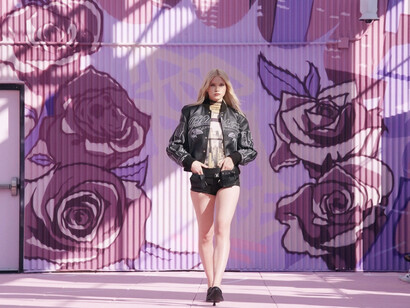
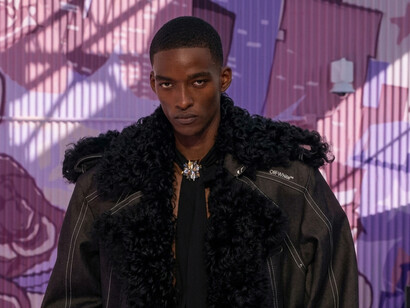
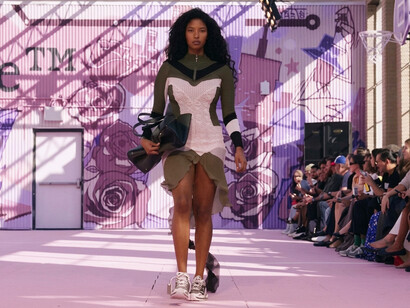
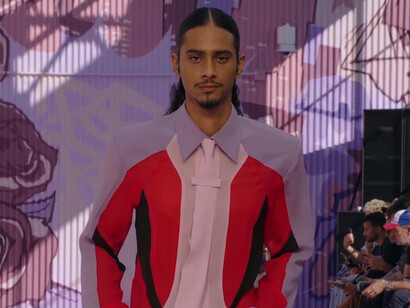
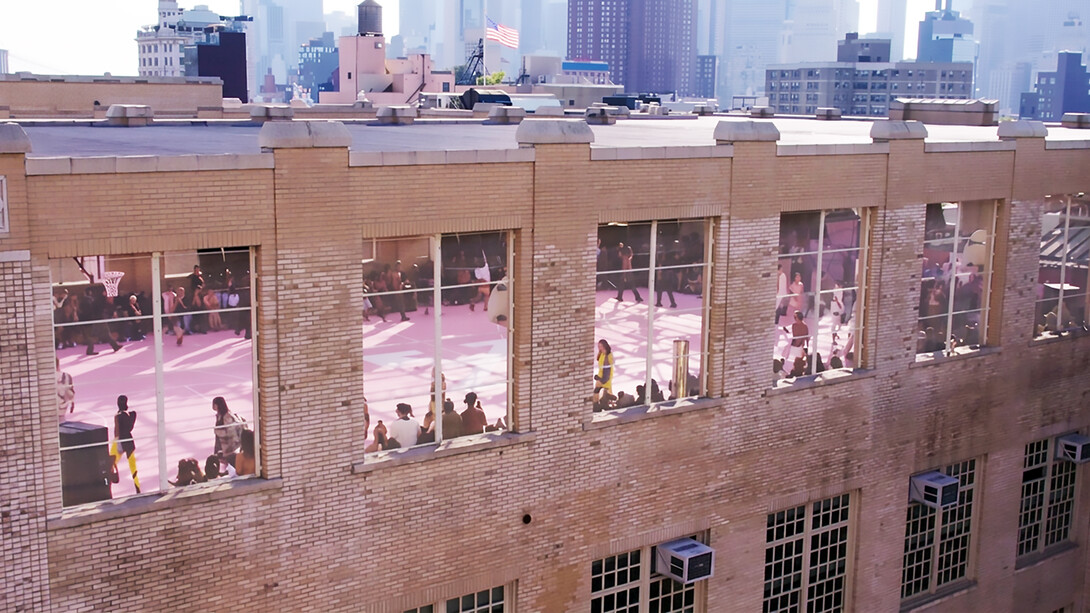
The SS26 show titled “Pop Romance” marked a pivotal moment in this evolution. Rather than relying on the overt graphic aggression or architectural street codes historically associated with the brand, Kamara presented a collection steeped in saturated color, melodic rhythm, and an almost vulnerable sensuality. It was pop not as a spectacle, but as emotional memory—romance not as nostalgia, but as tension.
This article argues that “Pop Romance” functions as a conceptual prelude to a more radical transformation that is likely to crystallize at Off-White’s FW26 Paris fashion show. Where SS26 foregrounded softness, chromatic excess, and expressive fluidity, FW26 is poised to translate these affective impulses into tailoring, structure, and material discipline. In doing so, Kamara may be constructing a new grammar for Off-White—one that fuses emotional openness with sartorial rigor.
Ib Kamara: styling as world-building
To understand the trajectory from SS26 to FW26, it is essential to grasp Ib Kamara’s creative logic. Unlike designers trained primarily through atelier systems, Kamara’s background as a stylist and editor has shaped his approach to fashion as image choreography. His collections rarely function as isolated garments; instead, they operate as scenes, moods, or emotional environments.
In “Pop R;omance,” this sensibility manifested through deliberate styling dissonance: tailored jackets softened by pastel hues, body-conscious silhouettes destabilized by exaggerated proportions, and references to pop culture reframed as intimate rather than ironic. Kamara’s pop is not commercial pop—it is felt pop, filtered through memory, music, and youth culture.
Crucially, Kamara does not reject structure; he delays it. SS26 suspended the body in a state of romantic flux, allowing color, texture, and gesture to lead. FW26, by contrast, is likely to ask a harder question: What happens when emotion must hold its shape?
“Pop romance” SS26: color, rhythm, and soft power
The SS26 collection announced a decisive shift in Off-White’s visual priorities. Color functioned as the primary narrative device: cherry reds, electric pinks, lavender blues, and glossed blacks created a palette that oscillated between euphoria and melancholy. These tones were not applied decoratively; they were emotional signifiers, echoing the logic of pop music where melody often carries more meaning than lyrics.
Silhouettes in SS26 leaned toward fluidity. Jackets were elongated, trousers draped rather than cut, and layers appeared to slide over the body rather than frame it. This softness was strategic. By loosening structure, Kamara allowed garments to behave like sound—responsive, atmospheric, and unstable.
Yet beneath this apparent ease lay a clear directional intent: SS26 was not about abandoning tailoring but about resetting its emotional temperature. The tailoring was present but muted—waiting to be reasserted.
From summer emotion to winter discipline
Fashion seasons are not merely climatic shifts; they are conceptual transitions. Historically, Off-White has treated winter collections as moments of ideological clarity—where the brand’s visual codes harden and its statements become more declarative.
FW26 is therefore likely to operate as the structural answer to SS26’s emotional proposition. Where “Pop Romance” asked how clothes can feel, FW26 may ask how those feelings are contained, protected, and formalized.
This does not suggest a return to severity. Instead, it points toward emotional tailoring—a mode of construction in which classic forms are subtly distorted by affect.
Predicting FW26 tailoring: precision with vulnerability
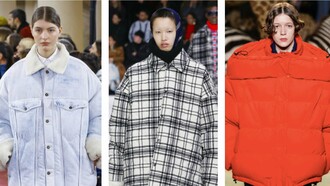
One of the most probable developments in FW26 is a renewed emphasis on tailored outerwear. Expect long wool coats, double-breasted jackets, and sharply cut trousers—altered, yet through unexpected proportion shifts. Shoulders may appear slightly dropped, waists subtly displaced, or lapels exaggerated to create a sense of emotional imbalance.
Kamara is unlikely to pursue Savile Row perfection. Instead, tailoring may function as emotional architecture: garments that hold the body while allowing room for psychological movement. Darting could become expressive rather than corrective; seams may be exposed or repositioned to reveal construction as narrative.
Importantly, tailoring in FW26 will likely absorb the chromatic language of SS26. Rather than traditional winter neutrals, we can anticipate deep oxbloods, midnight blues, saturated purples, and lacquered blacks—colors that retain romance while embracing gravity.
Material strategy: texture as memory
If SS26 used color as sound, FW26 may use texture as memory. Materials are likely to thicken, deepen, and resist. Wool gabardine, felted cashmere, brushed mohair, and technical blends could dominate, creating surfaces that feel protective yet tactile.
Leather—long a staple of Off-White—may return in a more sculptural form: molded coats, paneled trousers, or hybrid garments that blur the line between armor and intimacy. The key shift will be from fluid drape to controlled weight, signaling a move from romantic exposure to emotional containment.
This material evolution aligns with Kamara’s broader vision: fashion as a second skin that negotiates vulnerability and defense.
Graphic language: from loud symbols to quiet codes
Under Kamara, Off-White’s graphic language has steadily receded from overt sloganism. FW26 is unlikely to resurrect quotation marks or aggressive typography. Instead, branding may appear coded, embedded, or abstracted—woven into jacquards, embossed into leather, or suggested through recurring motifs rather than declared outright.
This quieting of graphics does not weaken brand identity; it matures it. In a landscape oversaturated with logos, restraint becomes a statement. Off-White’s future lies not in shouting, but in resonating.
Gender, romance, and the politics of softness
A defining characteristic of Kamara’s Off-White is its approach to gender. SS26 blurred distinctions through silhouette and styling rather than explicit messaging. FW26 is likely to continue this strategy, presenting garments that resist easy categorization while maintaining formal integrity.
Tailored pieces may appear on bodies styled without traditional gender markers; coats may close ambiguously; trousers may borrow from both menswear and womenswear traditions. Romance here is not sentimental—it is political softness, a refusal of rigidity in a time of cultural hardening.
In this sense, FW26 could position Off-White as a leader in post-gender tailoring—not through provocation, but through quiet confidence.
Paris as context: refinement without assimilation
Presenting FW26 in Paris carries symbolic weight. Paris represents fashion’s most codified language of tailoring, luxury, and heritage. Kamara’s challenge—and opportunity—is to engage with Parisian precision without assimilating into it.
Rather than mimicking French tailoring traditions, Off-White is likely to bend them. Expect references to classic forms—trench coats, suiting, and overcoats—but filtered through Kamara’s diasporic, music-inflected lens. The result may be a collection that feels disciplined yet emotionally charged, Parisian yet uncontainable.
Toward a new Off-White grammar
“Pop Romance” was not an endpoint; it was a declaration of emotional intent. FW26 promises to be the structural articulation of that intent—a collection where feeling meets form, and softness learns to stand upright.
Under Ib Kamara, Off-White is evolving from a brand defined by disruption into one defined by emotional intelligence. Its future lies not in rejecting tailoring, luxury, or tradition, but in reprogramming them through the lens of contemporary affect.
If SS26 taught us how Off-White feels, FW26 may show us how it holds. And in that holding—careful, complex, and unresolved—the brand may finally articulate its most mature identity yet.