English
 Español
 Français
 Deutsch
 Italiano
 Português
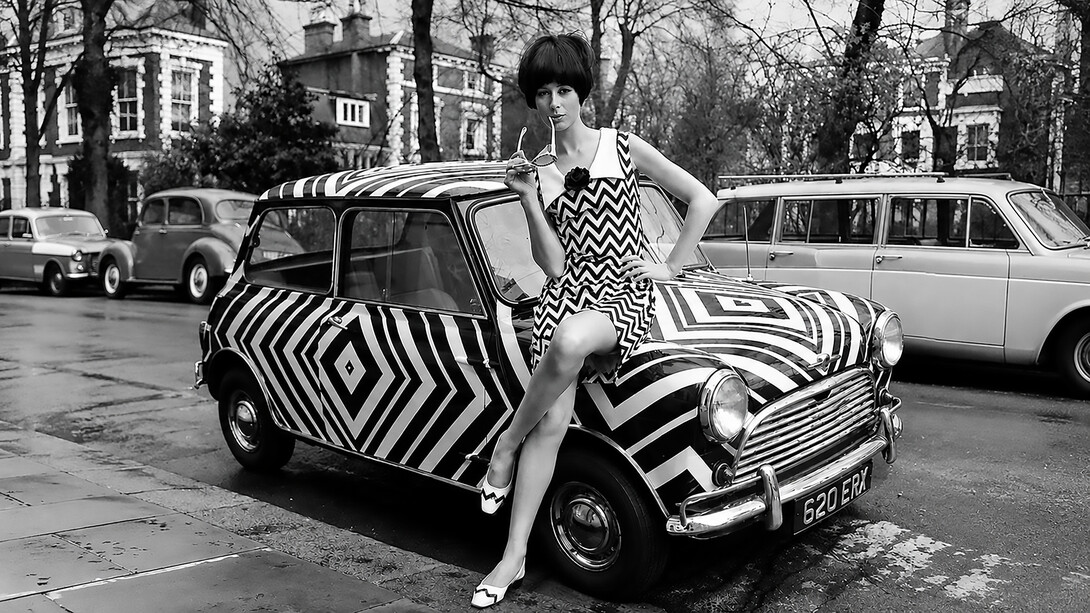
The 1960s marked one of the most radical ruptures in modern fashion history—a decade where youth culture, technology, and social change converged to redefine how clothing could look, move, and signify identity. At the heart of this transformation were two intertwined aesthetics: the Mod revolution in London and the Space Age movement emerging across Europe, both of which rejected tradition in favour of speed, geometry, and futurity.
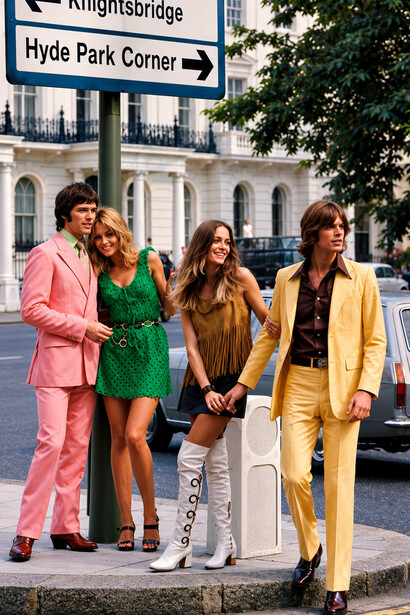
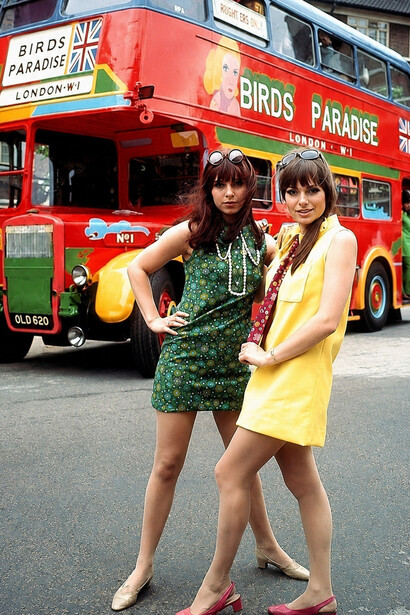
The Mod movement originated in post-war Britain, shaped by a new generation of urban youth no longer bound by the rigid class codes of their parents. "Mod", short for "modernist", was not just a style but a lifestyle rooted in music, scooters, nightlife, and a pursuit of sharp, clean aesthetics.
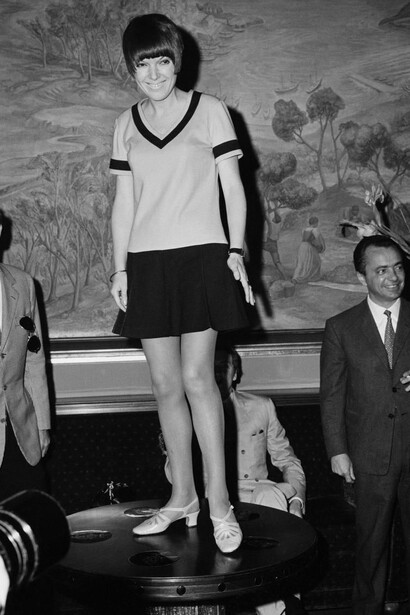
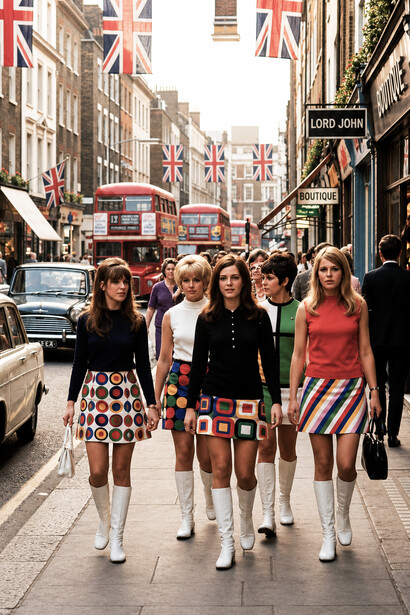
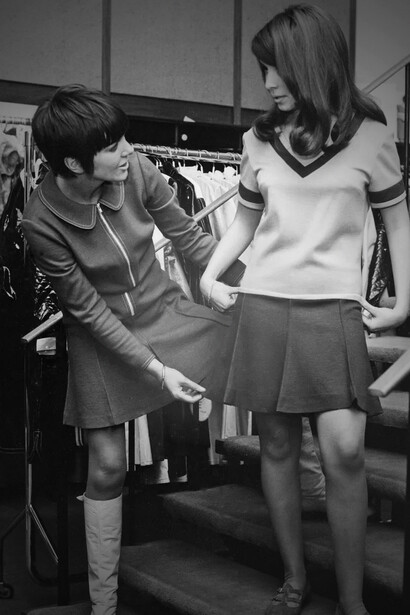
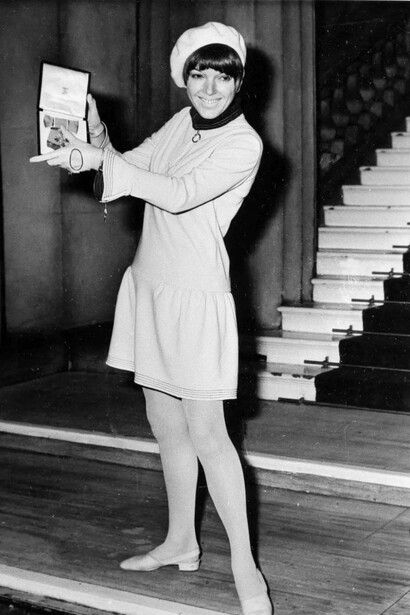
Influenced by jazz, American R&B, and Italian tailoring, Mod fashion embraced slim silhouettes, tailored suits, mini skirts, and bold graphic patterns. Designers such as Mary Quant became central figures in this shift, popularising the miniskirt as a symbol of liberation, youth, and sexual autonomy. Clothing became less about tradition and more about movement, energy, and self-definition.
In parallel, a more futuristic vision of fashion was emerging on the continent. The Space Age aesthetic, championed by designers such as André Courrèges, Pierre Cardin, and Paco Rabanne, reflected humanity’s fascination with science, technology, and the race to the moon. The body was reimagined through geometric cuts, synthetic materials, and sculptural forms that seemed to belong less to Earth and more to an imagined future. Vinyl, plastic, aluminium, and metallic fabrics replaced wool and cotton, marking a decisive break from natural materials and traditional craftsmanship.
Unlike previous eras of fashion, where garments referenced history or nature, Space Age design looked forward—toward satellites, spacecraft, and an increasingly technological world. Courrèges introduced white, structured ensembles with clean lines and helmet-like accessories that dissolved the boundary between clothing and object. Cardin pushed this further with unisex designs and architectural silhouettes that treated the body as a geometric form rather than a natural shape.
What connects Mod and Space Age fashion is their shared rejection of the past. Both movements embraced youth as a cultural force, positioning clothing as a tool for identity rather than inheritance. The body was no longer something to be concealed or idealised but a surface for experimentation, expression, and abstraction. Mini skirts redefined proportions, while futuristic silhouettes dissolved the body into form and structure.
The influence of technology during this period cannot be overstated. The 1960s were defined by rapid advancements in aviation, space exploration, and industrial design, all of which filtered into fashion’s visual language. The Apollo moon landing in 1969 became a cultural climax for Space Age aesthetics, reinforcing the idea that the future was no longer distant but imminent. Clothing responded with metallic finishes, modular construction, and experimental materials that mirrored the sleekness of machines and spacecraft.
At the same time, photography and mass media played a crucial role in amplifying these aesthetics. Fashion was no longer confined to elite spaces; it was circulated through magazines, television, and advertising, creating a global visual culture of modernity.
Despite their differences in tone, Mod and Space Age fashion shared a conceptual foundation: the desire to break from tradition and reimagine the relationship between body, clothing, and environment. Both movements challenged the idea that fashion must be rooted in history or craftsmanship alone. Instead, they proposed clothing as forward-looking, experimental, and deeply attuned to the cultural energy of its time.
Today, the legacy of the 1960s continues to resonate across contemporary design. The clean lines of Mod tailoring reappear in minimalist fashion, while Space Age influences persist in the ongoing fascination with technical fabrics, digital aesthetics, and futuristic silhouettes. In many ways, these movements established a visual vocabulary of modernity that continues to be reinterpreted through cycles of nostalgia and innovation.
In contemporary fashion, the legacy of the Mod and Space Age movements continues to surface in the work of designers who reinterpret their codes rather than simply revive their aesthetics. The precision and youthful sharpness of Mod style can be seen in the silhouettes of designers such as Miuccia Prada and Jonathan Anderson, who often explore uniform-like dressing, reduced forms, and a tension between restraint and disruption.
At the same time, the Space Age vision has been reimagined through designers such as Balenciaga under Demna, contemporary reinterpretations of Paco Rabanne, and Iris van Herpen, whose work pushes futuristic construction into sculptural and technologically driven territories.
Beyond fashion itself, both movements were strongly shaped—and amplified—by cinema, photography, and pop culture imagery. Films such as Blow-Up (1966) captured the Mod spirit of London youth culture, translating its tailoring, scooters, and club scenes into a global visual language of urban cool.
Meanwhile, science fiction cinema of the same era, including 2001: A Space Odyssey (1968), helped define the visual grammar of Space Age fashion: minimal interiors, uniformed bodies, and a disciplined vision of the future that designers directly translated into garments. Even earlier cult references such as Barbarella (1968) contributed to a hyper-stylised futurism where sexuality, technology, and costume merged into a new aesthetic vocabulary.
Across these interpretations, what persists is not nostalgia but a fascination with futurity. Metallic surfaces, synthetic materials, and engineered silhouettes continue to signal a desire to move beyond the past while imagining alternative futures. In this sense, both Mod and Space Age aesthetics remain active reference points—continuously reshaped by fashion and media to reflect each new cultural moment in which style turns again toward speed, technology, and reinvention.
Ultimately, the Mod revolution and Space Age revival represent more than stylistic shifts. They mark a fundamental transformation in how fashion understands time. Instead of looking backward for inspiration, they turned decisively toward the future, redefining clothing as a space for experimentation, freedom, and imagination.