English
 Español
 Français
 Deutsch
 Italiano
 Português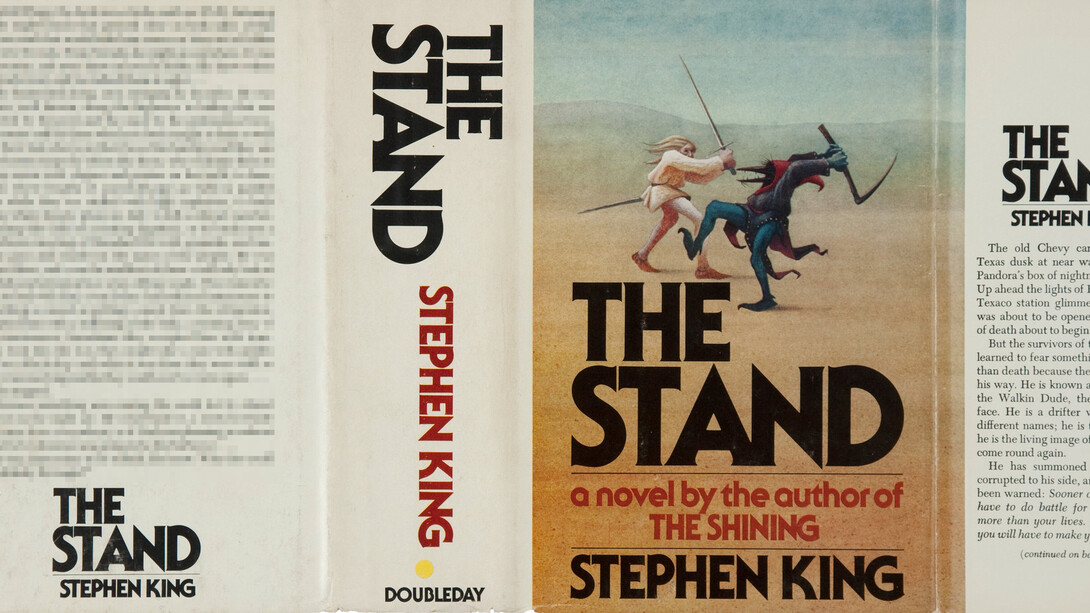
I recently had the opportunity to sit down with author Bev Vincent1 on my podcast All Things Unexplained and our conversation quickly turned into something deeper than a typical author interview.
Vincent is well known in the Stephen King community. He’s written books like The Dark Tower Companion and Stephen King: His Life, Work, and Influences, along with dozens of short stories appearing in publications like Alfred Hitchcock’s Mystery Magazine and Ellery Queen’s Mystery Magazine. His work has also been nominated for major awards, including the Bram Stoker Award and the Edgar Award.
But what fascinated me most during our conversation wasn’t just Vincent’s career—it was how his writing interacts with the larger Stephen King multiverse, particularly The Stand.
And how differently that story lands today.
Discovering Stephen King in the early internet era
Vincent told me his connection to the Stephen King world actually began in the early days of the internet.
Back in the 1990s, he spent time on Usenet, which functioned much like Reddit does today. One discussion group, alt. books Stephen King, became a gathering place for fans.
People would ask questions about King’s novels—details about characters, references, obscure connections—and Vincent developed a reputation for being the person who could track down the answers. Eventually, my publishers noticed.
They began feeding him news about upcoming books and appearances so he could share it with the community. That reputation ultimately led to a major role in the King world when Cemetery Dance magazine asked him to take over their Stephen King news column.
He’s been contributing ever since.
My own entry point: “Lockdown”
I first reached out to Vincent after listening to the anthology The End of the World As We Know It, a collection of stories set in the universe of The Stand.
One story stood out to me immediately: “Lockdown.”
It stayed with me.
The characters felt real, the scenario felt plausible, and when the story ended, I actually felt disappointed—because I wanted to spend more time in that world.
That’s when I decided to find out who wrote that story. As it turns out, that person is Bev Vincent, and he agreed to have a chat with me on All Things Unexplained!
An island trying to survive the apocalypse
“Lockdown” takes place during the early timeline of The Stand, when the deadly superflu known as Captain Trips begins spreading across the world.
Vincent imagined a scenario that fascinated me: what if a group of people could survive without immunity—not because they were chosen, but because they were isolated?
His solution was an island community off the coast of Maine.
The residents already live semi-self-sufficient lives. They grow food, stock supplies, and prepare for harsh winters when travel becomes difficult.
When they begin hearing about the virus spreading across the mainland, they make a simple but brutal decision:
No one from the mainland will be allowed onto the island.
It’s not about cruelty.
It’s about survival.
But that decision leads to increasingly difficult moral questions.
How far would ordinary people go to protect their community?
Reading The Stand after COVID
During our conversation, I told Vincent something I’ve thought about often.
I first experienced The Stand through the 1990s miniseries when I was younger. But when I finally read the full novel after COVID, the story hit me very differently.
Suddenly, by the early chapters, it didn’t feel like science fiction.
They felt familiar.
The panic. The rumors. The uncertainty about who was safe and who wasn’t.
Vincent told me that COVID absolutely influenced his approach to writing “Lockdown.” He and his wife experienced the same isolation that many of us did, and that reality shaped the story’s emotional core.
In other words, the story wasn’t just inspired by The Stand.
It was shaped by the world we actually lived through.
Dreams, destiny, and the moral spectrum
One of the most fascinating parts of The Stand is the dream phenomenon.
Survivors experience visions pulling them in one of two directions:
Toward Mother Abagail, representing rebuilding and order
Toward Randall Flagg, representing chaos and power.
Vincent shared an idea he used while writing his story: the people who dream might be the ones who are actually immune.
On the island in “Lockdown,” only two people experience the dreams.
That raises an unsettling question: if someone dreams about Randall Flagg, does that mean they’re already morally compromised?
Vincent’s answer was nuanced. Not necessarily evil—but perhaps more inclined toward selfishness, freedom without rules, or personal ambition.
It’s less about good versus evil and more about where someone falls along a moral spectrum.
What really makes Stephen King’s stories work
As we talked, I kept coming back to the same realization.
Stephen King’s stories work not because of monsters, ghosts, or supernatural forces.
They work because of the people.
Whether it’s the survivors of The Stand, the isolated town in Under the Dome, or the haunted hotel in The Shining, King’s characters always feel like ordinary people placed under extraordinary pressure.
Vincent put it simply: when readers spend hundreds of pages with these characters, they start to feel like friends.
That’s why the stories linger long after the final page.
Why stories about isolation still matter
Another theme we explored was isolation.
Many of King’s stories—from ’Salem’s Lot to Storm of the Century to The Shining—place characters in environments cut off from the outside world.
“Lockdown” follows the same pattern.
But today, isolation doesn’t feel like a distant horror trope.
For many of us, it feels like something we’ve already experienced.
And that might be why stories like The Stand continue to resonate decades after they were written.
The Stephen King Multiverse
One of the most fun parts of the conversation was exploring how interconnected King’s works really are.
Characters, towns, and even entire realities often overlap across his novels. Derry, Castle Rock, the Dark Tower universe, and many other threads connect stories that might initially appear unrelated.
Entire books—and even academic papers—have been written about the structure of this interconnected world.
And writers like Bev Vincent continue to expand that universe through their own stories.
Why horror still matters
At the end of our conversation, one idea stuck with me.
The scariest thing in most Stephen King stories isn’t the supernatural. It’s other people.
The monsters may be cosmic forces, ancient evils, or supernatural beings. But the real tension often comes from how human beings react when the world falls apart.
Fear. Power. Isolation.
And the choices we make when survival is on the line.
Notes
1 Bev Vincent, official website.