English
 Español
 Français
 Deutsch
 Italiano
 Português
If you read my articles, you’ll notice that I’m largely against AI. So, my confession here may come as a surprise: I used AI in my short film, and I think it was a mistake. But here I’ll explain why I decided to use it, and why I regret that decision.
Although I’m an Smedia (National Student Media Awards) Award winner, my last year in college wasn’t easy. My final-year project was selected for production, and I got my very first opportunity to write and direct a short film.
I had written a simple script that I could film in a public park, with a small cast and crew. In my head, there was nothing that could go wrong with such an appealing story. I like to think that the fact my project was selected through an in-class pitching process proves that it had potential.
The story was about a man who had killed his partner and was trying to overcome the harsh reality of what he had done through a dialogue with the ghost of his victim. During the hallucinations, he eventually understands what a monster he is. An idea inspired by Shutter Island, with the cinematography of The Tree of Life. Brilliant, no? That’s what I thought.
So, what was the problem, then?
My very low-budget short film was doomed to failure because the producer assigned to it didn’t book the right equipment, and I only found out when I was on set.
Did I get upset? Yes, of course. It was a small but wonderful opportunity to develop something I believed in. And although it didn’t turn out the way I wanted, I still succeeded in my failure.
You’re probably wondering how.
In my first meeting with my lecturer, I explained that we didn’t have enough footage to put the short film together. I explained that this was partly because the producer wasn’t booking the cameras and taking care of other necessary arrangements.
Due to the deadline and the conditions set for producing the project, I wouldn’t get a second chance to film it again. Since I still had to submit a final project, despite not having enough footage, I proposed to my lecturer that I submit a trailer instead.
After hearing and assessing all the information, including feedback from my other colleagues, she agreed.
Later, I received feedback saying that I had excellent problem-solving skills. Not only that, but she was surprised by the fact that, while the other groups had experienced big fights, everyone in my group seemed upset because they all thought they had let me down. I had actually encouraged everyone, telling them it wasn’t anyone’s fault.
My lecturer was surprised by that. In the other groups, people were crying, getting angry, feeling revolted, and so on. Meanwhile, I was okay with the process of making my short film.
Now, you’re probably wondering again: what does this have to do with the title of this piece?
I received really good feedback that showed not only how mature I was (or at least how well I could pretend to be an emotionally stable adult under pressure), but also how well I could coordinate a team. However, I still didn’t have a complete short film.
We were the only group that, despite everything, didn’t have any fights. I was even recommended for an internship by one of my lecturers.
But, as you can imagine, the frustration of not having a finished film was still boiling under my skin. So was my desire to create something of my own.
Then, a friend invited me to direct a short film.
Yes, just like that.
She didn’t know me very well, but Juliana del Rosso, the actress who plays Luiza in Just a Second, introduced me to a friend of hers who had a really good script. That’s how I met Guilherme Azvaradel, the writer.
We had a meeting, and I was presented with the script. He explained his cinematic vision and genuinely trusted me to direct his film. I was amazed.
Azvaradel had written two feature films, both of which had been shown in cinemas across Brazil, and that obviously made me even more eager to work with him.
I believed I was finally going to make a wonderful short film, one that would win awards and be screened everywhere.
I started developing my vision. Again, the scenario was the same: a simple story and a small cast.
I did the costumes and production design, and everything seemed to be going very well. I thought about everything. I met people who were willing to help with my project, and I only had to spend money on food.
We filmed everything in one day, and I was really happy with the footage.
I was really happy until I got the first cut.
That was when I realised something was missing. It wasn’t something that was necessarily missing from the script, but rather something missing from the actual story as it appeared on screen.
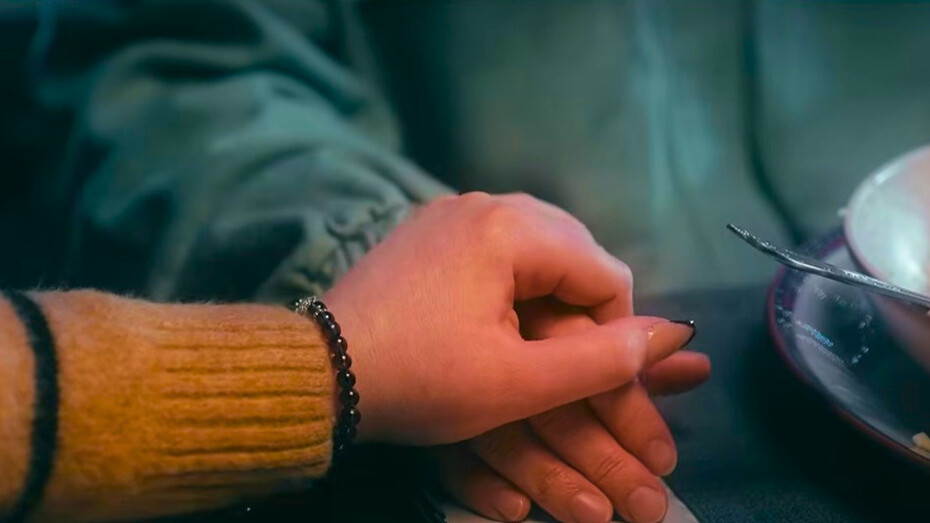
In the film, two characters have a frustrating conversation while the audience hears a TV playing in the background. When I watched the first cut, I noticed that although the script contained lines that matched the tense dialogue, we didn’t have the adverts or other elements needed to make the scene work.
The audience needed to understand that the couple sitting at the table were ignoring not only each other but also the TV that was casually playing in the background.
Here comes the bad decision
Although I had the voice-over recorded by a professional, I needed more TV news, adverts, and other elements to fill in the gaps.
But I was also in a hurry to finish the film.
My urge to get the finished material was so strong that I didn’t think twice. I took a shortcut: I used AI-generated voice-overs.
Now, why do I regret it?
Well, first, for the obvious reason. AI doesn’t give you the same emotions as humans, and I definitely don’t want it to become a creative partner of mine.
Maybe that was also one of the reasons the film didn’t get into many festivals. But the truth is that, because I rushed the process, I didn’t make the sound design as sharp as it deserved to be.
I gave random texts to software that generated the audio in less than two minutes, shoved it into the edit, and that was it. And maybe if I had had real actors doing the voice-over, they would have made a comment on that.
My first complete short film was finally ready, but it came with the weight of carrying an AI label.
Did I succeed?
Yes. Once again, I believe I succeeded in my failure.
Not only did I take a step further this time, but the experience also allowed me to understand other elements of filmmaking that I could only have learned by having a second chance to direct.
When I watch the film now, I think about other possibilities and the things I should have considered.
But hey, I directed it, did the costumes and production design, and worked with a team of people who helped bring it to life. Surely, I should be proud of myself and everyone involved in the process, right?
Except for the AI-generated voice-overs, everyone did a great job. And I’m happy that I got a second chance to do a little better and learn something different.
Now, you can watch the short film here:
Remember to leave your comments on the film.
It travelled to Greece and the United States through film festivals and received three nominations: Best Short Film, Best Cast, and Best Script.