English
 Español
 Français
 Deutsch
 Italiano
 Português
How many hundreds of years have we fallen this time? Is it thousands or more?
(Jodie Comer, 28 Years Later)
Movies are like time capsules, whether they’re meant to be or not. They capture not just a story or a style but also a mood—the texture of a particular moment in culture. When a film endures, it becomes something more: a living artifact of its era. A franchise, though, is a different kind of beast. It unfolds across decades, revisiting the same world at different points in history, shaped by the fears, technology, and collective mood of its time.
Few series illustrate that phenomenon better than Danny Boyle and Alex Garland’s 28 saga. Across twenty-four years and three films—28 Days Later (2002), 28 Weeks Later (2007), and now 28 Years Later (2025)—the franchise has evolved in tone, form, and meaning. What began as a lo-fi nightmare of rage and infection has become an epic, century-spanning myth. Each entry, in its own way, mirrors the anxieties of its generation: from the terror of collapse to the cold logic of control and, finally, to the exhaustion of mere endurance.
28 Days Later (2002)
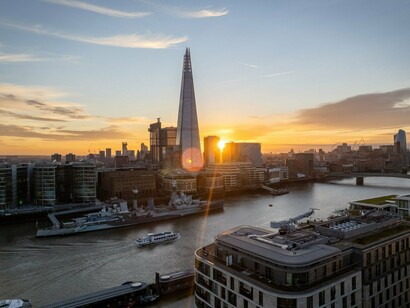
Few films feel as complete as Boyle and Garland’s 28 Days Later, a movie that redefined the zombie genre without ever technically featuring zombies. It’s a film about infection, yes, but more importantly, about what infection reveals about a society. From its early moments, as Cillian Murphy’s Jim wanders through the barren streets of London, the movie announces its fascination with isolation: how humanity decays not just through violence but through solitude.
Boyle constructs the apocalypse like a fable, precise in rhythm and scope. The film’s structure moves with both clarity and dread: a brief opening, three tight acts, and an epilogue. John Murphy’s score—particularly the track In the House – In a Heartbeat—has become cinematic shorthand for chaos, that slow pulse of dread that explodes just as the screen floods with violence.
Anthony Dod Mantle’s digital cinematography—blurry, blown-out, and unnervingly immediate—became a blueprint for post-9/11 cinema: raw, precise, and real. Beneath its grime, though, there’s beauty. Boyle’s London is a ruin, but it’s also breathing and alive. Cillian Murphy and Naomie Harris spark moments of tenderness amidst the carnage, grounding the horrors in empathy. 28 Days Later wasn’t just the rebirth of zombie horror; it was the start of a new way to imagine the end.
28 Weeks Later (2007)
If 28 Days Later was about chaos, 28 Weeks Later is about control—or at least the illusion of it. Directed by Juan Carlos Fresnadillo, the sequel shifts from intimate terror to institutional horror, turning the infection into a metaphor for collapse. The rage virus is no longer just a biological threat; it’s a system managed and weaponized by those who claim to be restoring order.
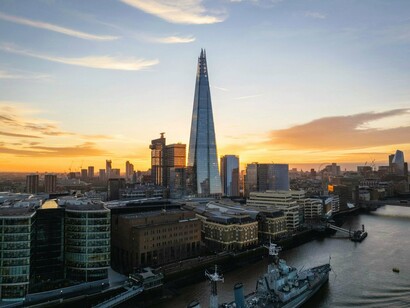
Fresnadillo’s film has sharper political teeth than Boyle’s, framing the outbreak as a study in bureaucratic panic and moral collapse. London is divided into militarized zones, citizens are tracked by snipers and cameras, and entire districts are burned in the name of “containment.” The infamous firebombing sequence—an entire city cleansed by fire in the name of peace—feels less like action spectacle and more like a scathing moral indictment.
At the same time, it’s more of a conventional Hollywood thriller—bigger set pieces, cleaner structure, Jeremy Renner, and just a dash less poetry. Rose Byrne and Imogen Poots also bring warmth and vulnerability to a film that might otherwise suffocate under its grey cynicism. Their humanity gives shape to Fresnadillo’s anger, while John Murphy’s repurposed score connects this new, colder world to the first film’s flicker of hope.
If Days was about rediscovering the warmth of the human heart, Weeks was about watching it harden. It’s sleeker, angrier, and more mechanized—a film perfectly tuned to the mid-2000s’ obsession with surveillance, security, and moral compromise.
Eighteen years later
After 28 Weeks Later, the apocalypse fell silent. Boyle moved from Slumdog Millionaire’s euphoric humanity to 127 Hours’ claustrophobic triumph and eventually to a nostalgic reckoning with T2: Trainspotting. Garland, meanwhile, tried his hand at directing, exploring the mind’s darker circuitry through Ex Machina, Annihilation, and most recently Warfare—a filmmaker dissecting what happens when control becomes spiritual.
In that time, the world changed too. The early 2000s’ fear of contamination and collapse gave way to a slower dread: disinformation, alienation, and digital loneliness. Surveillance became a feature, not a warning. The Britain that once feared its own rage now feared its disconnection, splintering along the lines of class and identity.
The 28 Days alumni had also evolved. Cillian Murphy and Naomie Harris became Oscar winners. Boyle and Garland, once the firebrands of a restless youth cinema, returned now as elder statesmen—revisiting the ruins they’d once prophesied, with new eyes and older scars.
28 Years Later (2025)
After a six-year hiatus following the divisive Yesterday, Danny Boyle returns with what might be his best film yet. Alex Garland, after a run of polarizing personal projects, delivers his most emotionally taut script since Annihilation. Together, they fuse their sensibilities into something ferocious: an apocalyptic symphony of decay and rebirth.
The result feels like a summation of everything they’ve explored separately over the past two decades—Boyle's kinetic visual energy, Garland’s philosophical dread, and their shared fascination with the fragility of humanity under pressure. The film is chaotic yet precise, intimate yet mythic: a horror story reborn as spiritual reckoning.
Anthony Dod Mantle’s cinematography pushes digital into the surreal. Most of it is shot on an iPhone 15, yet it looks richer than most IMAX epics. The palette is feverish—greens and reds are bleeding together like an infection under the skin. The incredible score by Young Fathers pulses with a ritual intensity, all drums, chants, and synthetic noise—the heartbeat of a dying world. When the infamous Boots track from the trailer finally drops, it feels like a thunderclap. Heralding the arrival of the Alpha, one of the most unforgettably fearsome monsters in modern horror.
Like the original, 28 Years Later unfolds in three precise movements, bookended by eerie vignettes orbiting the mysterious Jimmy, played masterfully by Jack O’Connell. Drops us into the inferno after two production logos without even the brief mercy of opening credits. Blood, fire, and motion — a world long past saving. Boyle’s visual direction is relentless, jittery shutters, and dark infrared. Aaron Taylor-Johnson embodies pure survival instinct, his performance almost primal.
The middle section exhales. Jodie Comer replaces Taylor-Johnson and becomes the film’s heart, leading a group through landscapes that feel both sacred and diseased. The world slows, and Garland’s writing turns meditative, reflecting on motherhood, faith, and grief. The train sequence is astonishing—desperation rendered as choreography. Boyle and Garland are both finding grace in the chaos and beauty in decay.
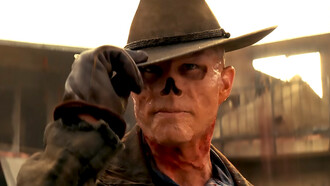
By the finale, the film ascends to operatic insanity. Ralph Fiennes appears like a ghostly apparition—half prophet, half corpse. The set design, a massive temple of human remains, mirrors the entire franchise: faith and horror intertwined. When an ethereal climax erupts, it feels less like resolution and more like a revelation.
28 Years Later is the kind of movie that shouldn’t exist but somehow feels inevitable. Big, strange, and defiantly personal, it’s a studio epic that plays like a handmade vision. Like Fury Road, it’s a late-career modern masterpiece that reminds us what blockbusters can be when driven by conviction rather than content strategy.
Infection as reflection
Across its 24 years, the 28 series has acted as both diagnosis and prophecy—a mirror for each era’s unease. Days captured the chaos of the early 2000s; Weeks dissected the paranoia of the post-9/11 world; Years channeled the numb exhaustion of the 2020s, where survival itself has become a form of belief.
Through it all, the throughline remains steady. These aren’t stories about monsters but about what’s left when order collapses. They’re about persistence—the stubborn conviction that something human still flickers in the dark.
Few franchises have aged this well, or this strangely. 28 Years Later doesn’t just continue the legacy of its predecessors; it transforms it. Across two decades and three nightmares, Boyle and Garland have done what few filmmakers ever manage: they’ve turned infection into art and apocalypse into memory.