English
 Español
 Français
 Deutsch
 Italiano
 Português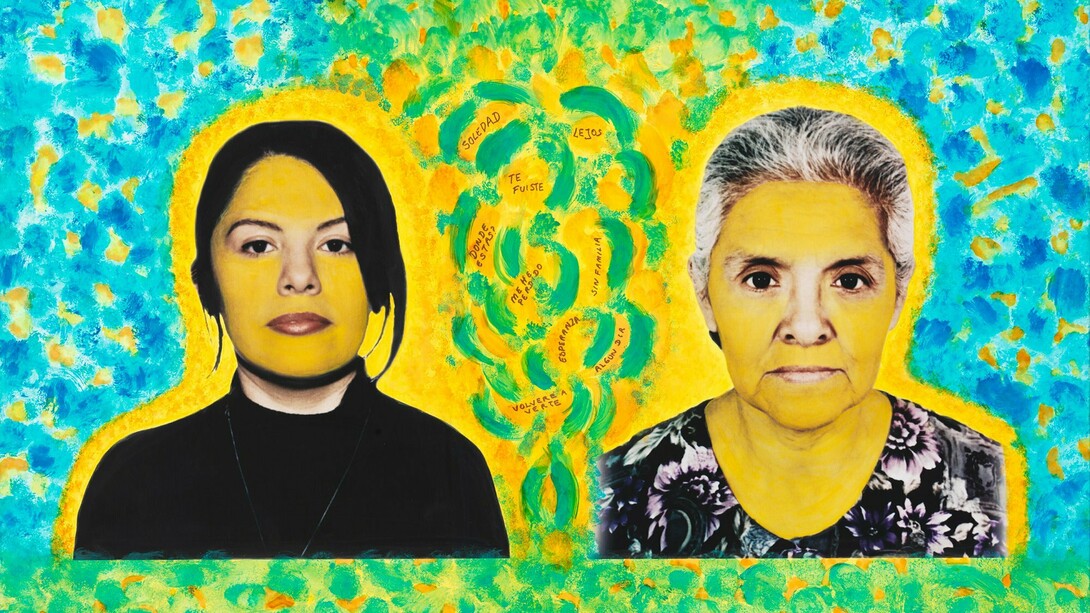
It is through movies that we connect most to ourselves. Perhaps our past has been a mirror for other people, and vice versa. There is nothing new to the human experience, and yet movies surprise us, move us, and make us feel seen. The documentary Prodigal Daughter does not fall short of the magic of films. For filmmaker and multi-disciplinary artist Mabel Valdiviezo, it provides a channel of healing. For the audience, a tender call to action, a reminder that it is never too late to mend relationships, especially with family.
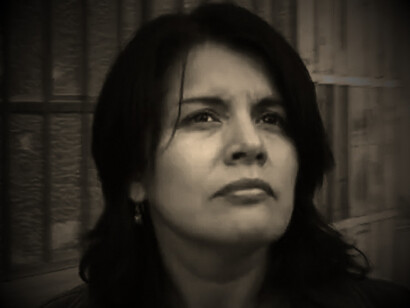
After 16 years of no contact with her family, Valdiviezo returns to her hometown in Lima, Peru. “What could have happened to her?” her mother wondered. “What if she died?” The reunion is tearful, heartfelt, and followed by questions. At the airport, through a single hug, a mother’s love seems to go beyond distance and time.
Through personal, raw, and unique shots, Valdiviezo shows what it meant to be an undocumented immigrant in San Francisco, leaving behind a politically charged environment in Lima and a family that made her feel misunderstood.
Growing up on the humble outskirts of Lima in the 80s and early 90s, Valdiviezo embraced self-expression as part of the subte punk movement, using creativity to defy a system ruled by violence and oppression. She did things that society didn’t understand—from embracing short boyish haircuts to wanting a better life for herself and her art abroad.
Returning to her hometown required shedding light for the first time on difficult truths of her past, both as a child in Lima and a young adult in San Francisco. San Francisco had not been the promised American dream. In “dark periods” of her life, she struggled with drugs, mental health, work, etc. Moreover, coming back to Lima implied revisiting places of trauma. An untold, hurtful memory of her childhood lingered. It was difficult to speak about the past, not only because of the shame and guilt, but also because of the potential of hurting someone you love by sharing the hurt once experienced.
There is a revolution in her vulnerability—a brave act from an even braver person. The truth, wide in the open, is sometimes unbearable for loved ones, and as a result, it is often shut down immediately with a plea to keep it a secret or move on without addressing it. In an attempt at comfort, there is dismissiveness (unfortunately, a common reaction in many Latinx families). By showing these family dynamics, Valdiviezo touches on the universal need for love and acceptance unconditionally. Would her family accept and love her unconditionally? Can loved ones truly see (and embrace) all the layers of our identity? Would they put in the effort to do the work that’s needed? Is collective healing possible?
As the documentary evolves in real time, new challenges arise. But Valdiviezo remains persistent in this journey, defying cultural norms and breaking the cycle of silence. Resilient in essence, she portrays by example that the desire for reconnection can become a reality, and gives others hope for healing despite the arduous process it entails.
The pain is never-ending, but so is the joy. The love and joy are palpable through the documentary, shared in forms of homemade food, mother-daughter art expositions, reuniting hugs from Valdiviezo’s grandma, heartwarming kisses from her mother, etc. These moments are shown with patience and care. While Peruvian culture remains conservative at best, the lens of the documentary is compassionate. The audience is not invited as a judge but welcomed as a family member —as a sibling, as younger Mabel, as wiser Mabel, as a Latina immigrant with a similar or different journey, as a human being with an open heart.
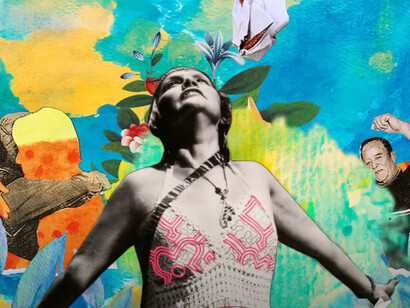
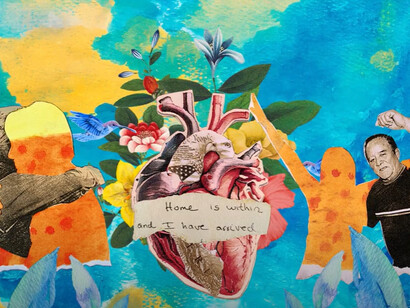
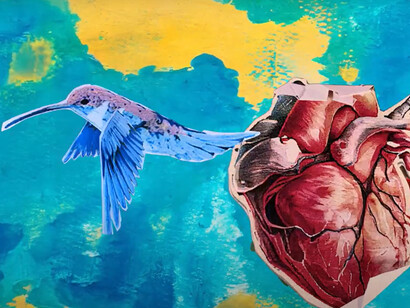
Prodigal Daughter is yet another example of art’s transformative power. The past, present, and future as pieces of a puzzle that Valdiviezo shapes and re-shapes by telling her story. This puzzle is conveyed through old pictures painted over, scraps of poems, collages, paintings, and recordings.
At the end of the film at the Lima premiere, a sea of applause is followed by a lively cheer at the back of the movie theatre. Later in the Q&A section of the screening, Valdiviezo points at the audience in the back with a smile and says, “My family”.
The story is still being written in real time. In Valdiviezo’s life and ours.
Prodigal Daughter premiered as part of the Cine+Mas San Francisco Latino Film Festival this past October 2024. Mabel is currently seeking funding to exhibit her film.
Prodigal Daughter won Best Documentary at the Arizona International Film Festival (2025) and has been screened in Mission Cultural Center for Latino Arts, Festival de Cinéma Péruvien de Paris, Havana Film Festival in New York, Chicago Latino Film Festival, Filmed In Peru NYC, Cine Club UCH, Breña in Lima, and more.