English
 Español
 Français
 Deutsch
 Italiano
 Português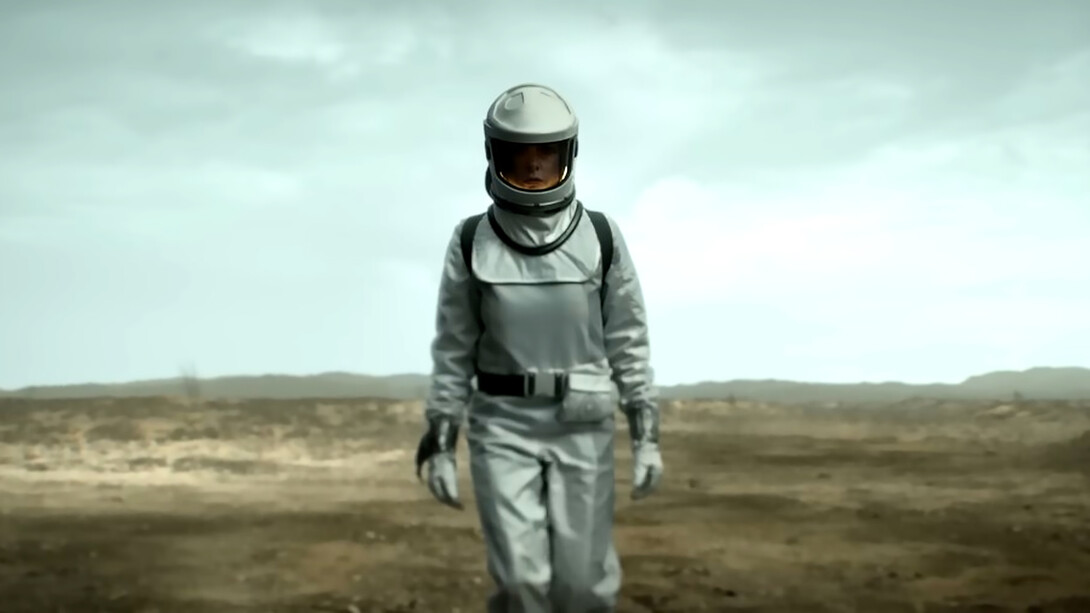
Subterranean habitation has become a recurring motif in contemporary speculative fiction, particularly in post-apocalyptic narratives where humanity retreats underground after environmental or nuclear catastrophe. These underground worlds promise protection and continuity. Yet they also introduce a troubling dynamic; survival depends not merely on shelter from disaster but on the strict regulation of life itself.
By examining the television adaptations of Silo and Fallout, this article argues that subterranean survival in post-apocalyptic speculative fiction reveals a fundamental paradox: in attempting to preserve humanity, bunker societies reconstruct it as a technologically mediated, socially engineered, and biopolitically managed form of life, thereby destabilizing the very idea of the human they claim to protect.
To contextualize the analysis, a brief overview of each series will first be provided. Through the comparative analysis of these two TV series adaptations, the article argues that bunker societies operate at the intersection of posthumanism and transhumanism, revealing how dystopian survival is inseparable from biopolitical control and the management of life.
Summary
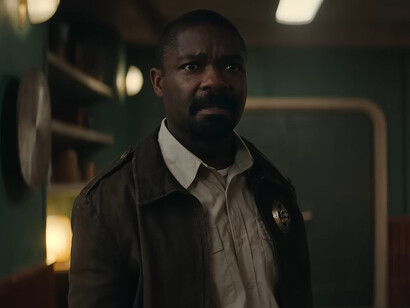
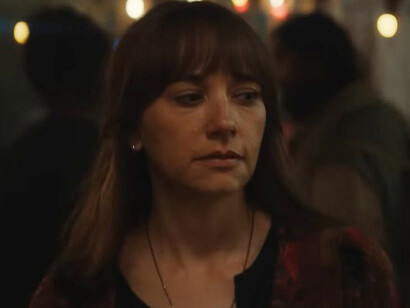
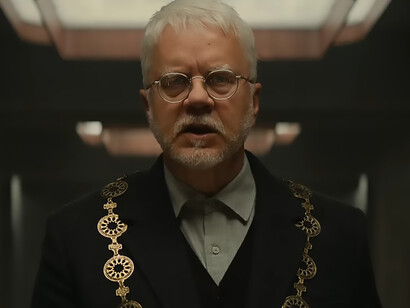
Silo is based on the Silo trilogy of novels (Wool, Shift, and Dust) by Hugh Howey. The Apple TV+ adaptation, created by Graham Yost and premiering in 2023, brings a slow-burn narrative style emphasizing social structures, hidden truths, and oppressive systems. Set in a massive cylindrical underground silo, a vertical city stretching hundreds of floors, with levels for living, agriculture, machinery, and administration, the story depicts ten thousand inhabitants who believe the surface is lethally poisoned. Dimly lit and utilitarian, the silo emphasizes confinement, efficiency, and surveillance. Society is tightly controlled, and dissenters are exiled to die. The narrative follows engineer Juliette as she uncovers the silo’s hidden history and questions its governance and the origins of the toxic world above.1
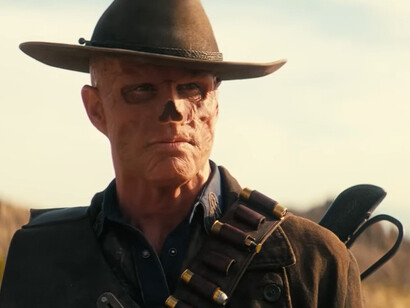
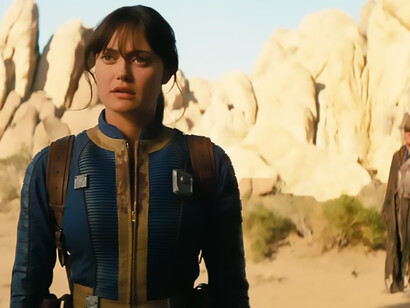
Meanwhile, Fallout, originally a video game series created in 1997 by Interplay, was adapted into a TV series on Amazon Prime Video in April 2024. The series was developed by Geneva Robertson-Dworet and Graham Wagner, with Jonathan Nolan and Lisa Joy as executive producers. Drawing on Nolan and Joy’s experience with Westworld, the show combines expansive world-building, philosophical inquiry, layered timelines, and darkly satirical post-apocalyptic storytelling. Set centuries after a nuclear apocalypse, survivors inhabit underground Vaults designed to protect humanity, many of which function as social experiments. The series follows the dwellers as they emerge into a deadly irradiated world filled with mutated humans, factions, and retro-futuristic technology.2
Both Silo and Fallout emphasize meticulously crafted subterranean worlds and explore how survival is inseparable from control. While Silo focuses on a single massive silo, Fallout presents multiple Vaults, yet both examine life confined beneath a devastated Earth. In each, strict rules suppress knowledge and freedom, with characters uncovering systemic lies and secrets about their societies. The narratives also interrogate human nature and adaptation, questioning what it means to survive when life depends on technological mediation, social engineering, and ideological constraints. Together, these series demonstrate that underground societies in dystopian fiction are not merely shelters but spaces of intense regulation, where survival requires both adaptation to the environment and submission to social, technological, and ideological control.
Comparative analysis
Having established how Silo and Fallout construct subterranean, post-apocalyptic worlds where survival is inseparable from control, this part examines how each series depicts this underground survival in more detail by providing examples from the TV adaptations.
Both series show that humans endure not simply because they are strong or adaptable, but because their environments, societies, and bodies are meticulously engineered and regulated.
The environment
The subterranean setting treats the human body as fragile and in need of strict regulation. Life underground shields humans from hostile natural environments, optimizes labor, controls sexuality, and instrumentalizes death. In both Silo and Fallout, survival depends on non-human systems: filtered air, engineered food, regulated reproduction, curated knowledge, and restricted movement. Humans are no longer autonomous biological beings; their continued existence relies on infrastructure, machines, and protocols. From a posthumanist perspective, the silo or vault itself becomes an actor that shapes behavior, ethics, memory, and even desire. The environment effectively shapes what it means to be human: the body becomes one system among many, regulated by environment and social design.
The society
In Silo, society is defined by strict control. Information is tightly regulated, visual perception is manipulated, such as the curated view of the outside world, and history is erased or rewritten to maintain order. Inhabitants are monitored constantly, and their bodies are expendable in the service of the system, reflecting Foucaultian biopolitics and critiques of surveillance: humans exist as managed populations rather than autonomous individuals.
By contrast, Fallout explores underground society as a space of experimentation, where Vault residents are subjected to social engineering and environmental pressures that produce new behaviors, cultures, and, eventually, altered bodies once they leave the Vault. While Silo maintains human life through containment and control, Fallout transforms it, highlighting how survival can involve both social and biological engineering.
However, these transhumanist promises of survival, continuity, and improvement are problematized in both series. Underground life preserves existence, but freedom is lost; bodies survive, but there is no meaning anymore. Technology, rather than liberating, becomes authoritarian. In Silo, stagnation dominates; humans do not evolve, they are contained. In Fallout, there is evolution, but it is unequal and often monstrous, highlighting how technological preservation can hollow out human values.
Building on the analysis of these series’ themes, settings, and societal structures, the article now considers a deeper question: why do post-apocalyptic speculative fiction works so often depict survival in underground environments? Is the underground merely a practical shelter from catastrophe, or does it also function as a metaphorical space, perhaps mirroring the human unconscious, where more primitive instincts reside? Do these narratives imply that humans are inherently fragile and in need of strict rules to prevent chaos? Are surveillance and social engineering presented not only as tools of survival but also as necessary restraints on desires that might otherwise destabilize society?
Both series actively entertain these questions through their protagonists. As viewers follow Juliette in Silo and Lucy MacLean in Fallout, identification becomes central to the narrative experience. The audience is positioned to sympathize with them, to root for their resistance, and to desire their courage in uncovering hidden truths. Their rebellion is not merely a narrative device; it exposes the fragility of the systems that claim to preserve humanity. Through their journeys, the series invites us to question these and encourages critical reflection.
It is precisely at this point that posthumanism and transhumanism become central to the analysis. If underground survival raises questions about control, fragility, and obedience, it also inevitably raises a more fundamental question: what, in fact, is being preserved? What does it mean to remain human under such conditions?
Posthumanism helps frame this dilemma by suggesting that the human is no longer autonomous but embedded within technological, environmental, and institutional systems. In both Silo and Fallout, humanity is decentered; the silo and the vault are not passive shelters but active systems that shape identity and behavior. The “human” becomes something managed, distributed, and sustained by non-human actors.
Transhumanism, meanwhile, enters through the promise of technological salvation: humanity can endure disasters through engineering, containment, or even biological transformation. Yet both series complicate this promise. In Silo, preservation requires obedience and stagnation; in Fallout, survival leads to mutation, experimentation, and altered bodies. Technology saves life, but it also reshapes it.
This tension brings the analysis back to the characters. Juliette in Silo and Lucy in Fallout. Their resistance suggests that even within highly regulated or technologically altered societies, something persistently “human” resists full containment. If survival underground demands obedience, their rebellion poses another possibility: that to be human may not mean compliance, but the capacity to question, to doubt, and to refuse imposed limits.
References
1 Fallout (TV Series 2024– ) - IMDb.
2 SILO (TV Series 2023–) 8.1 | Drama, Mystery, Sci-Fi.