English
 Español
 Français
 Deutsch
 Italiano
 Português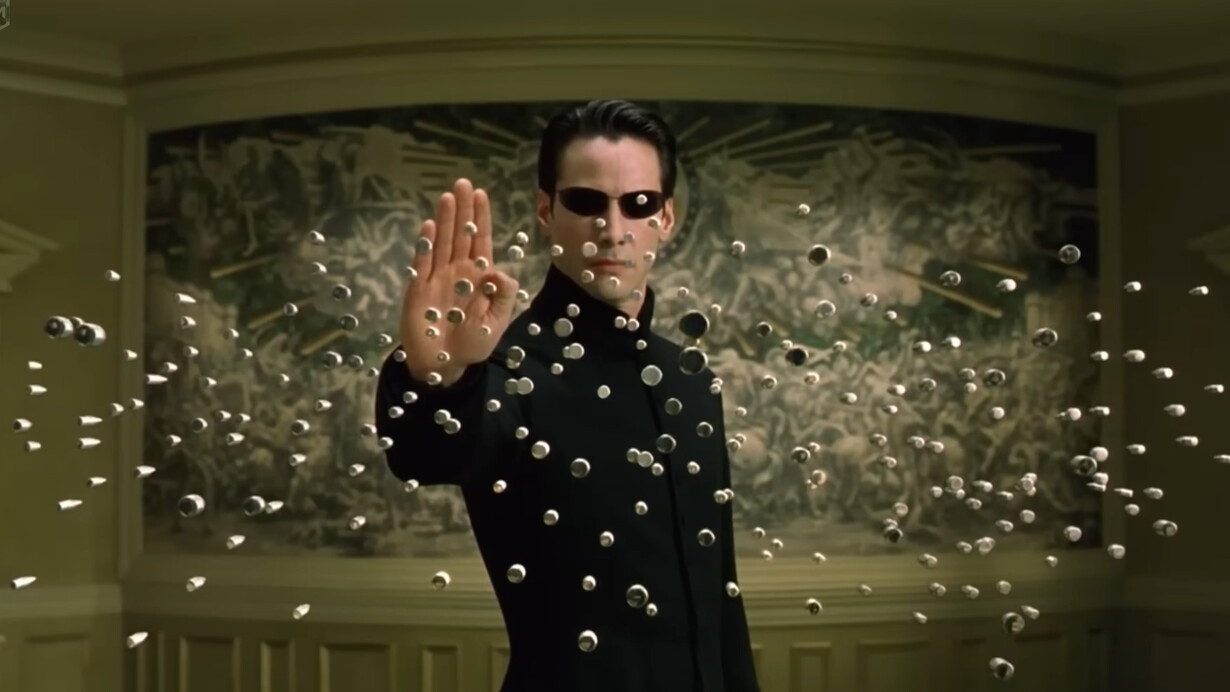
I watched all four Matrix movies recently, mostly because I’d never seen Resurrections, and I hadn’t revisited Reloaded or Revolutions since I was a kid. The first one, of course, is eternal—I throw it on all the time. It’s one of those movies that’s just permanently plugged into the cultural zeitgeist. The others, though, have had a much messier journey. At first, they were reviled, dismissed as bloated fluff, then over the years quietly reclaimed as cult oddities.
Now, almost twenty-five years later, we’re at a point where Reloaded—and even parts of Revolutions—are actually being taken seriously. Resurrections is still too new, too raw, and too bound up in online discourse. But there are already quite a few outspoken supporters (now including yours truly), and if history has taught us anything, it’s probably only a matter of time before the whole saga is remembered with nothing but the utmost fondness.
What’s allowed these movies to age so well compared to other late ’90s and early-2000s blockbusters is the subject matter. AI, simulation, free will, control, and identity in an increasingly digital world. These aren’t relic ideas tied to dial-up modems and leather trench coats; they’re the defining anxieties of our present and our future. The Matrix films feel increasingly relevant because the world is slowly catching up to them. The fear that our reality is mediated, that alien systems shape us more than we realize, that maybe the truth really is buried somewhere under all this convenience.
Rewatching the series as an adult, with more context and fewer expectations about what these movies should be, made me realize just how ambitious, strange, and emotionally sincere the Wachowski sisters are. Even if the execution falters, the intent is always bold. They swing big, occasionally miss, but never play it safe, and that more than anything is why these movies are still worth talking about.
The Matrix (1999)
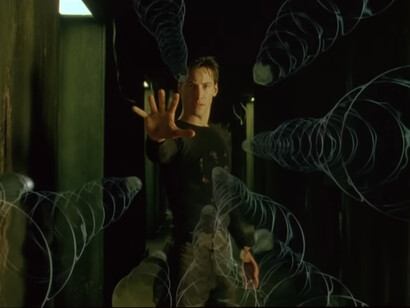
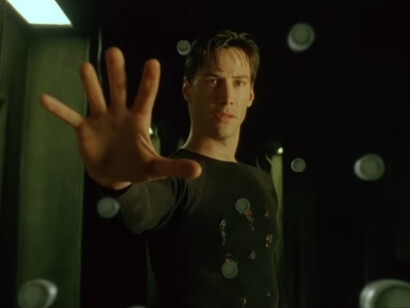
The original film is untouchable. It’s cool in the same way Kill Bill is cool—hyper-stylized, genre-bending action—but far more existential and philosophically rich. It plays almost like a cyberpunk D&D campaign by way of Hong Kong action cinema, Baudrillard, and the AOL homepage. Neo is essentially a player character, a blank slate for the audience to project themselves onto: quiet, passive, vaguely dissatisfied with life. Keanu Reeves’ vacant showmanship has never been better utilized;, he’s a perfect self-insert, a “y/n” protagonist before that was even really a thing.
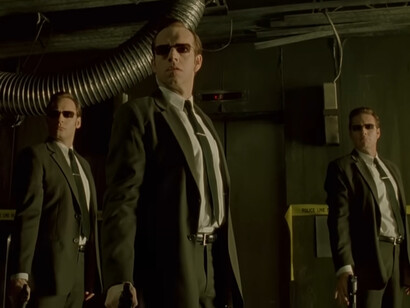
What really makes it really jive, though, is everyone around him. Morpheus, Trinity, and Agent Smith are instantly iconic, sharply defined, and endlessly watchable. Every scene with any one of them crackles with life. Hugo Weaving especially gives one of the great villain performances of all time—every line delivery is so precise, methodical, and theatrical that you never forget for a moment this guy isn’t human.
The effects aren’t perfect, but that’s part of its charm. You can tell the Wachowskis were at least trying to work within limitations. The dim green lighting obscures anything that might look dated while reinforcing the artificiality of the world. Falling rain that resembles cascading code, the blue tint of digital screens, the grimy, decaying set design—it creates such a rich texture that still looks incredible to this day. And then there’s the third act: the lobby shootout, the helicopter rescue, and bullet time. Classic, relentless, endlessly riffed-upon action.
At its core, though, The Matrix is a contained story about breaking free from imposed systems—whether you read that literally, politically, socially, or personally. Maybe we really are in a simulation, maybe it’s just about consumerism, maybe it’s about trans identity and self-realization, maybe it’s all of the above. That openness, the refusal to pin oneself down, to resist easy interpretation is what makes great art.
The Matrix Reloaded (2003)
I’ll be the first to admit that The Matrix didn’t need a sequel. It’s a perfectly complete story and yet, I’m very glad this exists. Instead of simply rehashing or escalating the original, it radically expands the world. Zion, mentioned fleetingly in the first one, becomes real and populated with other survivors. The Matrix itself is revealed to be teeming with rogue programs—some benevolent, some malicious, and most operating in moral gray zones. The Wachowskis are never interested in repetition, only further complication.
This one zeroes in on the love story shown briefly at the end of the first movie, treating it as essential rather than incidental. Through all the chaos, Neo and Trinity’s devotion to each other keeps the story human, even as everything around them becomes increasingly not so. Their relationship doesn’t just ground the film emotionally; it essentially IS the film. But make no mistake—this doesn’t come at the expense of action. If anything, Reloaded might be even more aggressive than its predecessor.
Much like the original, it opens with a jaw-dropping Trinity sequence, then detours into the surreal politics and philosophies of Zion and its people, which I appreciated more this time around. Once they finally plunge back into the Matrix, it’s basically all gas, no brakes. The freeway chase alone is a jaw-dropping technical achievement, still impressive even now. It also ends on a cliffhanger with no real wind-down, which I had forgotten completely but was pleasantly surprised by.
Like I said though, what really compelled me this time was the world-building. Even aside from the bustling halls of Zion, we see more of the Oracle and meet more programs like the Keymaker, the Architect, and, of course, the Merovingian—a decadent Hades-like figure presiding over the Matrix’s underworld, complete with his very own Persephone as portrayed by the elegant Monica Bellucci. I also have to make special mention of the music, almost all original tracks by composers like Paul Oakenfold and Rob Dougan, with industrial, synth-heavy beats pulsing throughout like sounds produced by the Matrix itself.
The Matrix Revolutions (2003)
As a kid, this one lost me almost immediately. The extended battle in Zion felt interminable and soured the entire experience. Revisiting it now, I can appreciate more of what it’s doing—even if I still think it’s the weakest film in the trilogy.
There are, undeniably, a lot of mechs, a lot of squid robots, and a lot of bullets. I love sci-fi maximalism as much as the next guy, but this is one of those cases where scale starts to overwhelm substance. The Zion battle goes on forever, and while it’s technically impressive, it lacks the clarity and substance this franchise usually excels at.
That said, it absolutely sticks the landing. Once Neo and Trinity reach the Machine city, Revolutions becomes something else entirely—operatic, tragic, mythic—the tone shifts from war movie to religious allegory. Neo’s arc is fully messianic now, and the final fight with Agent Smith in the pounding rain is as visually striking as it is emotionally charged.
A movie about sacrifice, balance, and finding uneasy peace in a desolate world. It’s messy, scattered, and uneven, but it’s also unabashedly sincere. There is no neat victory or triumphant victory, only ambiguity, compromise, and loss. The scope is enormous, even if the execution falters. It may not always work, but it commits fully to its ideas—and that sheer commitment gives it a strange staying power.
The Matrix Resurrections (2021)
Reaffirms what’s been forgotten over years of discourse and imitation: The Matrix is, first and foremost, a love story. Actually, that’s not entirely true, it’s more so about reclaiming the story from the way it’s been misinterpreted, flattened, and co-opted over the past twenty years by people who missed the point entirely.
The Matrix is about many things, and Resurrections takes that multiplicity and explodes it beyond comprehension. A meta legacy sequel about the ethics and meaning of legacy sequels, about art being commodified, repackaged, and stripped of its soul by the very machines it sought to destroy. A world where Neo’s story is just another piece of a bloated monoculture in which the Matrix itself is a product people voluntarily co-opt.
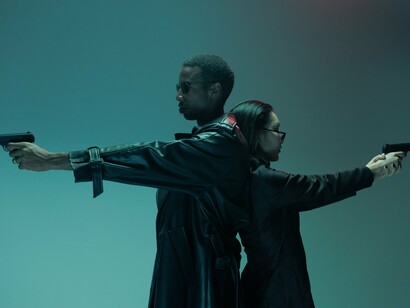
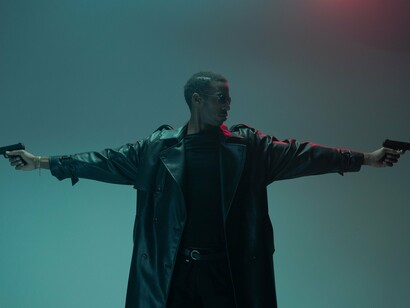
To break free this time, Neo doesn’t need better kung fu or bigger guns—he just needs Trinity. Not as an accessory or a motivation but as an equal, their connection is what makes them special. That idea seems to have enraged a large segment of the fanbase, which only proves how necessary the film was.
Resurrections is messy, strange, and deeply heartfelt. A typical Wachowski swing that refuses nostalgia bait and easy catharsis. Instead, it asks what actually matters to you and if you’re brave enough to hold onto it in a world designed to distract, numb, and contain you.