English
 Español
 Français
 Deutsch
 Italiano
 Português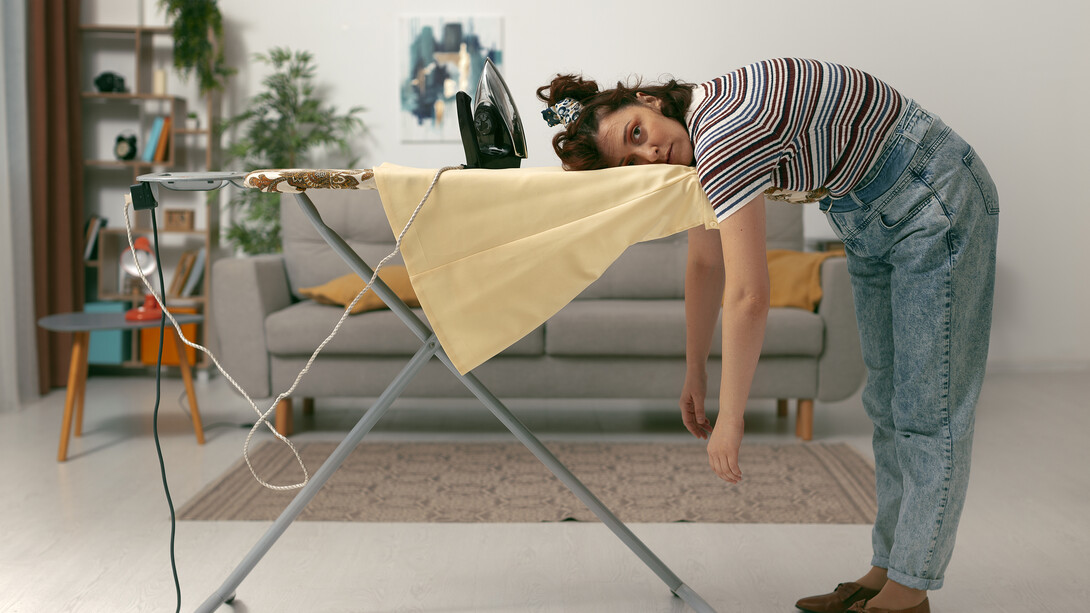
In the modern world, we are witnessing major transformations in every area of society due to the rapid pace of technological and globalization advances. However, one area has remained untouched by this rapid change: the division of labor within the home.
On paper, we live in a modern, free, and individual-centered world. However, when we step inside the home, we encounter traditional roles that Ulrich Beck, who was a German sociologist, termed “zombie categories”: ‘dead but still alive’ (Beck & Beck-Gernsheim, 2002, p. 203). On the one hand, the traditional division of labor within the family has essentially lost its function; according to the values of the modern world, it is considered ‘dead’ in principle. On the other hand, today, women and men are equal under the law, our education system prepares both genders for the same career paths, and the modern business world recognizes women as breadwinners. Legally and economically, the old rule that ‘a woman’s place is in the home’ has long since become outdated.
Nevertheless, despite this progress, these ‘dead’ rules come to life as soon as you step through the house door. They persist stubbornly as an institution in our minds, societal expectations, and daily habits. Because the culture we live in has always dictated how women and men should behave, think, and act (Akın & Demirel, 2003). According to social stereotypes, the expectations placed on a person depend directly on their gender. In other words, people are born male or female but grow up learning to fulfill gender-specific roles determined by society (Taşkın & Terzioğlu, 2010).
This cultural learning begins within the family. During this process, girls and boys acquire roles appropriate to their sexes and develop gender identities. These gender identities impose certain duties on individuals. Therefore, when a new family is established through marriage, the roles of men and women are determined from the outset. While jobs such as housework and childcare come to the fore for women, it becomes important for men to make money outside (Greenhaus & Powell, 2010). Being stronger than men, supporting their families, and having a certain control, women are expected to be patient and understanding and to do housework (İmamoğlu, 1991). It is the family itself that is the primary institution responsible for ensuring that these patterns are learned within a culture and passed down from generation to generation.
Today, many societies—even Europe and the USA, which we call very developed, and even some Asian countries we call technology giants—still have a family and society structure based on sexual division of labor. That’s precisely why, despite modern technology and an increasing number of working women, an unequal division of labor is the greatest proof that this zombie structure is ‘still alive.'
The face of patriarchy in the home and social roles
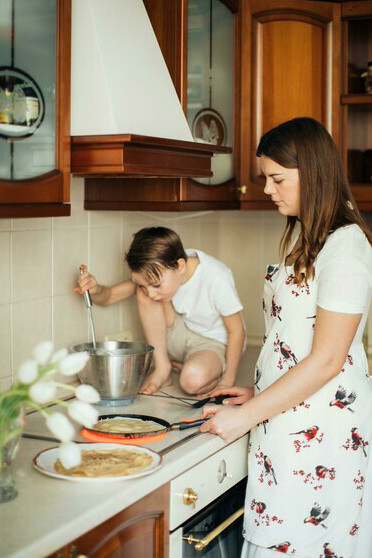
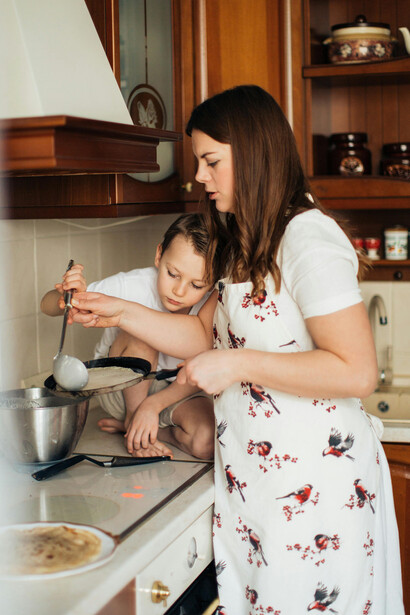
In the traditional family framework, men do things such as repairs, garden maintenance, and making money outside, while women do jobs such as cooking, washing dishes, raising children, and cleaning the house (Şafak, Çopur, & Özkan, 2006).
Of course, there are also those who criticize this situation. Bryan Stanley Turner, who is a British and Australian sociologist, mentions this in his book: One of the biggest sociological criticisms of the social division of labor is the feminist analyses of the sexual division of labor. These analyses problematize biological explanations that reveal gender distinctions, such as women doing unpaid housework, while men are in paid employment in the public sphere (Turner, 2020, p. 253).
This unpaid work outside the public sphere is often oversimplified through biological reductionism. However, a closer look shows that such uncompensated labor is far from effortless, requiring a complex and sustained effort.
Due to the sexist division of labor, women do repetitive jobs at home such as sweeping, wiping, collecting, chopping, whisking, mixing, kneading, lifting, bending, and so on. In fact, these tasks often extend far beyond basic upkeep; they encompass seasonal production like preserving and pickling, as well as a heavy ‘mental load.' They involve managing the household’s entire logistics, from inventory tracking to ensuring the emotional well-being of its members.
After doing these tasks all day, and most importantly, after doing this for a lifetime, it cannot be expected that the woman’s body will remain in perfect health. This is why women have to deal with constant pain and illness throughout their lives.
The physical cost of an “invisible” profession
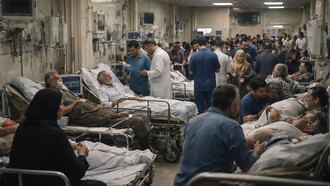
Shifting the focus to health makes it clear that these repetitive movements come at a cost. Chronic low back pain is a key symptom of long-term domestic physical abuse. Bending down and standing all day puts an enormous strain on the waist. Furthermore, there is an additional hidden dimension to this physical toll. Many women with low back pain are also primary caregivers for elderly or bedbound relatives. Tasks such as lifting, washing, and repositioning patients can cause them to unconsciously strain their bodies. However, as domestic caregiving is not categorized as a ‘high-risk occupation’ in medical literature, the physical strain these women experience is often dismissed or ignored by the medical profession.
The consequences of this situation are severe. These ‘simple’ pains, which have been neglected for years by both doctors and women, can eventually develop into much more serious and painful conditions, such as herniated discs. As the World Health Organization points out, gender inequality makes it difficult for women to access healthcare, leading to discriminatory attitudes that cause their concerns to be dismissed (WHO, 2026). Consequently, back pain is not just a medical problem but a physical consequence of the devaluation of women's labor.
“Double shift” in the modern family
While the increased participation of women in the workforce today seems like a big step, the patriarchal system has not fully transformed itself. When a working woman comes home, she actually starts a “second shift."
This unequal distribution of domestic labor is not just an individual issue but a global statistic. According to data from the International Labour Organization (ILO), women perform 76.2% of unpaid care work and household chores worldwide, while men account for less than a quarter of the total (ILO, 2018, p. 53). This means that, on average, women perform 3.2 times more unpaid work than men every day, equating to approximately 4.5 hours. On an annual basis, this equates to a woman working 201 days on household chores (based on an eight-hour day), while men dedicate only 63 days.
Moreover, the path to closing this gap is still very long. According to a 2023 report by UN Women, even the next generation of women will continue to spend an average of 2.3 hours more per day on unpaid domestic labor than men at the current rate of progress (UN Women, 2023, p. 4). These figures demonstrate that women are trapped in a ‘second shift’ at home, even if they work outside the home, and that health issues caused by this physical burden, such as back pain and hernias, are not coincidental but a structural consequence.
Conclusion: the modern family as an institutional conflict zone
In modern society, the family is not, as Ulrich Beck (2002, p. 204) states, the source of the historical conflict between men and women; rather, it is the fundamental surface on which this conflict becomes visible. According to Beck, the root of the tension in contemporary family life lies in men and women trying to ‘equalize’ within a traditional institutional structure based on 'inequality.' This transforms every area, from career plans to the division of household chores and childcare, into a negotiating zone. Individuals must now reconsider and compromise on every decision in the name of equality. However, this negotiation process does not occur with as much free will as is commonly believed.
This is where Durkheim’s (1982) observations on social phenomena come into play. Social expectations exert an invisible and external pressure on us. We generally do not feel this pressure until we struggle against it; in other words, until we engage in what Beck (2002) calls the ‘negotiation for equality.' When women question the division of labor at home or try to share the burden, they encounter not only individual resistance but also centuries-old social pressure hidden behind the mask of 'tradition.' This pressure ‘naturalizes’ the physical deterioration of women (e.g., hernias and chronic pain) by rendering domestic labor invisible.
As Beck points out, the solution to this structural impasse is to support the ‘negotiation’ processes individuals try to implement with comprehensive institutional solutions. The sexist division of labor is a heavy legacy of the patriarchal system, and rejecting this legacy should be both an individual choice and a fundamental matter of public policy. Vital steps to alleviate the burden on the oppressed party (women) on this ‘conflict surface’ of the family include providing women with social security independent of their husbands or fathers, unhindered access to healthcare, and widespread childcare facilities.
Today, we live in an era where women are more involved in the business world than ever before, building their professional identities and pursuing their career goals. However, despite this public progress, women still face an uneven distribution of responsibilities in the private sphere (the home). This situation poses the most significant challenge to modern society: while women are liberated in the outside world, they are still confined to traditional roles and ‘zombie categories’ at home.
In conclusion, maintaining peace and order within the home is the greatest challenge facing modern society. As Beck emphasizes, this transformation is redefining the very concept of family. Recognizing the physical damage (such as hernias and chronic pain) caused by women’s oppression under this ‘double workload’ and their invisible labor is not just a medical necessity; it is a prerequisite for transforming the family from an unequal structure into a just and egalitarian union. It is the only way to transform the family from an ancient, unequal structure into a fair, egalitarian union where both partners’ labor and health are valued.
Therefore, achieving peace and justice within the household is not just an individual choice but a major structural challenge for modern society. As Beck emphasizes, this painful transformation redefines the very essence of the family and its role in the 21st century.
References
Akın, A., & Demirel, S. (2003). Toplumsal Cinsiyet Kavramı ve Sağlığa Etkisi. Cumhuriyet Üniversitesi Tıp Fakültesi Dergisi.
Beck, U., & Beck-Gernsheim, E. (2002). Chapter 14: Zombie Categories: Interview with Ulrich Beck. Individualization: Institutionalized Individualism and its Social and Political Consequences. içinde SAGE Publications Ltd.
Durkheim, É. (1982). What is a social fact? . The Rules of Sociological Method.
Greenhaus, J., & Powell, G. (2010). Sex, Gender, and Decisions at the Family Work Interface. Journal of Management.
ILO. (2018). Care work and care jobs for the future of decent work. Geneva: International Labour Office.
İmamoğlu. (1991). Aile içinde kadın-erkek rolleri. Türk Aile Ansiklopedisi.
Şafak, Ş., Çopur, Z., & Özkan, M. (2006). Çocukların evle ilgili faaliyetlere harcadıkları zamanın incelenmesi. Hacettepe Üniversitesi Aile ve Tüketici Bilimleri Bölümü.
Taşkın, L., & Terzioğlu, F. (2010). Yaşam Dönemlerine Göre Kadın Sağlığı ve Ruhsal İşlevler: Hemşirelik Yaklaşımlarının. Cumhuriyet Üniversitesi Hemşirelik Yüksekokulu Dergisi.
Turner, B. (2020). babalık/babalar (fatherhood/fathers), emek (labor). Sosyoloji Sözlüğü. İstanbul: Pinhan Yayıncılık.
UN Women. (2023). Progress on the Sustainable Development Goals: The Gender Snapshot 2023. New York: UN Women and United Nations Department of Economic and Social Affairs.
WHO. (2026). Gender and health. World Health Organization.