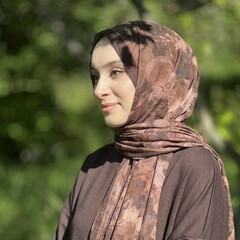
Zehra Bakırcı was born in 1998 in the Beykoz district of Istanbul, where continents and cultures meet. Growing up in the transformative atmosphere of 21st-century Turkey allowed her to witness the intricate dance between deep-rooted traditions and rapid modernization. This upbringing not only gave her an identity but also a skill of observation that allowed her to perceive social and economic inequalities, class differences, and cultural and religious conflicts from a young age. Turkey’s dynamic and unstable nature became the greatest laboratory, prompting the question, “Why is society like this?”
To pursue this interest professionally, she enrolled in the sociology department at Maltepe University, where she studied in English and received a full scholarship. Throughout her undergraduate education, she gained theoretical depth across a wide range of topics, from the historical development of society to the functioning of modern structures. Focusing particularly on social stratification and mobility, she learned to demonstrate the origins of inequality using quantitative data, employing both qualitative and advanced statistical analysis methods. Her mastery of research methodology in the social sciences enabled her to transform complex social data into meaningful reports. Thanks to this academic discipline, she graduated with high honors, ranking second in her department with an excellent GPA of 3.87 out of 4.00.
For Bakırcı, sociology was not just a collection of dusty library books but a tool for understanding the current situation. Driven by this mindset, she gained first-hand experience of the work being carried out on women and children’s units within the Turkish Ministry of Family and Social Services while still a student, transforming her theoretical knowledge into reports. She then decided to continue her academic journey in Turkey by beginning a master’s program in sociology at Ibn Haldun University on a 100% scholarship. Although the advanced education she received there strengthened her academic writing and critical thinking skills, her ambition to test her local insights against global standards prompted a pivotal move. Driven by a desire to ‘be part of a different academic culture’ and examine inequality from a global perspective, she transitioned to Germany, aiming to apply the sociological knowledge she had acquired in Turkey to an international context.
She began specializing in the “Sociology of Inequality” at the University of Konstanz, one of Germany’s most prestigious educational institutions. During this time, she successfully completed courses analyzing disadvantaged positions stemming from gender and ethnic inequalities, as well as injustices in political representation processes at both the macro and micro levels. When examining global and political inequalities, she always based her claims on scientific evidence, employing advanced methods such as regression analysis and complex measurement techniques.
One of the most transformative periods of her academic life was her time on the Erasmus program at Middle East Technical University (METU) in Ankara. There, she had the opportunity to observe the challenges faced by social policies in both the European Union and Turkey firsthand, as well as the social tensions between modernity and tradition. This period not only provided her with academic knowledge but also gave her the flexibility to combine the ‘inside perspective’ of having been born and raised in Turkey with the ‘outside perspective’ of Europe.
Bakırcı's master’s thesis, titled ‘Occupational prestige among Turkish and Italian immigrants in Germany: A comparative SIOPS analysis,' is the most concrete evidence of her academic competence and increased her expertise in migration sociology and prestige hierarchies. She scientifically examined the position of immigrants in the labor market and how they gain social acceptance.
Bakırcı, who has always had a strong sense of social responsibility, worked alongside the Turkish Red Crescent following the 2023 Kahramanmaraş earthquakes, joining the solidarity effort on the ground. She also took part in an oral history project and book that aimed to preserve Giresun’s social memory. As part of the analysis team, she documented how individual stories could shed light on collective history.
Having completed her master’s degree in 2025, Bakırcı continues to communicate with data, using statistical tools such as STATA and SPSS. Shaped by Turkey’s complex social structure and Europe’s academic discipline, her vision is to transform her accumulated knowledge on migration and social structure into social awareness.
In 2026, Bakırcı began her PhD in the Sociology of Religion at Marmara University and made the decision to continue her education in Turkey. Through Turkey-based projects, Bakırcı continues to expand his scholarly work and skills with the goal of examining the interaction between religion and society from a sociological perspective within Turkey's dynamic social structure.



 English
 Español
 Français
 Deutsch
 Italiano
 Português