English
 Español
 Français
 Deutsch
 Italiano
 Português
July 30, 2026, will go down in Ceuta's history as the worst illegal immigration crisis since 2021, when 12,000 immigrants entered its territory in just 48 hours. It is reported that in previous days, several thousand people—data show between 1,500 and 2,000—were entering Ceuta, which was already considered alarming. But then, on Thursday the 30th and Friday the 31st, thousands of people ended up crossing the border between Morocco and Spain.
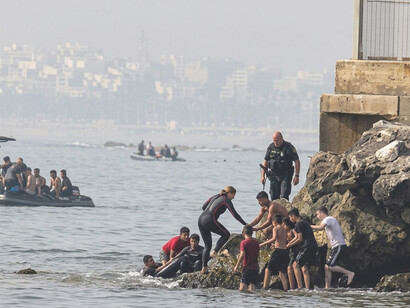
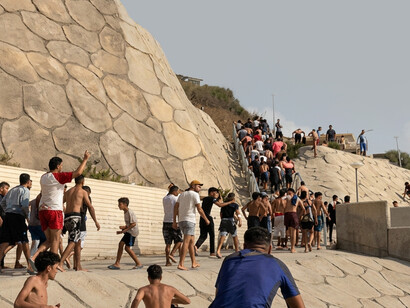
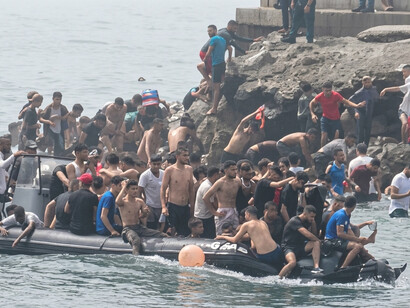
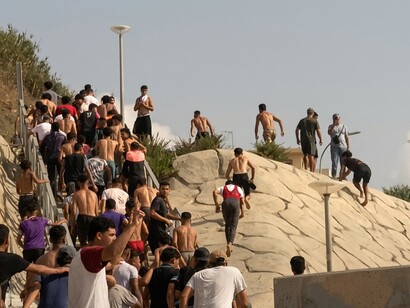
The images and videos that circulated on social media were impressive. Thousands of people arrived in Ceuta by swimming, many carrying nothing but their own bodies. The numbers vary depending on the source. So far, the Spanish government has released an initial estimate of 50,000 people who invaded the territory. The autonomous government of Ceuta, however, reported that at least 60,000 individuals entered the enclave.
Regardless of the figures, what is known is that Ceuta could never have been prepared for such an event, since its Temporary Immigrant Accommodation Center had only 512 vacancies, overloading the region's system. Most of the illegal immigrants who entered were of Moroccan origin, but it is also very important to report that other ethnic groups were found among them, especially immigrants who came from the Sahel and other neighboring regions. Those remaining in the enclave currently.
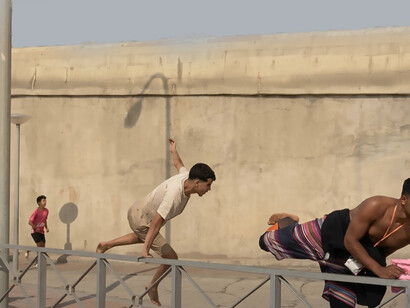
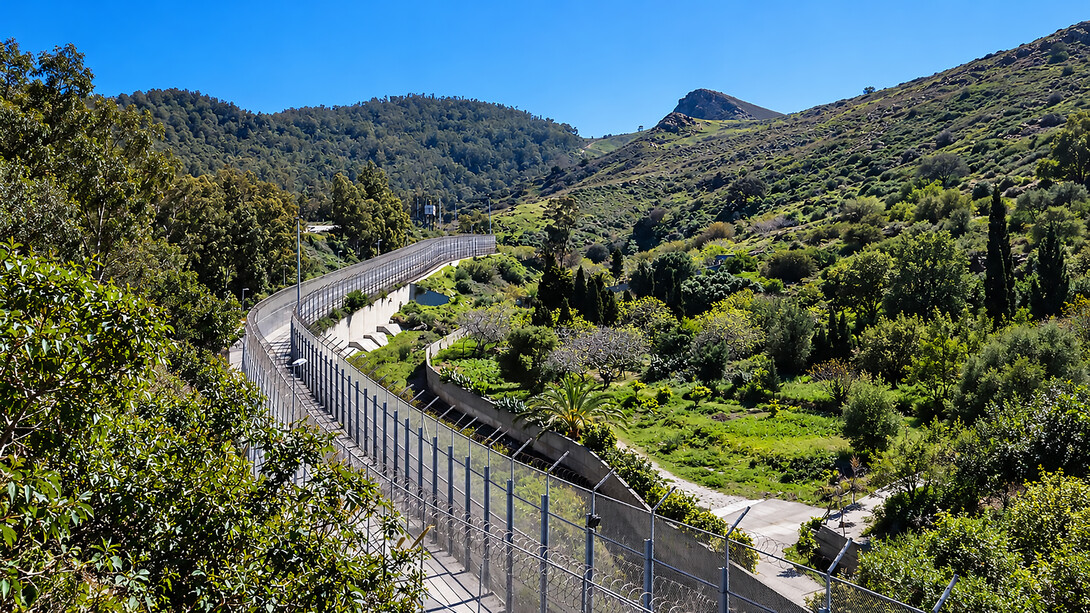
Although the videos showed a sea of young men arriving in Ceuta, it is important to highlight that women and children were among those who arrived, further deepening the vulnerability of the situation. Whether by crossing on foot along the border pier, by climbing the fence that divides the two countries, or by swimming from Fnideq or Belyounech to El Tarajal beach in Ceuta, the human cost is one of the points that most deserves attention.
Sources vary widely on the number of deaths in this crisis, as well as on the number of people who have returned to Morocco so far. What happened was nothing new, just a continuation of a problem the Spanish enclave has been facing for some time, and also an old problem that the European Union has faced every year regarding the security and control of its borders.
Nevertheless, there appear to be factors that may or may not have contributed to what happened in Ceuta. On July 8th, before the tragedy, the Spanish Supreme Court published a new ruling on immigration and asylum laws. Now, migrants intercepted at sea must undergo the ordinary immigration proceedings regulated by Article 58.3. This new measure stipulates that migrants arriving by sea can receive legal assistance and the possibility of asylum. This involves a whole procedural formality, slowing down the process of returning these people to their countries of origin.
The Spanish government and police unions saw this change as a pull effect, that is, a facilitation of entry and stay of migrants due to the change in immigration law in order to encourage and attempt the crossing. For Sánchez, the Prime Minister of Spain, what happened in Ceuta is due to the increase in human trafficking networks; those who distorted the sentence and encouraged crossings at the end of July.
It is important to emphasize that after the measure, many border agents were left without legal coverage or with limited control over their actions, a very dangerous effect on those who are on the front line protecting the borders of the European Union.
Some dispute this view, arguing that the law cannot be blamed for problems with deeper, earlier roots. For example, lawyer Patricia Fernández believes that the migratory flow into the Spanish enclave was already growing before the July 30th crisis due to long-standing structural problems, not a change in judicial law. Issues such as the economic crisis, migration routes shaped by conflict, and demographic pressure among the Sahel, Morocco, and Spain had already been contributing to the influx of migrants into the region.
The Spanish case is not an isolated phenomenon. Currently, the Mediterranean region is one of the most intense migration areas in the world, with many irregular migrants seeking Europe or the Canary Islands as their destination. This is the case for thousands of Bangladeshis, Egyptians, Eritreans, and Libyans who cross the central Mediterranean route to Italy every year. Italy, in particular, is one of the European countries that receive the most undocumented immigrants and was one of the first to take a negative stance on what happened in Ceuta.
The same is true for Sudanese, Afghans, and Libyans who decide to cross the eastern Mediterranean route in search of the borders of Cyprus, Greece, and Bulgaria, although a 28% decrease in the volume of irregular movements has been observed. On the western side, the situation is no different. Thousands of people from North Africa cross the Mediterranean Sea in search of Spain, mainly from Algeria, Somalia, and Morocco.
There are also other contexts of irregular migration, with routes extending through the Balkan region. Many Syrians, Turks, and Afghans enter Europe via this route to reach countries such as Hungary, Croatia, Romania, and Bulgaria. It's clear, then, that Europe is actually under pressure from all sides, but recent data from Frontex shows a curious situation.
Overall, the EU recorded a 37% drop in illegal crossings in 2026 between January and July, with approximately 61,000 detections. In the case of the central route (Italy), the drop was around 55%, while on the eastern route it was 28%. The western route, precisely where migrants seek Spain, increased by 37%. This shows that, in a general context, illegal migration on European borders is being combated with relative success, while in the Spanish case, migration protection policies have proven less effective. This does not mean that Spain is the problem, but rather that although the data shows a decrease in irregular entry movements throughout Europe, nothing guarantees that the situation will remain the same if constant control and protection measures are not applied.
And what appears to be a weakness in the EU's internal structure is precisely this. Following the events in Ceuta, Italian Prime Minister Giorgia Meloni decided to temporarily suspend the Schengen Agreement on maritime and air links with Spain. The rationale was to coordinate migration policies at the European level and to combat and control the entry of illegal migrants into Italian territory. This measure was also publicly supported by other EU member states, such as Denmark and Finland, demonstrating the institutional and political fragility of the bloc, since it is not permitted for one member state to expel another from the agreement.
Spain, of course, did not let it go unanswered. More than just making statements on social media, as Tajani had done, Pedro Sánchez used data to counter the Italian measure, showing that between 2021 and 2026, approximately 478,600 illegal migrants entered Italy, more than double the number in Spain. Therefore, the Italian measure had an unfounded justification.
After Spain pressured Italy to revoke this measure, which Italy refused, Spain has now also closed its Schengen border with Italy, initiating diplomatic tension between Meloni and Sánchez and between Albares and Tajani. The diplomatic tension on both sides and the measures adopted open the door for other member states to act accordingly, which would be problematic since the measures go against EU regulations. Moreover, this behavior by the states occurred purely due to political perception and not objective data, with developments that are still ongoing and results that could persist indefinitely.
One thing is certain: what happened in Ceuta extends beyond a migration crisis; it also represents a reality that could affect other European countries, a reality that is neither unfounded nor unlikely. This crisis also fuels political discourse that may or may not contain valid arguments, in addition to contributing to general social anxiety and public polarization.
Some people have a genuine fear of the uncontrolled flow of migration in Europe and how it might affect housing, employment, security, and the organization of public life. These concerns and fears are well-founded; many European cities are already feeling the weight of the consequences of uncontrolled immigration. Some defend and support immigration, arguing that the host countries need foreign labor, an undeniable fact. Some people still view what happened in Ceuta not with concern and fear, but with a more humanitarian and compassionate perspective towards those who risk everything, including their own lives, in search of a better life.
The crisis in Ceuta is both a warning and a lesson. For institutions, for people, for the European bloc, for the world. Action is needed so that both sides are satisfied: those vulnerable people who risk their lives crossing the sea in search of dignity and those who receive them, who also need their rights guaranteed and respected.