English
 Español
 Français
 Deutsch
 Italiano
 Português

There is a great challenge for humankind about work and those who work, a vital question for our daily lives and for our future is once again raised: what kind of work civilization do we want? Work is the center of the economy, it is the engine of growth, it is the energy that drives progress. And if all this is true, the work must have as its central objective that of taking care of society. In this condition, it is also true that this care must also be valid for the worker.
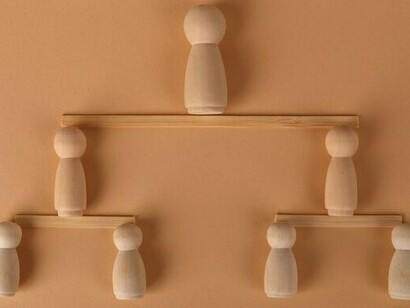
We cannot ignore a truth that is as big as those corpses in the closet that we want to hide: work is sometimes coercive. You don't have to study Socrates to understand that submitting to standards is not a meaningless act. An essential condition of work is respect for authority. The boss, the leader, the superior says, and the team, the employees, and the subordinates obey. That's how it is and it should be for things to work.
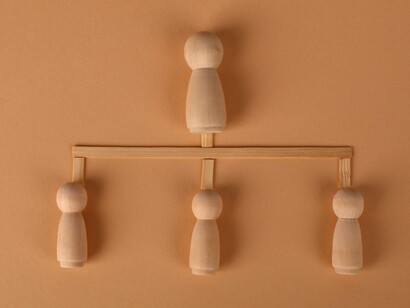
Without hierarchies there is no leadership and authority is the bastion that allows someone to dictate the course and for others to follow it. It is an indispensable element of administrative management, so much so that Henri Fayol determined it as one of the principles of administration. Of course, obedience is one thing and abuse and threat are another.
Obedience, understood as conformity between what is ordered and what is obeyed, must be nourished with an essential ingredient: the hope of a more equitable management. In particular, it is about the alignment between activities and relationships between stakeholders. These conditions are what give meaning to work, both for managers and subordinates. It is also the precondition for the manifestation of the spirituality of work.
Work is not just a way to earn a living and bring bread and salt to our tables; it is a way to give purpose to our lives. Working is an encounter with transcendence. In the Western tradition, for example, Christianity has seen work not as a punishment but as a means to serve and improve society. For Eastern traditions, work is the performance of what we like to do; it is what drives us to get up in the morning. Ikigai seeks that the individual find a balance between what he is good at, what he loves to do and what he can be paid for. At the center of this balance is purpose.
But be careful; work is not the only source to achieve our purposes. When work becomes the sine qua non engine of life, when we abuse and center our life around our work activities, we enter into work stress, burnout syndrome, illness, and ultimately, the opposite of what is intended. If work is the absolute axis of life, we lose essence, we lose individuality, and we distance ourselves from transcendence; we become modern slaves, barter commodities. Those of us who work should not be intelligent robots but human beings with dignity.
The great challenge of our day is to attend to the foundational element, the cornerstone: the dignity of the person. Working is not acquiring the language of machines, therefore, in order not to fall into perversity—especially in times of artificial intelligence—it is to recognize the human being who works and respect his rights. To this end, these rights must be accompanied by the responsibility of the person who carries out an activity.
It is very important to emphasize this social dimension in which work is a means, not an end. It is the channel through which we will unite personal development, service to society, and the transformation of our world. It is, therefore, a commitment that is acquired with awareness and joy; it is the construction of a bridge of empathy between employer and employee; it is the care of a harmonious, fair and safe work environment.
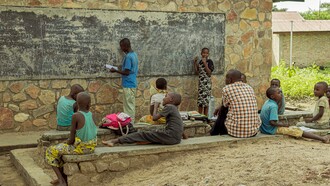
We know that is not always the case. It is not in many rural communities or in corporate environments; it is not so when there are infants tied by a chain while they work, as it is not for an old man who feels discriminated against, when his years of experience are a reason for contempt rather than an asset, or when a woman crashes into a glass ceiling and receives less each payday while others get more doing the same. Work has to uphold values that defend harmony, justice, and security.
Today, in the context of a fluid society to which Zygmunt Bauman refers, in which we are confronted with fluctuating moral and social referents, the evaluation of work and work relationships is a requirement that we should all embrace.
Nowadays, there are demands for economic, financial, social, or other qualification criteria to avoid unfavorable judgments: in competition between workers, employers see you as a vector of productivity linked to competition. This is how it is and this is how it should be. But you have to pay attention, watch, and understand that the worker is also involved in this competitive game. By trying to follow the rule as strictly as possible, you want to make a good impression on your boss. At the same time, this allows him to compare himself with his colleagues and find in this comparison a sign of recognition.
Therein lies the important detail: contrary to the logic of conceiving society as opposed to the community, careful work combats the purely instrumental drifts of work. We must seek the dignity of the worker. The worker is not a machine, it is more. The work is much broader than a process that must be carried out. If we are left with that reduced vision, artificial intelligence can replace us today, now. Work can be and must be more than a place of human fulfillment but also a participation in the execution of creation. The work is also concerned with creation, innovation, and excellence.
If we want to give it another dimension, a higher one, work is the realization of this mandate; man, every human being, reflects the very action of the greatness of the universe. Thus, the concepts of human solidarity, responsible innovation, and sustainable stewardship transform work into an activity that participates in the construction of the common good.