English
 Español
 Français
 Deutsch
 Italiano
 Português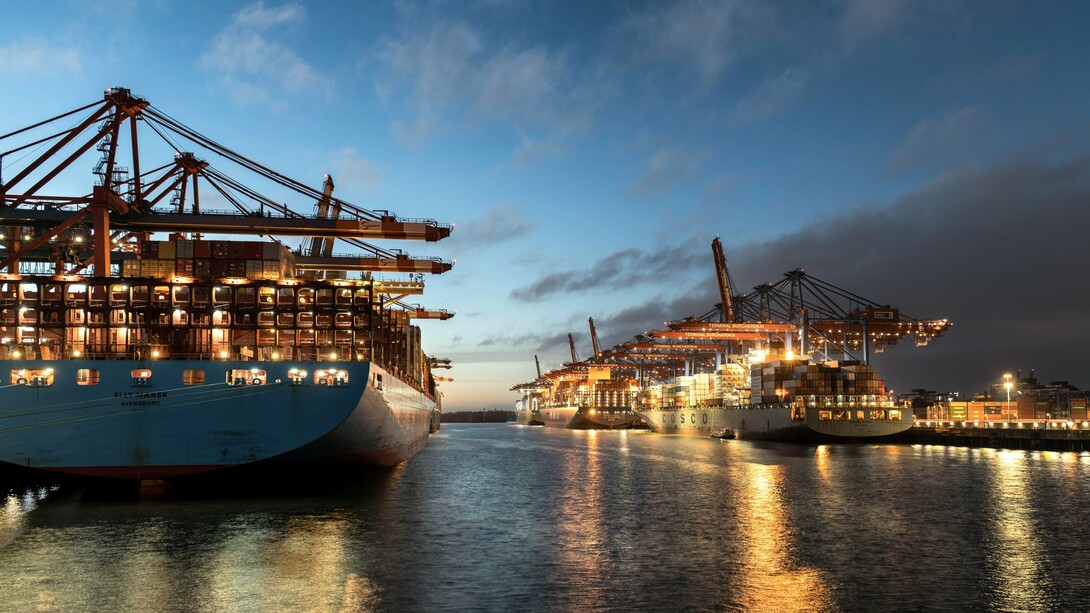
The threats facing nations no longer always come from across borders, nor do they necessarily wear military uniforms, nor do they manifest as clearly defined wars. It may begin with a malicious email, a cheap drone, a disruption in a shipping lane, a drought, or a digital disinformation campaign—and then, within days, escalate into a crisis involving food, medicine, energy, or social stability.
This is the central reality of the post-Cold War and post-“War on Terror” world: national security is no longer a purely military matter managed solely by armies and security agencies; rather, it has become a daily test of a state’s ability to protect the very flows of life itself—the flow of goods, information, energy, water, medicine, and public trust.
The world is not necessarily heading toward a conventional world war, but it is entering a far more complex phase: multifaceted international competition, grey-zone conflicts without a formal declaration of war, exploitable internal vulnerabilities, and low-cost technologies capable of granting small actors power that was once the exclusive domain of major powers. In this landscape, a country may lose a strategic round not because its military was defeated on the battlefield, but because its ports were paralyzed, its digital networks were compromised, its supply chains collapsed, or its institutions were unable to absorb a simultaneous shock.
From terrorism to great power competition
For more than two decades, terrorism dominated Western security doctrine and a large part of the regional security agenda. In the wake of the September 11 attacks, the war on terrorism shaped priorities for military spending, troop deployments, intelligence alliances, and the very definition of the threat itself.
But the centre of gravity has gradually shifted. In the eyes of the major powers, terrorism is no longer the sole threat—or even the highest-priority one—but has become a chronic danger requiring sustained containment and management. On the other hand, competition among the major powers has returned to the forefront of strategic thinking as they struggle for influence, technology, rare minerals, data, sea lanes, and industrial capabilities. This shift does not mean that armed groups have lost their ability to cause harm. In fact, they remain capable of striking, adapting, exploiting divisions, and expanding into fragile regions. But the strategic mistake lies in treating them as a threat separate from the new international environment.
Today’s armed groups operate within a world increasingly crowded with proxies, informal economies, accessible technologies, and local conflicts where the interests of regional and international powers intersect. They do not need to possess tanks or fighter jets to exert a political or economic impact that exceeds their actual size. It is enough for them to disrupt a maritime route, target infrastructure, spread panic in a fragile information space, or exploit an institutional vacuum in a border region.
The undeclared war
In conventional wars, the onset of conflict is relatively clear: military buildup, political warnings, mutual shelling, or border crossings. In the new world, however, the most dangerous conflicts operate just below the threshold of war.
This is where the “grey zone” emerges: a space where sanctions, cyberattacks, disinformation, economic pressure, local proxies, piracy, and limited targeting of infrastructure overlap. There is no declaration of war, but there is a continuous attrition of the adversary. There is no single military front, but there are fronts at sea, in cyberspace, in the markets, and in public opinion.
The danger of this type of conflict is that it confuses political decision-making. How does a state respond to a cyberattack whose perpetrator has not been identified? How does it distinguish between a spontaneous disinformation campaign and an organised operation? And how does it balance the need for deterrence with the risk of escalation? How does it protect its institutions from an adversary that seeks not direct military victory but rather to erode trust, slow down the economy, and disrupt decision-making?
In this region, firepower alone is not enough. Deterrence becomes more complex: the ability to detect an attack, identify its source, protect critical systems, and send a clear message that the cost of the attack will outweigh its gains. But it also becomes a matter of resilience; for a state that quickly restores its services, prevents panic, and ensures the continuity of supplies deprives its adversary of the political objective of the attack.
The economy is no longer on the sidelines
Perhaps the most striking shift has been the return of the economy to the very heart of national security. Supply chains are no longer merely a commercial matter determined by companies and markets; they have become the lifelines of sovereignty. Medicine, food, energy, semiconductors, communications, and logistics are no longer sectors separate from defence; they are integral to a nation’s ability to survive and function under pressure.
The disruptions to shipping in the Red Sea have demonstrated that a regional crisis can quickly escalate into a global one. What happens near a maritime corridor is not confined to the surrounding geography; rather, it affects shipping and insurance rates, delivery times for goods, production costs, food prices, corporate plans, and the revenues of countries that depend on transit trade.
Thus, maritime corridors are not merely lines on a map but strategic infrastructure for the global economic system. Every canal, strait, or port represents both a geopolitical opportunity and a potential vulnerability.
For Egypt, the Suez Canal transcends its direct economic significance. It is a strategic asset that links the country’s location to its role in global trade and grants it a stature that is inseparable from the stability of international navigation. However, this strategic position does not automatically hold value; rather, it requires a complex protection system that includes maritime security, port security, logistical capacity, digital infrastructure, contingency plans, and regional and international coordination.
The most important lesson is that a country is not measured solely by what it possesses, but by its ability to ensure the continuity of what it possesses in times of turmoil.
A fragile state: more dangerous than a military vacuum
In traditional analyses, state weakness is viewed as an internal developmental or political problem. But in the new security environment, institutional fragility has become a matter of national security par excellence.
A state that loses its ability to deliver services, protect citizens, enforce the law, manage resources, and provide justice does not leave a neutral vacuum. This vacuum is quickly filled by smuggling networks, armed groups, parallel economies, conflicting local loyalties, or external powers seeking a foothold.
For this reason, the fight against violence does not always begin on the battlefield. Sometimes it begins with an efficiently run police station, a court that acts promptly, a school that offers opportunities, a hospital that reaches a marginalised area, a development project that provides a stable income, or a local administration that restores the community’s trust.
This is not idealistic rhetoric about development, but rather a practical understanding of security. Extremist groups thrive not only because of their ideas but also because of the environments that allow them to evolve from an idea into an organisation, from an organisation into a parallel authority, and from a parallel authority into a cross-border threat.
Security sector reform, in this sense, is not merely a reorganisation of the police, the military, or the intelligence agencies. It is the building of a more efficient and accountable relationship between the state and society so that security becomes a public service and the rule of law prevails—not merely a belated, coercive response to a crisis.
Technology gives the small the power of the big
Technological power is no longer the exclusive domain of wealthy nations or giant institutions. Commercial drones, malware, deepfake tools, data analysis, and generative artificial intelligence are narrowing the gap between the capabilities of major actors and those of smaller ones.
This does not mean that an armed group or a criminal network has become the equal of a major power, but it does mean that the cost of causing harm has dropped dramatically. A low-cost drone could threaten a sensitive facility. A well-designed disinformation campaign could spark widespread panic. A limited breach of an operational platform could disrupt services relied upon by millions of citizens.
Most dangerously, artificial intelligence adds a new element to this equation: speed. It accelerates the production of false information, data analysis, target identification, decision-making, and the development of influential content. However, speed does not equate to wisdom. The faster the decision-making cycle, the greater the risk of miscalculation, unintended escalation, and taking actions that humans do not have time to review.
Therefore, the question is no longer if countries will use artificial intelligence in security and defence, but how they can use it without allowing the technology to become a new source of chaos. What is needed is not a rejection of the technology but the establishment of clear governance for it: human oversight, data protection, legal accountability, and clear limits on automated decision-making for highly sensitive matters.
Climate is not a marginal security issue
One of the aspects most often overlooked by traditional security analyses is the tendency to view climate change as a separate environmental issue. In reality, climate does not create conflict out of thin air, but it acts as a dangerous multiplier of existing risks.
When water becomes scarce, agriculture declines, food prices rise, land degrades, and waves of displacement increase, societies become more vulnerable. When these pressures combine with weak governance, unemployment, and marginalisation, the environment becomes fertile ground for tension, violence, irregular migration, and conflict over resources.
In the Middle East and North Africa, security cannot be separated from water, food, and energy. The equation here is not merely environmental; it is one of a state’s stability, legitimacy, and capacity. Any national security plan that ignores water management, agricultural adaptation, food security, and the protection of communities most vulnerable to climate shocks merely postpones the problem rather than solving it.
True security begins years before a crisis, in decisions regarding investment, urban planning, land and water management, and the protection of vulnerable groups.
Major corridors: opportunity or vulnerability?
Stakes are rising in major economic corridors, rail networks, digital and energy connectivity projects, and new ports. These projects have the potential to reshape the economic landscape and open up vast opportunities for trade and growth.
But infrastructure alone does not create stability. A project designed to enhance connectivity may become a bottleneck if it passes through a politically turbulent region, relies on fragile agreements, lacks security safeguards, or has no operational alternatives in the event of a crisis.
The mistake is to view corridors as engineering lines that ignore politics. Every economic corridor is, at its core, a political and security agreement before it is a trade route. Its success requires stability in the countries through which it passes, coordination among their governments, the ability to protect its facilities, and confidence among investors and transport companies.
Therefore, the question should not be: What is the expected return on the project? Rather: What happens if one of its links is disrupted? What are the alternative routes? What is the cost of a shutdown? Who guarantees protection? And who manages the crisis if politics, security, and the economy become intertwined?
What must countries do?
An effective response to this environment cannot consist solely of increased military spending, despite the importance of military strength and deterrence. Armies remain essential for protecting sovereignty and deterring direct threats, but they cannot, on their own, protect an electrical grid from a cyberattack, prevent a food crisis, address administrative weaknesses, secure the pharmaceutical supply chain, or restore the trust of a marginalised community.
What is needed is a shift from “defensive security” to “integrated security.” This means that the ministries of defence, interior, foreign affairs, economy, transportation, energy, communications, environment, and health must become part of a single system for risk assessment and decision-making.
This transformation first requires the establishment of a permanent national mechanism for complex risks—one that does not merely respond after a crisis has occurred but monitors early warning indicators of stress: disruptions to shipping, fluctuations in food prices, cyberattacks, supplier vulnerabilities, displacement, water scarcity, disinformation campaigns, and the declining resilience of critical infrastructure.
Second, it requires the protection of critical infrastructure: ports, airports, power plants, water networks, hospitals, communications, banks, and food and medicine warehouses. Protection here is not merely physical security; it also includes the ability to operate on backup systems, rapid recovery, protection of digital systems, and vetting the security of suppliers and contractors.
The third track involves making supply chains an integral part of national security planning. It is essential to diversify suppliers, build carefully calculated strategic stockpiles, promote domestic manufacturing in sensitive sectors, develop alternative logistics plans, and identify goods for which the state cannot allow any disruption under any circumstances.
Most important of all is investing in people and institutions. A state capable of withstanding shocks is not merely one that possesses the greatest amount of resources, but one that has disciplined institutions, reliable data, trained leadership, a cooperative private sector, and a society that trusts in the state’s ability to respond.
Power in the age of shocks
In the last century, measures of power tended to be direct comparisons: the number of soldiers, the number of tanks, the strength of the navy, and the range of missiles. Today, while these criteria remain important, they are no longer sufficient.
Power has become the ability to persevere—the ability to keep hospitals running, ports open, communications secure, medicine available, information reliable, markets stable, and institutions capable of making swift decisions without recklessness.
In a world of complex risks, nations succeed not because they are immune to shocks, but because they know how to anticipate them, contain them, recover from them, and learn from them before they turn into total collapse.
That is the new definition of national security: not merely the protection of borders, but the protection of a nation’s ability to remain functional when all of its physical, digital, economic, and social boundaries are being tested simultaneously.