English
 Español
 Français
 Deutsch
 Italiano
 Português
Speaking about peace in a world marked by today’s upheavals seems more like an act of hope than a realistic undertaking. Interestingly, more than twenty years ago, the Human Security Report concluded that the world had entered a phase with the lowest number of wars in the previous forty years. Between 1992 and 2005, the number of armed conflicts declined by 40 percent. Steven Pinker followed a similar line of thought in 2011, suggesting that we might be living in the most peaceful era since the beginning of human civilization. Yet now, in 2026, the world appears to be sinking into conflicts of enormous and uncertain proportions.
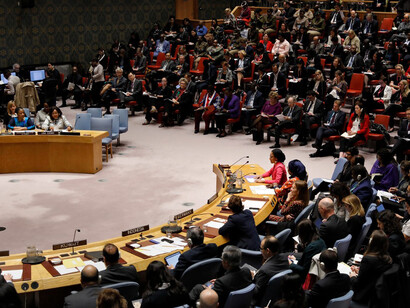
Within this chaos, one figure stands out in the contemporary narrative of peace. Over the last two years, Donald Trump, the current President of the United States, has become one of its most visible advocates (at least at the level of political narrative). Trump claims that he has prevented seven (or possibly even more) wars; he has also presented himself as the person who, by every possible means, attempted to end the war between Russia and Ukraine; he has likewise launched a new international peace initiative. Yet there are also more troubling versions of peacemaking. For example, the attack on Iran has often been framed by the Trump administration itself as an initiative directed toward (total) peace.
All of this leads us to a basic question: are we dealing with irony, parody, or simply with the conceptual vagueness of peace itself? If we follow the logic through which the concept of peace has often been used, that is, if it becomes nothing more than an empty signifier without a clear signified, then nuclear apocalypse would mark the beginning of a phase of total peace. The end of human civilization would become the beginning of total peace. It is not without reason that we say, "Rest in peace." Perhaps this is the kind of peace that world powers are trying to establish when they speak of total peace.
Moving beyond Galtung
Jokes aside, the concept of peace, although immensely popular across all spheres of society (politics, science, religion, and education), has never managed to produce a fully clear definition. There have been attempts, but they have failed to provide a sharp distinction between what peace is and what peace is not.
One of the classic attempts in the literature is that of Galtung (1969). He defined peace through two categories: positive peace and negative peace.
Negative peace referred to the absence of personal or direct violence. It is a situation in which there is no open physical conflict, war, killing, attack, or immediate coercion among human beings. It is defined negatively: it tells us what is not present, but it does not yet tell us whether a society is just or well-ordered.
Positive peace, by contrast, referred to the absence of structural violence. Structural violence exists when power, resources, education, healthcare, life chances, and opportunities are distributed so unequally that some people systematically live below what would otherwise be possible for them to achieve. Galtung therefore linked positive peace with social justice, explicitly stating that positive peace is not simply the silence of weapons but a social order in which injustice is not built into the structure of society itself.
His concept became highly influential. Yet considering the contemporary tensions already mentioned, it may be useful to reconsider and deepen Galtung’s concepts.
The tetralemma of peace
The fundamental idea of defining peace as the absence of violence is not something that can be fully sustained through the logic of distinction. In this text, to define our own approach to peace, we will rely on the tetralemma. The significance of the tetralemma lies in the fact that it challenges the ordinary logic according to which, for any proposition, only one of two options can hold: it is either true or false.
The tetralemma introduces four possibilities for a proposition A:
A.
Not-A.
Both A and not-A.
Neither A nor not-A.
If we take violence as a category, then within the tetralemma it has its distinction and its combinations not with peace, but with non-violence. Violence/non-violence becomes the basic distinction. In the same way, it would be mistaken to claim that the distinction of peace is simply war. Even in wartime, certain aspects of social life may remain aligned with the idea of peace. Ultimately, war or external threat may temporarily stabilize internal tensions and conflicts (see Simmel, 1904; Stein, 1976).
What, then, would be the proper distinction to peace? Simply this: non-peace.
In that context, it becomes possible to derive a tetralemma of peace based on the four possibilities outlined above:
Peace.
Non-peace.
Non-peaceful peace.
Peaceful non-peace.
Here we can see that the positive and negative peace mentioned earlier may be incorporated into the tetralemma, but they do not complete the picture. To describe these four states, we can take two central variables: security (understood as the absence of direct violence) and socio-political and economic justice (understood through the question of authoritarianism and freedom). Now these two categories do not belong to the tetralemma, but once the tetralemma is defined, we use these two variables to describe the cases within it; they are present strictly for empirical purposes.
It is also important to note that we are not dealing here with the absolute question of total peace. Instead, these categories help us assess how closely a society resembles these specific conditions of ideal types.
What kind of peace do we actually want?
Let us begin with (4) peaceful non-peace. This category may include struggles for human rights. The struggle for women’s suffrage, for instance, was not peaceful. It involved significant direct violence. Yet its underlying orientation was toward the establishment of freedom in a crucial dimension of women’s existence and identity. There are many other examples of attempts to achieve freedom or to overcome forms of authoritarianism that were highly violent in their means but were directed toward ending non-peaceful peace. This type of unrest is often honored with the Nobel Peace Prize, yet in its essence, it belongs not to peace, but to non-peace. It is important to emphasize that this does not morally delegitimize such struggles; it only indicates that they should not be conceptually confused with peace itself.
Next is (3) non-peaceful peace, the exact opposite. This is a condition characterized by the absence of overt violence but by high levels of authoritarianism and the suppression of freedom. Here, peace prevails as the dominant term, but it is a peace born of fear and control. In the Democratic People’s Republic of Korea, for example, one finds this type of peace to a far greater degree than in the Scandinavian countries. Social peace in this type of order is subordinated to absolute security, while freedom, emancipation, and critical thought are marginalized. When world leaders speak of total peace, this is perhaps the type of peace that is easiest to achieve. It is a condition that leads toward totalitarianism, obedience, and human stagnation. It is peace, but in a profoundly negative sense. If one follows this categorization, then certain world leaders may indeed deserve multiple Nobel Peace Prizes.
In the clearer version of the tetralemma, (2) non-peace is a condition of complete unrest in which both security and freedom fail. It is a state in which direct violence is high, while freedom remains deeply marginalized. One of the clearest examples of near-total non-peace remains National Socialism in Germany, where such a condition was realized to a significant degree. Here, the absolute erasure of individual liberties was coupled with industrial-scale violence, both internally against its own population and externally through total war. Another example can be seen in the rule of the Khmer in Cambodia, where the suppression of all personal freedom was enforced through mass extermination.
Finally, we are left with (1) peace, or peaceful peace, where both security and freedom thrive. As with non-peace, this category is rarer than the mixed combinations. Living in a time of peace presupposes conditions in which the freedom of individuals is elevated to the center of social order, while stability and the absence of violence are simultaneously preserved. Very often, however, these two principles appear to conflict. In contemporary society, security is often inversely proportional to freedom. This brings us to the paradox that increasing freedom frequently seems to imply decreasing security.
That is a question for another discussion. Yet it is worth adding here that the structural conditions of today’s societies, in the context of growing hedonism and egocentrism (Fromm, 2015), contribute to the widening gap between security and freedom. Still, history does provide examples in which peaceful peace can be observed to some degree, such as in the countries of Northern Europe, where social democracy has been realized in its more substantive form (it might be that this form of governance is becoming the artifact of history, though).
Conclusion
The tetralemma of peace presented here gives us an analytical framework for evaluating the very concept of peace itself, while also showing how difficult genuine peaceful peace is to achieve. More often, what is presented narratively as peace tends to drift toward control (non-peaceful peace) or justified struggle (peaceful non-peace). In that sense, even something like the Nobel Peace Prize could only be assessed objectively through the tetralemma proposed here.
So, as a conceptual tool, this framework offers us a means of arranging more clearly the political, scientific, and civic narratives of our present moment. Only once we possess an adequate analytical tool can we begin to ask what kind of peace we want, what kind of peace is possible, and whether we should be wary of those who speak of total peace. In that sense, total peace leans less toward peaceful peace than toward nuclear apocalypse.