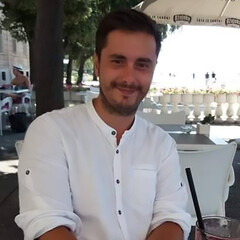
Dr Erik Brezovec was born on August 25, 1992, in Varaždin, Croatia. He graduated in sociology from the Faculty of Croatian Studies at the University of Zagreb, where he first developed an interest in the interconnections between social theory, communication, and the structures of modernity. In 2021, he earned his PhD in Sociology from the Faculty of Humanities and Social Sciences, University of Zagreb, with a dissertation titled Social Inclusion and Exclusion of Alcohol Consumption in Krapinsko-zagorska County. His doctoral research combined empirical and theoretical approaches to examine how everyday social practices of consumption reflect broader mechanisms of inclusion and exclusion within the social system, thus opening his long-term engagement with Luhmann’s theory of social systems and its analytical potential for contemporary sociology.
After completing his doctorate, Erik continued his academic career at the Faculty of Croatian Studies, Department of Sociology, University of Zagreb, where he teaches courses in general sociology, sociological theory, and the sociology of knowledge. His academic work is characterized by an attempt to bridge sociological concepts with contemporary technological and epistemological transformations.
In the past two years, Erik’s professional focus has turned more decisively toward the evolving relationship between communication and technological potential, with particular attention to generative artificial intelligence (AI). Rather than treating technology as an external object of study, his research examines how society observes, interprets, and structures itself through references to technological possibilities. From this perspective, generative AI is not understood as an autonomous actor or tool but as a semantic and communicative event through which modern society reflects on its own conditions of knowledge, control, and creativity. Rooted in Luhmann’s theory of social systems, Erik explores how references to AI reconfigure the boundaries of what counts as knowledge, learning, or cognition within education and beyond. In his view, generative AI operates as a communication that irritates existing distinctions between human and machine, teacher and learner, and creativity and reproduction.
Together with Prof. Steven Watson from the University of Cambridge, Erik has co-developed a new theoretical framework called autopoietic ecology. Building on the foundations of Niklas Luhmann’s theory of social systems, this concept extends systems theory toward a de-essentialized and ecological mode of thinking. Autopoietic ecology offers a way to conceptualize the complex interplay between materiality, persons, and social systems, emphasizing the recursive operations through which distinctions and boundaries are produced and stabilized. It seeks to move beyond the anthropocentric and essentialist assumptions that still pervade much of contemporary social theory. Through this theoretical innovation, Erik and Steven aim to provide a flexible analytical tool that can capture the multi-layered interactions between social and technological systems in a world increasingly shaped by algorithmic and generative processes.
Throughout his career, Erik has authored dozens of scholarly and professional publications, including journal articles, book chapters, and one monograph. His writing consistently demonstrates a commitment to connecting sociological theory with empirical inquiry and to developing conceptual tools that clarify how communication structures and reproduces modern society. As a member of the Croatian Sociological Association, Erik serves as Secretary of the Section for Theoretical Sociology, contributing to the promotion of theoretical reflection within Croatian sociology and to the international visibility of Croatian scholars. He is also actively involved in mentoring younger researchers and fostering international cooperation.
Beyond academia, Erik is also active in public intellectual life. He is a regular commentator on the weekly intellectual talk show Peti dan (The Fifth Day) on Croatian National Television (HRT), where he discusses contemporary social, cultural, and technological issues from a sociological perspective. Through this engagement, he seeks to bring theoretical reflection into the public sphere, fostering critical dialogue about the transformations of modern society, the role of knowledge, and the ethical and communicative challenges of technological development.
Erik’s intellectual orientation is guided by a consistent theoretical ambition: to understand how communication, as the elementary operation of society, continuously reproduces and redefines distinctions such as inclusion and exclusion, human and machine, and knowledge and ignorance. Whether through the lens of alcohol consumption, educational transformation, or artificial intelligence, his research is driven by a desire to uncover the communicative mechanisms through which society reflects on itself and adapts to new environments.

















 English
 Español
 Français
 Deutsch
 Italiano
 Português