English
 Español
 Français
 Deutsch
 Italiano
 Português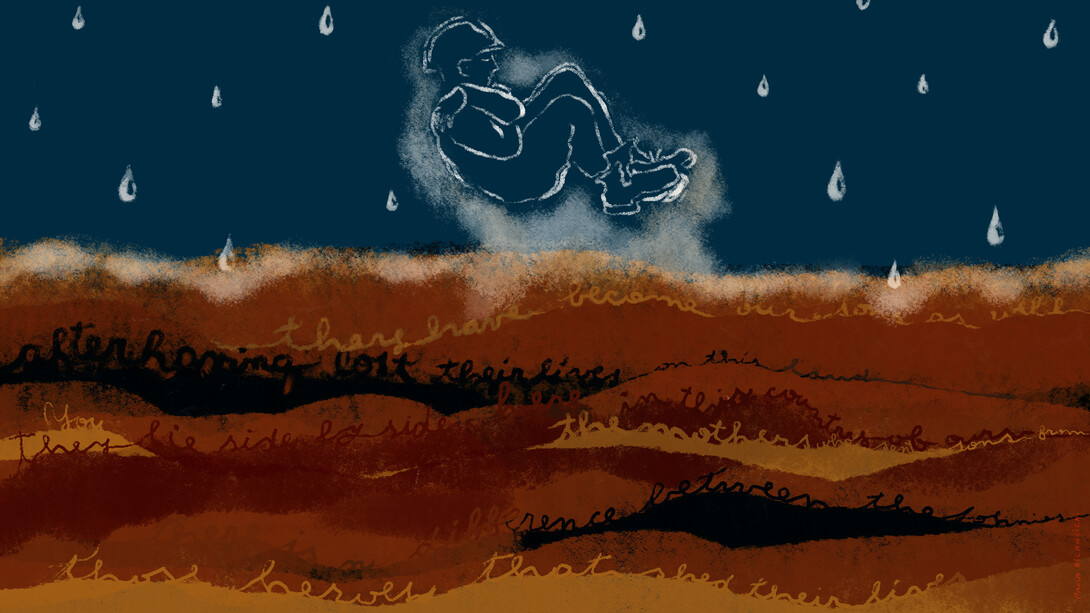
Humanity is going through a time of unusual intolerance and violence, and we run the risk of descending into a spiral of destruction and death that could have been avoided. In these circumstances, it is useful to remember an episode in history that shows how words can bring closure to a painful historical episode, and at the same time console those who lost loved ones.
Every April, citizens of Turkey, as well as those from Australia and New Zealand, gather in northwestern Turkey and rend homage to their ancestors who lost their lives in the fields of Canakkale, during what is generally known as the Gallipoli or Dardanelles campaign, and also as the Battle of Gallipoli.
The Allied powers, Britain and France, tried to make the Ottoman Empire capitulate by taking control of the Turkish Straits, which comprise the Bosphorus, the Sea of Marmara, and the Dardanelles. They are a critical 164-nautical-mile international waterway that connects the Black Sea to the Mediterranean, which constitutes a major geopolitical chokepoint dividing Europe and Asia.
On April 25, 1915, British and French forces were complemented by thousands of soldiers from the Australian and New Zealand Army Corps (ANZAC) and landed in what would later be called Anzac Cove on the Gallipoli Peninsula in Turkey, as part of the Allied Forces, part of the Mediterranean Expeditionary Force, to support a naval push toward Constantinople. But they faced strong resistance from the Ottoman forces.
Should the Allied powers have been successful in taking the Turkish Straits, this would have exposed the Ottoman capital of Constantinople to bombardment by Allied forces, separating it from the Asian part of the empire. Should the Ottoman Empire have been defeated, the Bosphorus and Dardanelles straits would have been opened to the Allies' supplies to the warm-water ports of Russia.
The Battle of Gallipoli started in February 1915 with the Allied fleet trying to force passage through the Dardanelles. It ended in January 1916 when, after eight months of fighting, over 250,000 soldiers on each side lost their lives. The campaign was stopped, and the invasion force withdrew. It was a costly campaign for both sides, and a sound defeat for the Allied powers and for the sponsor of the expedition, especially for the First Lord of the Admiralty, Winston Churchill.
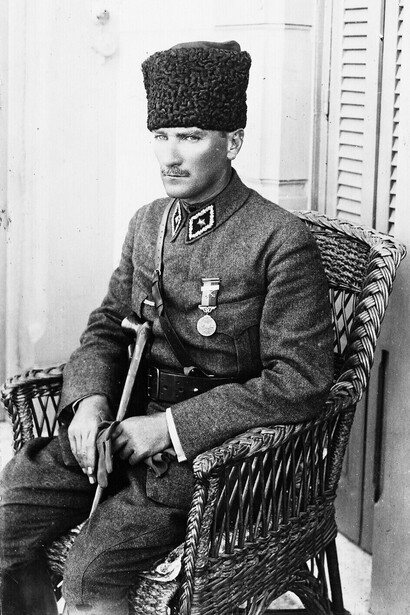
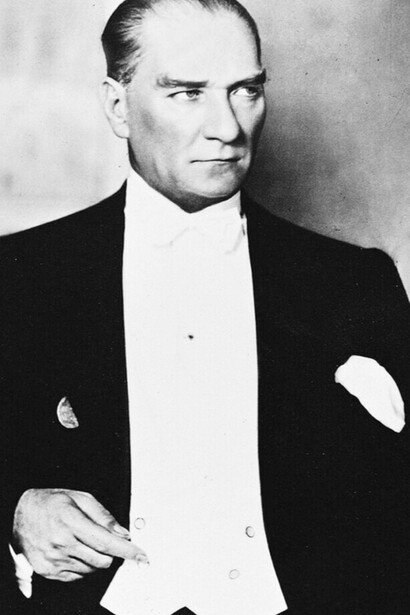
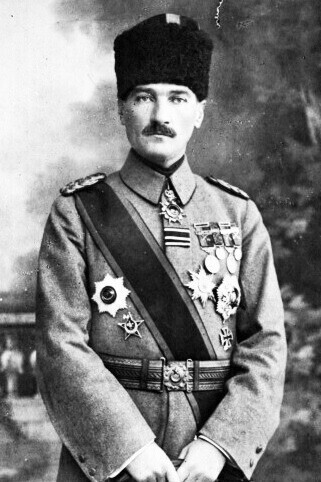
It was a remarkable victory for the Turkish forces, commanded by Mustafa Kemal Atatṻrk (Atatṻrk means Father of the Turks). Mustafa Kemal was highly revered after that battle and went on to become the founder and first president of the Republic of Turkey in 1923. Mustafa Kemal, then a 34-year-old Lt.-Col., had been familiar with the Gallipoli Peninsula from his operations against Bulgaria during the Balkan War.
As president of Turkey, Mustafa Kemal led a sweeping set of reforms to build a republican and secular nation-state. He made primary education free and compulsory, gave women equal civil and political rights as men, mandated new language and dress codes, and considerably shrank the role of Islam in the country.
In addition, he closed all religious schools, prohibited the wearing of headscarves among public sector employees, adopted the Gregorian calendar in place of the Islamic calendar, changed the Turkish alphabet from Arabic letters to Roman ones, and even forbade the wearing of fez hats among men.
For the Australian and New Zealand forces, it marked the beginning of national consciousness and laid the foundations for friendly relations among the people from Turkey, Australia, and New Zealand. 25 April, known as Anzac Day, the anniversary of the landings, is the most significant commemoration for the two countries.
The prestige Mustafa Kemal gained during the Gallipoli Campaign allowed him to create the Republic of Turkey as a secular nation with Western values, revitalizing it from the ruins of the Ottoman Empire. After the Gallipoli campaign, he proved to be as generous in peace as he had been daring in war.
An incident showed his stature as a statesman. 14 years after the Gallipoli Campaign, and as president of Turkey, Mustafa Kemal was given a letter by his aide-de-camp. In the letter, the mothers of the Anzac soldiers fallen at Gallipoli were requesting permission to visit the graves of their sons. The Turkish leader thought briefly on how to respond. His aide suggested to him, “Warn them that if anyone invades us again, we’ll break off their legs.” Mustafa Kemal, however, said, “I cannot do that.” Instead, he sat down and wrote to the mothers of the Anzac soldiers,
Those heroes that shed their blood and lost their lives… You are now lying in the soil of a friendly country. Therefore, rest in peace. There is no difference between the Johnnies and the Mehmets to us where they lie side by side here in this country of ours… You, the mothers who sent their sons from faraway countries, wipe away your tears; your sons are now lying in our bosom and are at peace. After having lost their lives on this land, they have become our sons as well.
The words are now inscribed in the Memorial of Anzac Cove, which commemorates the loss of thousands of Ottoman and Anzac soldiers who gave up their lives at Gallipoli. They show that Mustafa Kemal wasn’t only a remarkable politician. He was a great statesman as well.