English
 Español
 Français
 Deutsch
 Italiano
 Português
It is very important to understand that making a movie is not a 1-man job, but we often spend 3 hours in a cinema hall whilst eating popcorn and assume that the movie meets our expectations, and we tend to not like the movie anymore by rating it average to below average.
Post-Covid, the idea and imagination of cinema makers around the world hit a roadblock, be it with the actor’s strike, mismanagement of funds, or generating new content for the cinema lovers to explore and enjoy in the cinema halls.
One such industry lies in the hustling and bustling streets of Mumbai, where every Friday at the box office movies are released and their fate is decided by the audience catering to their needs. But what derives their deprivation of watching movies that gets them to spend 1000 bucks every Friday in a crippled economy and yet spend 3 hours of their precious time?
The answer is larger-than-life cinema, i.e., Bollywood. the terminology Bollywood refers to Bombay Wood, i.e., Bollywood. While the name of the city was officially changed to Mumbai in recent times, the term "Bollywood" never went away and became a norm in the Indian film fraternity.
So, what makes Bollywood so different from other forms of cinema?
The art of storytelling in Bollywood runs mainly on characters' layered emotions, which the common man can resonate with, connect to, replicate, and inculcate in their personal and professional lives.
Some of Bollywood’s greatest hits include Amitabh Bachchan’s Dewar and Ramesh Sippy’s Sholay. Ashutosh Gowariker’s Lagaan and Many More—these are some of the many that common people subjectify themselves into, imagining themselves to portray the fictitious character.
Other emotions like romance, wherein The hero is romanticizing the female lead of the movie, which is set in a world far from earth where they live happily ever after, or in an action movie where high-octane stunt people jump from building to building to save themselves or kill the hero to eventually avenge their mission.
Last but not least, drama is the emotion where periodic films based on history or political characters usually drive the market forces to relive a periodic time of the age for 3 hours and imagine oneself idolizing the hardships faced by the people during that period.
Whereas the medicine for all the problems is the comedy genre, which is growing by leaps and bounds, where a cinematic laughter spectacle awaits the viewers to laugh their eyes out and gobble at the gibberish dialogue made by the actors in the movie.
With so many emotions and so much ideation, you might miss out on an opportunity to make a perfect combination to make a picture-perfect film.
It all comes down to the art of writing and storytelling and eventually bringing it to life by the director’s vision and actors’ method of acting and the crew’s handwork undertaken to attain all the final cut.
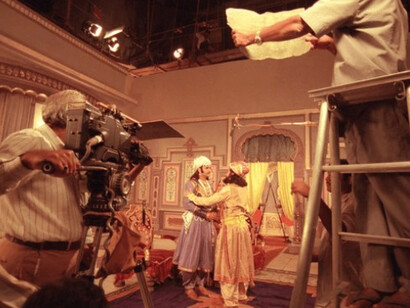
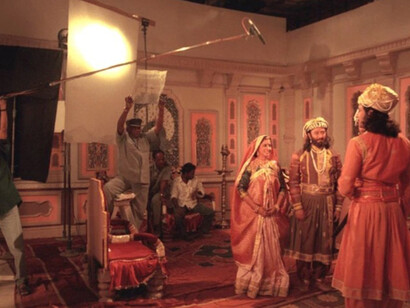
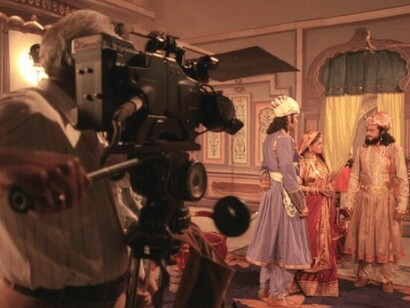
It is not a one-man job but a group of people coming together to bring a fictional story to life. It usually takes up about almost 400 people to make a movie over the span of almost 6 to 8 months or even more than a year if it’s a high-end budget movie.
When compared to Hollywood, the art and style of cinema making may be different, but it sure does have a lot of similar traits and styles of storytelling that resonate with the target audience.
Bollywood Since the post-pandemic, it has been facing a turmoil of issues where most of the useful actors and most renowned filmmakers are not being able to deliver a good series of movies, and it’s been a trend that the South film industry, which is from the south side of India, that is, Tollywood, Kollywood, and Sandalwood, respectively, are making a name for themselves by making pan-Indian movies that are recognized all over the world.
Recently at the Academy Awards, the first-ever Indian movie of southern origin directed by renowned filmmaker S. S. Rajamouli, RRR, won the best original song, the first Oscar ever to be won, and the first-ever Indian-origin movie to even make it to nominations after A. R. Rahman back in the year 2008. So, what is really happening to Bollywood? The industry once known as the pillar of Indian cinema with a great talent of actors is now facing an unforeseen crisis where people do not like the type of movies and content they are producing. There are various parameters and reasons why that is happening.
The rise of OOT during the pandemic, lucrative movie ideas, Duplicating the existing available work and not having good enough dialogues and scripts—even if all the things are achieved, there is still a miss somewhere there where people are not completely or are partially satisfied with the work.
Bollywood nowadays has become a sequel-making machine where second installments of the first original movies are made with new or existing actors or a cinematic universe is created within oneself with a malaxation of actors coming together to face the final boss.
High time Bollywood needs to get back to its originality to survive in the Indian and global markets, as everyone out there is making movies, and it’s a challenge and survival of the fittest, where the content and audience feedback speak for themselves.