English
 Español
 Français
 Deutsch
 Italiano
 Português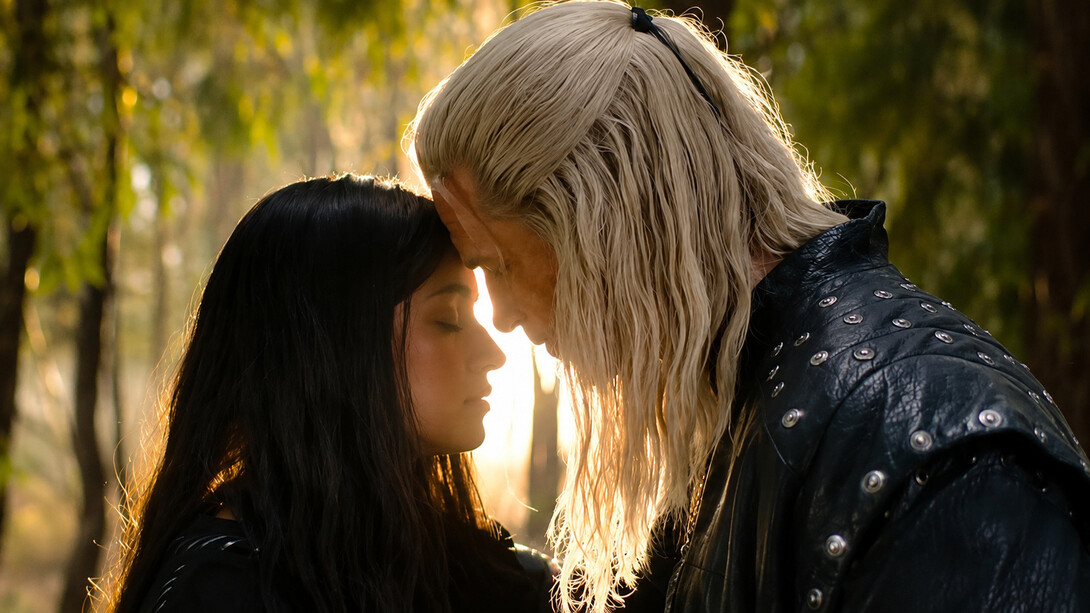
We said we wanted green flags. We posted about emotional maturity. We discussed attachment styles. We learned the language of boundaries, communication, and self-respect. We swore we were done romanticizing red flags.
And then we fell in love with a vampire. Again.
Not just any vampire, but the manipulative, centuries-old, emotionally unstable kind. Or the assassin with a literal demon inside him. Or the resurrected corpse abandoned by his creator. Or the sweet boy next door who turns out to be a serial monster.
It means that the monster boyfriend is back as a full-blown romantic archetype.
We never really broke up with the monster
Supernatural romance isn’t new. Gothic literature built entire mythologies around dangerous men in capes. Dracula wasn’t just a threat: he was seduction with fangs. Frankenstein’s creature wasn’t just horror: he was rejection and longing stitched into a body.
The 2000s gave us Twilight, where the vampire became abstinent, sparkly, and vaguely safe. The 2010s gave us tortured immortals who brooded attractively and occasionally murdered someone for narrative tension. But in the 2020s, the monster boyfriend evolved.
He’s no longer sanitized. He’s no longer pretending to be harmless. He’s dangerous, damaged, and disturbingly honest about it. And audiences love him.
Love as beautiful predation: Interview with the Vampire
Interview with the Vampire (AMC) didn’t revive the gothic romance. It weaponized it. The AMC adaptation turns Louis and Lestat into something far more explicit than earlier versions ever dared. Their relationship is erotic, abusive, obsessive, and intoxicating. It stages toxicity in candlelight and refuses to dim the intensity.
What makes it resonate isn’t that the characters are morally ambiguous. It’s that the show doesn’t pretend they’re safe. Lestat is manipulative. Louis is complicit. The romance is violent, emotional, and sometimes literal.
And audiences don’t deny it. They analyze it. They debate it. They romanticize it while fully aware of the damage. The modern viewer doesn’t need the monster cleaned up. We just need him to be well-written.
The vampire you can shape: Baldur’s Gate 3
Baldur's Gate 3 (Larian Studios) raises the stakes by making the monster interactive. Astarion is charming, vain, traumatized, and absolutely capable of becoming worse if encouraged. He isn’t just a seductive archetype. He’s a moral fork in the road.
You can push him toward empathy, enable his hunger for power, or romanticize his darker ambitions. And that’s the shift. You’re not just watching a dangerous man. You’re participating in his evolution.
Interactivity transforms the monster boyfriend into something almost philosophical. Are you attracted to him because he’s wounded? Because he’s powerful? Because you think you can guide him toward something softer? The game doesn’t answer. It lets you live with your choice.
Romance becomes negotiation with darkness.
The assassin with a demon: Dragon Age: the veilguard
Dragon Age: The Veilguard (BioWare) introduces Lucanis Dellamorte: professional killer, heir to an assassin family, and host to a literal demon. He is not metaphorically complicated. He is spiritually cohabiting with danger. And yes, you can romance him.
Lucanis represents something distinctly 2020s: the monster who knows he’s dangerous. He doesn’t deny it. He doesn’t hide it behind false innocence. He negotiates with it. He restrains it. He acknowledges it. The fantasy isn’t “I can fix him.” It’s “He’s aware of his darkness.”
That awareness feels modern. We don’t want men pretending they’re harmless. We want them to be conscious of their damage. The demon isn’t a flaw to erase. It’s something to manage. And somehow, that transparency feels safer than denial.
The lonely creature: Netflix’s Frankenstein
Frankenstein (Netflix) recenters the Creature not as horror, but as longing. This isn’t a monster defined by evil. It’s being defined by abandonment. He’s stitched together, rejected, misunderstood, and desperate for connection.
Modern adaptations lean into the romantic tragedy of the Creature. He’s not terrifying because he’s violent. He’s devastating because he wants to be seen.
In a culture obsessed with reinvention and identity construction, the stitched body feels strangely familiar. We curate ourselves constantly: online, socially, and emotionally. Frankenstein’s Creature becomes a metaphor for assembled identity. He’s not the threat. He’s the outsider asking to be loved. And that’s far more compelling.
Sweet boy, secret monster: Wednesday
Wednesday (Netflix) adds another layer. Tyler begins as soft-spoken, vulnerable, and almost disarmingly ordinary. Then the reveal lands: he’s the Hyde. The monster. The killer.
What’s fascinating isn’t the twist. It’s the reaction. Instead of recoiling, parts of the internet leaned in. Fan edits. Sympathy threads. Debates about manipulation and autonomy. The dynamic becomes layered: predator and prey, affection and betrayal, softness masking brutality. The monster boyfriend no longer hides in castles. He texts you first.
The soft monster: Geralt and the appeal of contained violence
The Witcher (CD Projekt Red) gives us a different kind of monster boyfriend. Geralt of Rivia is technically not human. He’s mutated, chemically enhanced, socially ostracized, and professionally employed to kill things most people can’t pronounce. On paper, that should disqualify him from romantic viability.
Instead, he became one of the most thirst-edited characters on the internet. What makes Geralt fascinating isn’t that he’s dangerous. It’s that he’s disciplined. His monstrosity is regulated. He doesn’t lose control; he contains it. His violence is procedural. His emotional life, surprisingly, is tender. He grunts. He broods. He baths dramatically.
But underneath the aesthetic, Geralt represents a subtle shift in the monster boyfriend evolution: we’re no longer drawn to chaos. We’re drawn to controlled danger. Power that could destroy but chooses not to. Geralt doesn’t seduce through manipulation or trauma confession. He seduces through restraint. He’s a blade in a sheath.
In a culture suspicious of unchecked masculinity, that restraint feels almost radical. The monster isn’t terrifying because he’s wild. He’s appealing because he’s aware. He knows what he is. And he keeps it leashed.
The reverse monster: Poor Things and the men who think they’re the prize
Poor Things (Yorgos Lanthimos) isn’t a supernatural romance in the traditional “vampire in a velvet shirt” sense, but it absolutely belongs in this conversation, because it reveals why the monster boyfriend is appealing in the first place.
Bella Baxter is the constructed being here: reborn, remade, and treated like an experiment with legs. And what circles around her isn’t heroic devotion; it’s a parade of men who mistake obsession for love and control for intimacy. They don’t bite. They don’t levitate. They don’t have demons inside them. They just want ownership, and they’re weirdly confident that counts as romance.
This is the reverse monster dynamic: the “danger” isn’t supernatural; it’s social. Bella’s “creation” becomes a mirror held up to the kind of masculinity that romantic narratives used to normalize: the possessive lover, the patronizing mentor, and the man who thinks desire gives him rights.
And the film’s punchline (delivered with maximal style) is that Bella refuses to stay in anyone’s narrative cage. She doesn’t exist to redeem a broken man. She becomes the threat: not by being evil, but by being free.
If Interview with the Vampire makes predation beautiful and Baldur’s Gate 3 lets you negotiate it, Poor Things reminds you what the non-supernatural version looks like: not tragic, not sexy, just depressingly familiar.
Why are we comfortable with this again?
It would be easy to dismiss this as an aesthetic obsession. Gothic lighting. Velvet coats. Smirks and slow burns. But the pattern runs deeper.
Fictional danger feels safer than real risk: vampires have rules. Demons have contracts. Supernatural threats follow narrative logic. Real-life emotional danger is far less predictable. We’d rather negotiate immortality than ambiguity.
Trauma is romantic currency: modern monster boyfriends aren’t evil for evil’s sake. They’re wounded. Abused. Abandoned. Controlled. They carry backstories heavy enough to justify their sharp edges. We’re drawn to complexity. And trauma signals depth.
Power plus vulnerability is intoxicating: the monster is dangerous, but he needs you. That combination is irresistible. Strength paired with emotional fracture creates the illusion of significance. You’re not just loved. You’re trusted with something fragile.
Interactivity changed the game: narrative games amplify the fantasy. You aren’t a passive observer. You make choices. You participate in redemption or corruption. Romance becomes collaborative, and that makes danger feel contained.
The monster is honest
The most unsettling truth might be this: the monster boyfriend doesn’t pretend to be harmless.
In a world saturated with curated personas, public apologies, and carefully filtered morality, the supernatural lover is transparent. He bites. He kills. He carries a demon. He wants something.
There’s no false marketing, and that clarity feels refreshing.
We’re not dating monsters. We’re dating metaphors.
Maybe we’re not romanticizing danger. Maybe we’re rehearsing how to love complexity. The monster boyfriend reflects a world that feels unstable, morally gray, and emotionally volatile. He’s powerful but flawed. Capable of harm but aware of it. He embodies contradiction, which feels far more realistic than perfection.
We don’t crave flawless heroes anymore. We crave characters who acknowledge the darkness and step toward connection anyway.
Or maybe we just collectively decided that if love is going to be terrifying, it might as well come with immortality, dramatic lighting, and a very well-written trauma arc. Either way, the monster boyfriend isn’t disappearing. He’s evolving. And apparently, our tastes are too.