English
 Español
 Français
 Deutsch
 Italiano
 Português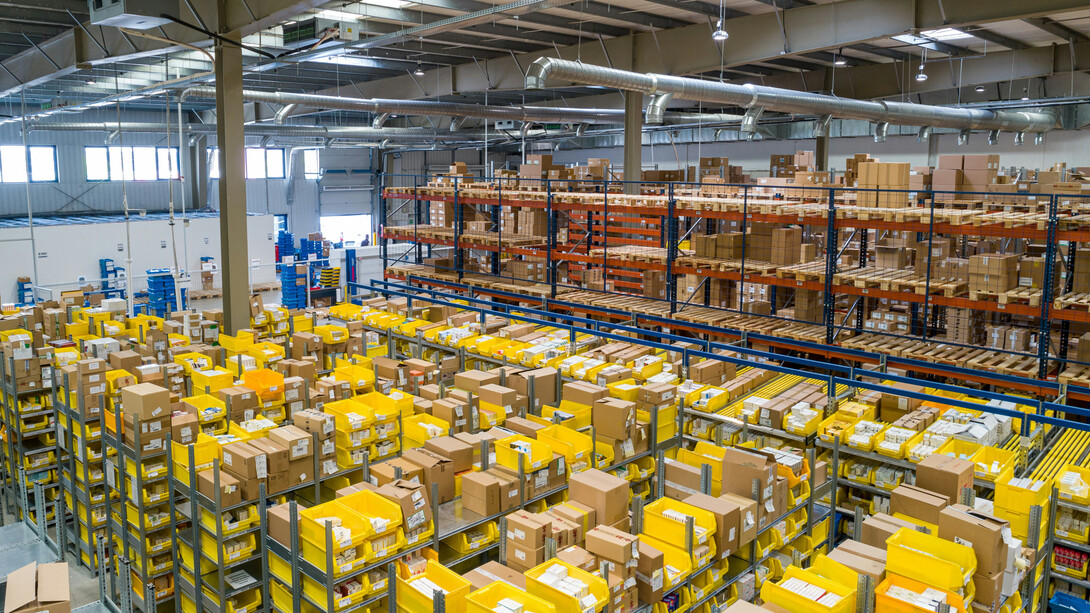
Warehouse work has always been demanding, but the explosive growth of e-commerce has pushed employees to their limits. The pressure for speed and accuracy, combined with physically strenuous and repetitive tasks, has led to a critical challenge for the industry — high rates of employee burnout and turnover. For leaders, retaining skilled workers is a core operational priority.
Fortunately, the same technology driving this demand also offers a powerful solution. Smart warehouses, powered by automation, AI and robotics, are revolutionizing the industry by boosting productivity and fundamentally improving the employee experience. Explore how these specific innovations are easing worker burdens, reducing burnout and creating safer, more fulfilling jobs that people want to keep.
What are smart warehouses, and how do they work?
Generally, smart warehouses have numerous connectivity features and the required underlying infrastructure that allows connecting products such as robots, cloud-based computing systems, artificial intelligence applications and augmented reality devices to the warehouse network. Many professionals overseeing these enhancements implement them slowly. That cautious approach allows them to verify the anticipated return on investment before scaling up their efforts.
Here are some of the main functions of smart warehouses:
Personalizing facilities to fill needs
The customization potential is a significant reason these high-tech facilities have become popular. Even if a person visited several in the same area, they would likely see notable differences between them. This is because there are many ways to build a smart warehouse, and those doing so naturally focus on the advantages they most want to realize.
One location may prioritize an automated storage and retrieval system. Another might initially budget for an intelligent picking system that guides workers to the correct shelves and aisles, helping them retrieve items faster. Sometimes, the technology push affects entire industries, as is the case with many luxury fashion brands.1
Many of these high-tech sites use automation and similar technologies to define every major operational stage, from receiving and storing goods to shipping them to customers and managing inventory. Warehouse management systems are central to overall success because they enable users to coordinate activities and verify accurate inventory counts, among other essential functions.
Executives may also choose to implement products such as robotic exoskeletons and virtual reality training systems. Both can improve employee retention by reducing physical strain and by giving workers greater confidence to learn new skills through interactive, educational modules. There is no single way to build a smart warehouse. Those involved must determine their main drivers for making these upgrades. They can then finalize how those facilities will function and the required infrastructure to ensure reliable performance.
Some leaders have noticed that this approach enables them to make more data-driven decisions and track key metrics, such as supply chain emissions. Others have used the technology to more nimbly cope with demand shifts, allowing companies to handle increased business demands with robots.
Taking individualized approaches
Professionals planning these advanced facilities should determine from the outset what they hope to achieve and in which time frame. The particulars determine how the location will work and what technology it must have to achieve those ideals.
Getting feedback from people at various levels of the organization and from numerous departments also ensures authorities can take many viewpoints into account before reaching their decisions. Because most smart warehouses represent significant investments, it is in leaders' best interests to seek input rather than act first and expect affected parties to adjust later. This input should inform decisions about how the facility and its technology will operate.
Getting workers' opinions is also a practical and effective retention strategy. People typically appreciate it when others ask for their thoughts, especially when the topic concerns changes to their processes or roles.
The benefits of smart warehouses
A December 2025 warehousing report indicated that 90% of these facilities already use AI and machine learning for enhanced operational control, speed and accuracy.2 That finding suggests those technologies will remain at the forefront as the smart warehousing trend gains momentum. Another takeaway from the study is that entities can achieve returns on their investment in as little as two or three years.
That relatively short span should encourage those interested in preparing their warehouses for the future to act decisively without delaying. What are some other benefits that leaders have enjoyed after taking this approach?
Reduced downtime
Unexpected downtime can be prohibitively costly for many brands that run warehouses. That is particularly true if the location contains many high-value or in-demand products. In those cases, customer service teams may hear from upset consumers who have contacted them to find out why their goods have not arrived or other complications have occurred.
Fortunately, the wireless network designs of most smart warehouses have integrated monitors and alerting systems that give insights into warehouse systems.3 Besides informing leaders of potential problems before they occur, these technologies can automate report generation and support real-time decision-making, depending on the specific setup.
The sooner leaders know about issues, the sooner they can respond to them before outages happen. This reality explains why many smart warehouses and other advanced facilities include connected sensors that measure aspects such as a machine's vibrations, temperature levels and output. Those additions increase proactiveness and encourage people to create detailed plans that minimize downtime when it happens.
Better preparedness should also increase employee retention, especially because prolonged outages can unexpectedly cause workers to lose income. The associated ripple effects could prompt them to seek new employment, especially if such pauses occur frequently. When companies can prevent most outages and shorten those that do occur, the associated advantages can boost employee satisfaction.
Automated tasks
Warehousing roles are especially demanding because of the many strenuous and time-consuming duties. Some decision-makers have explored how smart warehouses could reduce or eliminate those requirements. The goal is to enable workers to spend more time on rewarding activities they enjoy, increasing the likelihood that they will stay in their positions long term.
Furniture and housewares brand IKEA has deployed drones in some of its distribution centers after a successful trial at one of its Belgian locations.4 Each drone uses advanced algorithms to identify and photograph the storage locations for particular products.
These vehicles also feature customized indoor positioning systems and obstacle-detection capabilities, enabling them to navigate warehouses easily and without supervision. Workers previously had to count stock levels manually, which was a time-consuming and physically demanding process.
This technological upgrade increases operational efficiency and enables the company to manage its products more efficiently and accurately. Leaders may also begin using the drones in other ways, such as unit loading, shelf inspections or data analysis.
Improved employee productivity
Warehouse facilities are typically sprawling. The large sizes are necessary to meet customer demand, but they also mean workers must travel long distances to pick up goods and prepare them for shipment.
A well-designed smart warehouse can tackle that challenge, especially if it includes technologies that bring items directly to employees. For example, Amazon uses many robots in its facilities, including one that can lift up to 2,500 pounds and weighs more than 500 pounds itself.5
Another system picks the items for hundreds of thousands of customer orders every week. It uses various technologies, including AI, computer vision and robotics to consolidate inventory and optimize storage space, allowing the brand to fulfill orders faster and closer to customers.
Some robots take orders directly to employees’ ergonomically positioned workstations, set up to prevent them from needing to reach above their heads or squat. That approach improves their well-being because those movements are common causes of workplace injuries. When people can avoid repetitive tasks and movements that may strain them, it is easier for them to work at their best. Many will then feel that their employer has their best interests in mind and want to remain with the company.
High-tech warehouses are the future
These benefits illustrate why many decision-makers have decided to upgrade their facilities with technologies that ease many worker burdens. These improvements can reduce turnover, occupational injuries and other complications while simultaneously making the workforce more nimble and able to respond to changing needs.
Notes
1 Inside fashion’s ‘smart’ warehouses at Vogue Business.
2 MIT CTL-Mecalux Report: The State of AI in Warehousing and its Impact in Global Media at MIT Center for Transportation & Logistics.
3 How to Reduce Warehouse Downtime at Fitzgerald Equipment.
4 Ikea expands drone use for inventory management at Supply Chain Movement.
5 Amazon has more than 1 million robots that sort, lift, and carry packages—see them in action at Amazon News.