English
 Español
 Français
 Deutsch
 Italiano
 Português
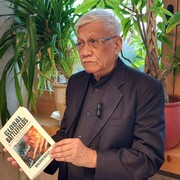
This is an edited version of the commentator’s speech when he received an honoris causa doctorate at the University of Helsinki on May 22, 2026.
I can find no better words to describe the last few months than those of the great Italian Marxist thinker Antonio Gramsci:
The old world is dying, and the new world struggles to be born: now is the time of monsters.
What Gramsci meant, among other things, was that in times of sweeping transition such as today, acts of savagery and other momentous acts have great consequences, sometimes unintended and often the opposite of what their perpetrators intended.
We have seen a superpower, in defiance of international law and civilized practice, wreak destruction on a much less powerful country in an effort to teach the latter and the world that it can do anything it wants. Instead, we have seen its fruitless efforts to pulverize the latter give birth to a new global security order. To quote Trita Parsi, one of today’s most astute analysts of the geopolitics of the Middle East, what has emerged from the war between Iran and the US-Israeli axis, like that from the conflict between Russia and Ukraine, is “a different kind of global order: one not defined by dominance but by mutual denial. In this world, great powers cannot simply impose their will, and smaller states can resist them at tolerable costs. The result is not chaos, but constraint.”
We’ve seen the massive, indiscriminate, unilateral imposition of tariffs on nearly 100 countries in an effort by the US to regain its overweening global economic dominance. Instead, we’ve seen the acceleration of its decline since its unilateral trade war has gravely eroded, if not destroyed, the post-World War II multilateral system of discriminatory laws, practices, and institutions on which that supremacy was based, giving way to a more fluid order that allows countries of the Global South to achieve greater development space. There is a colorful English idiom for this, which is to “cut off your nose to spite your face.”
But the law of unintended consequences can work the other way, too, in what many would consider a negative direction. Over three decades ago, we saw the collapse of the authoritarian socialist states in Eastern Europe and the Soviet Union. Someone famously proclaimed the end of history, the hegemony of the market, and the permanent triumph of liberal democracy. Instead, in Europe, America, and elsewhere, we’ve seen in the last 15 years the capture of large sections of the electorates of democracies by the radical right, which the liberal consensus had decreed as permanently vanquished in the middle of the 20th century. We’ve witnessed the seizure via electoral means of the presidency of the most powerful country on earth by a devotee of the principle that might makes right and his subsequent attempt to decisively bury the 249-year-old liberal democracy of the United States, as well as the post-World War II liberal international order.
Let me dwell on this a bit. We have, of course, our extreme rightists in the Global South, like Narendra Modi in India and Rodrigo Duterte, the former Philippine president who is now on trial at the International Criminal Court in The Hague. But being in Europe, let me focus on this continent. From having no radical right-wing regime in the 2000’s, the region now has one in power, the government of Giorgia Meloni in Italy. The far right is part of ruling coalitions in the Netherlands, Sweden, and here, in Finland. The region has five more countries where a party of the extreme right is the main opposition party, sometimes, in fact, claiming the presidency, as in Poland. And it has seven, where the far right has become a major presence both in parliament and in the streets. While far-right parties have been dislodged temporarily from power via elections in Hungary and Poland, they threaten to capture the presidency in France next year; they recently registered massive gains in the local elections in Britain, at the expense of both the Conservatives and Labor; and the Alternative fur Deutschland is now the most popular party in Germany, according to the polls.
Let me not mince words. However much I, as a sociologist, can understand the conditions that have given rise to them, racism, ultra-nationalism, and cultural chauvinism are central to the appeal of the parties of the far right, and as someone who subscribes to the value of equality among all human beings and as a person of color from the Global South, I am very concerned about trends in the West. I cannot help but be dismayed at the outright fascist stormtrooper tactics deployed by agents of ICE in capturing undocumented immigrants and killing people in the process, as they did in Minneapolis. I cannot help but be appalled at the way the European Union has subcontracted immigration control to a failed state like Libya, allowing the EU, like Pontius Pilate, to wash its hands of the human rights abuses, including torture, rape, and illegal detention that have resulted from the seizure on the high seas of boatloads of migrants by the Libyan mafia.
But I ask, is not the rise of the far right, in fact, not simply a case of racist reaction but a symptom of civilizational malaise? Perhaps, Oswald Spengler wasn’t wrong. Perhaps, he just miscalculated and advanced the decline of the West by a century, when, in fact, the worst was yet to come.
But balancing the decline of the West is the rise of the Rest, as someone called it, with the ascent of China and the emergence of a multipolar world where novel arrangements are arising that mirror the new constellations of power and influence. Whether we call the emerging situation deglobalization, a fractured world, or a multipolar world, one of its key features is greater space for people of the Global South to navigate their preferred paths to development, if they seize the opportunity. Another is the challenge it poses to multiple actors to negotiate a new global modus vivendi that places constraints on the powerful, promotes cooperation, and manages competition. If you notice, I used the term modus vivendi instead of “order”. I am extremely allergic to the word “order,” for it connotes hierarchy, as in the current multilateral order or deception, as in the so-called “rules-based order” the West tried to sell us in the form of the World Trade Organization.
But will this global modus vivendi that will succeed the Western-dominated global order be able to provide greater possibilities for peace, justice, and democracy, the values that many in the West are now turning their backs on? Will it be able to manage better the threats posed by climate change, artificial intelligence, geopolitical conflict, and a capitalism that has brought us the most unequal distribution of incomes since the early 20th century?
There is only one answer to this, and that is the same answer that Zhou Enlai gave Henry Kissinger when the latter asked him about the impact of the French Revolution: “It’s too early to tell.”
In the meantime, we need to confront several sobering realities.
One is the fact that there is no going back to the old multilateral order that propped up Western hegemony for eighty years since the end of the Second World War.
The second is that there is no getting to a safe harbor without passing through storms, without navigating the treacherous waters between Scylla and Charybdis.
The third is that there is no guarantee that, in fact, we will get to that safe harbor at all, that it will not be pitch dark at the end of the tunnel, but that unless we reach out across the North-South and East-West divides and commit ourselves to give our all to the project of creating a new global arrangement guided by our shared values, those forces that will take us to their imagined past of Nietzsche’s blond beasts will surely prevail.
I began with a quote from Gramsci. Let me close with another quote from him: “Pessimism of the intellect, optimism of the will.” This enigmatic phrase has been interpreted in a number of ways. It has been interpreted by some to be simply a restatement of Pascal’s saying that the heart has its reasons that the mind cannot fathom. Another interpretation is that Gramsci is counseling that if your mind tells you one thing and your instincts another, follow your instincts. My preferred reading is that we must always remember we are subjects that participate in the creation of a new objective reality, and while the contours of the latter may not yet be clear, we must suspend our doubts and act. Let me give you a contemporary example: Put yourself in the place of Greta Thunberg and her multinational co-conspirators of Gen Z and Millennial activists who are launching flotilla after flotilla in the Mediterranean. You know the Israeli Navy will stop, detain, abuse, and deport you. Still, you nevertheless sail to Palestine to lift the blockade of Gaza because you have faith your act will ultimately help bring about another world, a better world.
Let me conclude that I am dedicating this honoris causa doctorate that you have so generously awarded me to the memory of three young people who were students or alumni of my university, the University of the Philippines, which, like this great institution, is a beacon of academic freedom and critical thinking. I may have disagreed with their choice of a venue for social research or their choice of a path to follow, but I praise their idealism, thirst for social justice, and commitment to change. Alyssa Alano, Maureen Santuyo, and Vince Dingding died in encounters with the military over the last month. They did not deserve to be cut down in their prime.