English
 Español
 Français
 Deutsch
 Italiano
 Português
The Earth as a system is interdependent; one failure in a system often sets off cascading failures, which set us behind on the goals of creating a sustainable world without poverty, catastrophe, and conflict.
The new set of Sustainable Development Goals (SDGs) was reinstated in New York City in September 2015. The goals were formulated based on the historically backed decision to make them far-reaching and comprehensive on purpose, to push the limits of the global system by testing global partnerships to sustain life, climate, and the well-being of humanity on the principle that “no one will be left behind.”1
The goals apply to all nations and therefore require the intense cooperation and commitment of all. Each nation must shift its agenda to take these goals into account when enacting policy and coordinating economic/social activities. This requires them to prioritize the well-being of their populations and the health of the planet to achieve all seventeen goals by 2030.
The SDGs have made history by managing to integrate themselves into the agenda of numerous governments, educational institutions, and corporate conglomerates. Their publicity has put them in the forefront of the minds of global changemakers and informed members of civil society, expanding their reach more than ever expected.
As we enter a new calendar year, the anxiety of reviewing the progress made in the last decade—and seeing how far we still have to go—is a thought in the minds of many. In the past several years, the geopolitical and physical climate of the world has drastically changed. The cooperation of nations has dwindled as the rise of nationalism and exclusionary policies has overtaken major influential players in the global field.
In short, most reports point to one takeaway: it is not looking good. However, the goals were designed as far-fetched and comprehensive for a reason. They are motivators and guidelines for lawmakers and global voices to use when shaping the future of our world.
To summarize where we stand in the progress of advancing the 2030 agenda, I will outline some key global events that have disrupted global progress in reaching the SDGs. Understanding these setbacks is essential. Not as a verdict of failure, but as a foundation for renewing global commitment and looking ahead to the sustainable betterment of humanity.
The failure of the Paris Climate Agreement
In December 2015, global leaders convened in Paris, France, under the United Nations Framework Convention on Climate Change (UNFCCC) to confront the escalating reality of climate warming and the consequences of failing to fundamentally alter human activity.
With the hope of preventing the Earth from succumbing to its injuries, a legally binding treaty was created, under which each consenting country was held liable for voluntarily restructuring its social and economic activities to internally address climate change. In total, 195 nations attended the conference, all of which committed to undergoing the intense task of reforming their policies to meet the suggestions drawn by the United Nations.
That year, global warming had reached around 1.1°C above the pre-industrial temperature average due to fossil fuel emissions.2 This increase was an unprecedented rate of change, and each fraction of a degree increase has led to extreme weather patterns: catastrophic hurricanes, severe heatwaves, droughts, and earthquakes. These natural catastrophes resulted in the disturbance of many livelihoods by causing financial hardship and necessitating the physical reconstruction of communities.
Based on these trends, the overarching goal of the Paris Climate Agreement was decided: to limit global warming to around 1.5°C above pre-industrial levels (based on climate data before the start of industrial activities), exceeding no more than 2.0°C at the very least, by 2030.2
Based on statistical data, if we exceed this degree of warming, we are in danger of entering an irreversible shift, where the consequences of climate change can no longer be reversed. Nearly a decade after the ratification of the Paris Climate Agreement, things are not looking too good. Data depicting climate patterns tells us that we are not on schedule to achieve the goal of keeping warming averages at the value of 1.5°C.
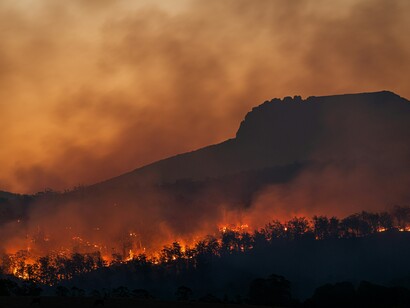
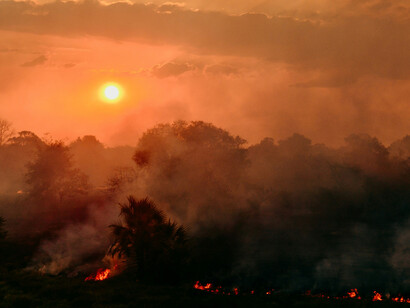
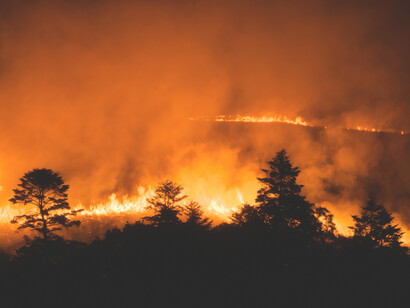
Between the enactment of the Paris Climate Agreement and now, the world has seen record-breaking weather events strike all regions of the globe. Intense periods of drought are causing wildfires, unprecedented flooding episodes are destroying infrastructure, and severe hurricanes are putting lives in danger. These powerful events are even putting countries with high GDPs billions of dollars in debt, resulting in severe economic burdens required to rebuild communities and displacing millions, even in the finances of the world’s strongest economic players. So, where exactly did it go wrong?
Each of the 195 nations that signed the Paris Climate Agreement was required to submit nationally determined contributions (NDCs) every five years detailing how they are going to reform their climate actions in contribution to working towards limiting global warming rates.
However, the progress of these pledges is loosely enforced, and nations are not held accountable for their progress while also not being legally required to adhere to the actions outlined in each written commitment. The non-binding nature of these agreements and the failure of major economies to adhere to the NDC allow for weak, unsupervised implementation of reforms and may be a key explanation for the predicted failure of the Paris Climate Agreement.3
The United States has also experienced two major reversals in climate leadership, withdrawing from the agreement during both of President Donald Trump’s terms (2017 and 2025), notwithstanding efforts to rejoin under President Biden. The United States’ scale of emissions and its global influence on climate change make it a crucial player in the cooperation to prevent warming from exceeding 2.0°C. Additionally, its position as a norm-setter could potentially influence the retreat of other nations from removing themselves from the treaty if the regulations don’t fully align with the goals of their current administration, especially with the rise of exclusionary, nationalistic geopolitical tendencies growing.
Climate stability underpins the entire SDGs framework, directly affecting progress on roughly 10 of the 17 goals. Failure to meet the Paris Climate Agreement undermines efforts on poverty, food security, health, cities, inequality, responsible consumption and production, water and sanitation, and wildlife, creating a domino effect across the broader development agenda (SDG goals 1, 2, 3, 5, 6, 12, 13, 14, 15, 17, respectively).
While setbacks threaten multiple goals and many nations have acknowledged shortcomings, hope is not lost; there may still be time to prioritize meaningful reform for the global good before reaching irreversible warming.
Conflict, instability, and development reversal
The Russia–Ukraine war is one of the most high-profile international conflicts in recent years. The conflict has severely weakened state institutions and displaced millions across the region, with reverberating effects far beyond Eastern Europe. It prompted one of the largest mass migrations since the start of World War II and spiked food and energy prices, fueling inflation and damaging geopolitical alignments throughout the EU and into the Global South.
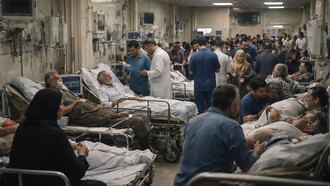
With a rising number of refugees experiencing socioeconomic hardship, psychological distress, and hunger, attention has understandably shifted to ensuring that those seeking refuge are receiving accessible assistance, momentarily narrowing global focus and away from achieving the broader SDGs.
An estimated 3.7 million people are internally displaced within Ukraine, and around 6.9 million fled to surrounding countries within the EU and beyond.4 An estimated 4.7 million refugees are under temporary protection within the EU, drastically increasing the need for humanitarian assistance, impacting the already 2 million existing refugees in neighboring EU countries.5
The displacement crisis consequently stalls progress most explicitly on the following SDGs, while having indirect impacts on the progress of almost all: No poverty (1), Good health and well-being (3), Decent work and economic growth (8), and Peace, justice, and strong institutions (16).
Critical ongoing energy production of oil, coal, and natural gas in Russia came to a halt as it experienced dramatic economic setbacks due to sanctions imposed by Western countries to disrupt energy exports during the conflict with Ukraine.
Though in an attempt to inhibit the conflict, non-oil-producing countries, developing and developed regions alike, experienced a decrease in GDP by 0.5%-3%. Inflation increased by 2% in some of these economies, and developing regions in Sub-Saharan Africa took the brunt of the economic hardship.6 This disruption in the global energy sector raised questions about the sustainability of energy production and greenhouse gas dependence (SDG 9, 11, 12).
Aside from the global energy crisis, the war in Ukraine has prompted severe disruptions in domestic and international food supply. As Ukraine is a major exporter of several nutritional staples (i.e., wheat, maize, and oilseeds), the halt in exportation impacted food supplies in the Middle East and North Africa (reliant on one-third of cereal exports from Ukraine) and East Africa (reliant on nearly one-half of cereal exports from Ukraine).
In 2022, maize and wheat prices were raised by 47% and 42%, respectively, and prices remained at historically high levels since the end of 2024.7 This is another setback to achieving zero hunger (SDG 2), as financial and material limitations prevented the imports of core nutritional food products in developing regions.
More broadly, the rise in armed conflict, geopolitical tension, and mass displacement has profound implications for global spending and political priorities, diverting attention and resources away from multilateral cooperation and long-term development towards the necessary domestic and regional crisis management (impacting SDG 1, 4, 10, 16, and 17).
As a result, progress toward the SDGs has stalled, with low- and middle-income countries (LMICs) bearing a disproportionate share of the economic and social fallout, despite being the ones most in need of sustained global investment and support.
What is at risk in the Global South?
Many individual targets have indeed been met within some of the broader goals in developing regions, but the overall progress shows mixed results. Advancements in developing countries contribute to the overall global success in reaching the SDGs, as the 17 interconnected goals are intrinsically linked to the development of the Global South.8
The SDG Resource Centre reports that despite the tediousness of SDG implementation in developing countries, due to aid reversal, weak institutional capacities, lack of resources, and susceptibility to climate change, many nations have persevered and successfully integrated SDG guidelines into their national frameworks.8
This brings us back to the importance of partnerships for the goals, SDG 17. The success of achieving the SDGs by 2030 requires developed and developing nations to have a dialogue with each other. The SDGs cannot be achieved without one or the other, as they were made to be achieved within a functioning system.
However, developing nations are still dependent on the assistance of developed countries. For example, technological advancements, like the implementation of solar power and mobile banking/fintech, are thriving, but there is still a need for assistance from developed countries via financial, resource, etc., support to ensure the longevity and scale of these projects.
References
1 United Nations. (n.d.). Transforming our world: The 2030 Agenda for Sustainable Development. United Nations Sustainable Development.
2 United Nations Framework Convention on Climate Change. (n.d.). The Paris Agreement.
3 European Parliament. (2025 The third generation of national climate plans (EPRS Briefing No. 2025/775905).
4 International Organization for Migration. (n.d.). Crisis in Ukraine.
5 Eurostat. (2026, January 12). Temporary protection for persons fleeing Ukraine—monthly statistics.
6 Sun et al. (2024). The Russia–Ukraine conflict, soaring international energy prices, and implications for global economic policies. Current Opinion in Environmental Sustainability, S2405-8440(24), Article S2405844024107438.
7 Philo et al. (2023). How the war in Ukraine affects food security. Hamburg University of Applied Sciences.
8 RELX Group. (n.d.). Global South. RELX SDG Resource Centre.