English
 Español
 Français
 Deutsch
 Italiano
 Português
In 1853, an American minister offered a profound insight about human affairs. Dr. Martin Luther King made it famous a century later: “The arc of the moral universe is long, but it bends toward justice.”
The idea was that our generation may not see the end of the arc as it stretches into the future, but justice will be there if we are persistent, struggle, and assert our moral will.
The moral arc exists not only in human affairs. It also exists in the relationship between humanity and the rest of life on planet Earth. After 250 years of industrialization, intense resource consumption, population growth, and recklessness toward nature, we are exceeding the Earth’s tolerance for the stresses we impose on it.
A few years ago, when geologists proposed that the Earth had entered a new epoch called the Anthropocene, they based this on a long list of alterations that human civilization has made to the biosphere. The alterations were all negative. The geologists concluded that humanity is now the most destructive force on the planet.
In 2009, international scientists convened by Stockholm University identified seven critical ecological systems and the “safe operating space” in each. They concluded that civilization had crossed into unsafe territory in three. In 2025, the team expanded the number of critical operating spaces to nine and said we had crossed the threshold into danger in seven of them.
Meanwhile, the United Nations (UN) has identified 34 “major planetary indicators” and says 22 are “flashing red.” Scientists predict that if we don’t address them, the environment will reach “tipping points” in which environmental breakdowns become self-sustaining and irreversible.
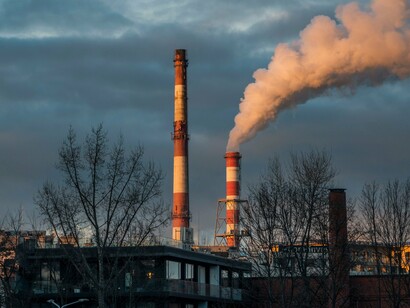
The problem getting most attention has been the Earth’s rising surface temperature. It has been gradually warming since the early to mid-19th century. Fossil fuel pollution has gathered in the lower atmosphere like a blanket, keeping some of the sun’s heat from radiating back into space. The thickness of the blanket – in other words, the concentration of pollution measured in parts per million – was considered relatively safe in the late 1980s at 350 ppm. Now it’s about 430 ppm and climbing.
As a result, the Earth’s surface temperature has warmed by about 1.4°C above its pre-industrial level and is on the verge of exceeding 1.5°C, which world leaders agreed is the preferred limit. The planet has not been this warm in approximately 125,000 years, when woolly mammoths roamed the Earth. Under current policies, warming could reach 2.6°C by the end of this century, which would drastically alter the planet, causing devastating heat waves, economic and social disruption, and the collapse of important ecosystems. Nearly all of the world’s 195 nations have set goals to prevent that outcome by cutting their fossil fuel emissions, but most are falling short. Fossil fuels still provide 86 percent of the global energy supply. The world’s richest 20 countries account for 75 percent of fossil-fuel pollution. They are the most capable of mobilizing the resources to prevent it, but only five are on track to fulfill their commitments.
Forces for change
There was a time when civilization’s imposition on the natural world was small enough for nature to absorb the damage. That time has passed. As the Dalai Lama puts it, “Human use, population, and technology have reached that certain stage where Mother Earth no longer accepts our presence with silence.”
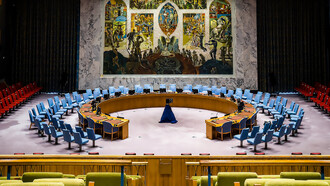
The international community, usually under the aegis of the United Nations, began trying to bend the moral arc of human impact during the last quarter of the 20th century. In 1972, the UN convened the Stockholm Conference on the Human Environment, elevating environmental stewardship to the international stage for the first time.
In 1983, the UN created a commission called the Brundtland Commission to examine the conflict between economic development, human welfare, and environmental degradation. Four years later, the commission, chaired by former Norwegian Prime Minister Gro Harlem Brundtland, proposed that the world’s objective should be “sustainable development,” defined as “meeting the needs of the present without compromising the ability of future generations to meet their own needs.” It required that environmental, economic, and social objectives be pursued systematically and simultaneously.
In 1992, the international community met in Rio de Janeiro for the world’s first “Earth Summit.” It produced several historic agreements, including the UN Framework Convention on Climate Change (UNFCCC), the Convention on Biological Diversity, and the Rio Declaration on Environment and Development. The Declaration became known as Agenda 21, a 300-page, 40-chapter action plan to alleviate “poverty, hunger, sickness, and illiteracy worldwide while halting the deterioration of the global ecosystems that sustain life.”
Although the agenda was not legally binding, it called on organizations and governments at all levels – civil society, municipalities, nations, and international – to implement sustainable development in the approaching 21st century.
Countries have created over 3,700 bilateral and multilateral environmental agreements. The UNFCCC produced the Kyoto Protocol in 1997 and the Paris Climate Agreement in 2015. Other treaties were designed to protect biodiversity, wildlife habitats, bird migrations, and to limit pollution from chemicals, industry, hazardous waste, ships, ozone, and mercury.
The most successful of these has been the Montreal Protocol, in which countries, scientists, and industry have collaborated on the long-term goal of repairing the hole in the Earth’s ozone layer. The Protocol is often cited as proof that international cross-sectoral collaboration can produce results. However, countries have underperformed on nearly all the other agreements.
Today, the world is awash in good intentions, but dangerously short on results. In addition to global warming, the world is undergoing the Sixth Great Extinction of species, freshwater shortages, desertification and deforestation, a deterioration of coral reefs and ocean life, and a variety of human problems, including armed conflicts, nuclear weapons proliferation, persistent poverty and inequality, the shortage of clean water and sanitation, and food scarcity.
We apparently have found the right formula for motivating nations to act sufficiently and in time, even though doing so would be in everyone’s self-interest. Too much talk about a dystopian future can create “apocalypse fatigue,” depression, and resignation. Yet awareness of the damage we are doing and will do is important in pushing us toward action. It must be balanced by the “pull” of the future we can create by achieving what the principal environmental law in the United States calls “productivity harmony with nature.”
The push and pull must have enough power to overcome enormous inertia, including the fossil energy industry's power and people’s resistance to the inconveniences of change. The industry fights against the world’s transition to sustainable, non-polluting energy because it has high sunk costs in fossil fuel infrastructure and the even larger economic value of oil, gas, and coal reserves underground.
Scientists warn that about two-thirds of those reserves must remain unused, but they represent most of the industry’s economic value as well as the investments of lenders and shareholders. Fossil fuel infrastructure is valued at $40 trillion; its reserves are estimated at $240 trillion. Last year, the world’s big banks invested $906 billion in the sector. The industry claims to be responsible for 32 million jobs worldwide. The last time it counted, in 2022, the World Bank estimated that countries subsidize fossil fuels by more than $7 trillion annually through tax breaks, environmental damage, and social costs.
Economists say the most efficient way to drive the world's transition to clean energy would be to reflect the true costs of fuels in what consumers pay for them. That would mean significant price increases. Countries that have tried this have faced intense industry and consumer pushback.
The sector’s influence over international climate negotiations has been obvious. Countries have met 31 times to negotiate and track their climate commitments, yet the words “fossil fuels” have appeared in their outcome commitments only once. The words disappeared again the following year.
The good news is that the world is investing about $2 trillion annually in clean renewable energy, about twice the annual investment in fossil fuels. But economists say the clean energy investment must be $7 trillion annually through mid-century.
But again, climate change is just one of multiple environmental crises. We must find the motivation and the money to ensure that developing countries build their economies’ foundations on clean energy rather than fossil fuels and that developed countries take advantage of the fact that renewable resources like sunlight and wind are the least expensive way to electrify the world. The global market for solar, wind, and other “green” energy technologies is expected to reach over $1.8 trillion in the next eight years.
For our own benefit and for humanity’s future, we must make peace with nature. We should start by building a “restoration economy” that repairs the repairable damage we have caused to ecosystems and recaptures the enormous benefits they provide to humanity at no cost.
Then, we must create an economy in service to life, all life, based on collaboration with the natural world rather than on the anthropocentric conceit that we are superior to and able to control it. For every dollar the world spends to protect nature today, it spends $30 in ways that destroy it. That must change. As the late theologian Thomas Berry said, it should be the great work of the 21st century.