English
 Español
 Français
 Deutsch
 Italiano
 Português
Nicholas Danforth and Aaron Stein's article ‘Turkey's New Foreign Policy: Ankara's Ambitions, Regional Responses, and Implications for the United States’ analyzes Turkey's political journey from the Treaty of Lausanne at the time of our founding, through the Cold War, the PKK, and the Arab Spring, to the revisionist and confrontational political stance of the AKP era. While doing all this, we can say that the political stance of Turkey starting from Lausanne is analyzed both from the impact of events and from the psychological side, from the point of view of social consciousness and constructivism.
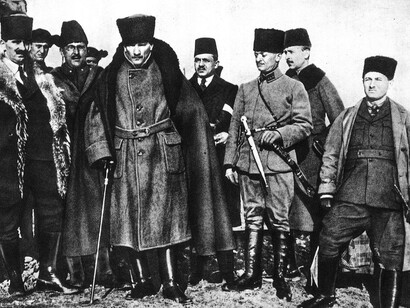
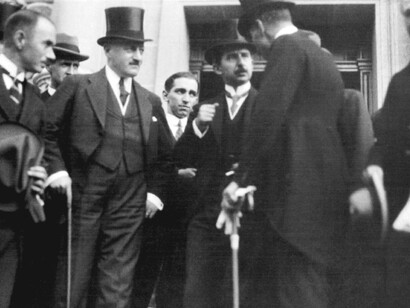
The first part of the text describes the Treaty of Lausanne signed after the War of Independence and the impact of this treaty on the society, and especially on İsmet İnönü's reputation in the eyes of the public. It also touches upon the Mosul problem and the mistake. In general, when we look at the article's arguments about this period, we see that the balance policy is dominant and generally avoids being a party to the events. Another concept we saw in the article was the relations between the United States and Turkey. In particular, they state that since the Cold War period, good relations were established with the threat of the common enemy, ‘Soviet Russia,’ and a status quo foreign policy was pursued.
In this period, Turkey also joined NATO. However, at this point, it is also mentioned that the socialists were against the idea of acting together with the United Kingdom due to past experiences. The text also states that after the 1950s, Turkey tried to improve its relations with the Arab world and took steps such as recognizing the Palestine Liberation Organization in 1976 and establishing closer relations with the Organization of the Islamic Conference in the early 1980s. However, the general interpretation of this period is in favor of maintaining the status quo.
For the post-Cold War period, we observe a transition to the free market in the neoliberal and Özal's policies index. However, the authors state that the biggest problem is the increasing power of the PKK. At this point, the article argues that the relationship between Syria and the PKK has led to the development of the relationship between Turkey and Israel, as Syria and Turkey have drifted apart. As we see in the article, another problem in this period is the migration movement that Turkey received due to the problems with the Kurds in the north of Saddam Hussein and the problem of the Kurdish state that may be established.
The American attitude towards both the Kurds and Turkey strengthened the relationship between Turkey and Israel. In fact, with the support of Israel, Abdullah Öcalan, the leader of the PKK in Syria, was captured in 1999. In general, the authors argue that until this period, Turkey maintained the status quo, and afterwards, with the AKP, it adopted a revisionist policy and pursued a policy of being the regional leader, which harmed its relations with both regional and global powers. In these parts of the article, he generally explains the Arab Spring, the US support for the YPG, and finally, the S-400 crisis.
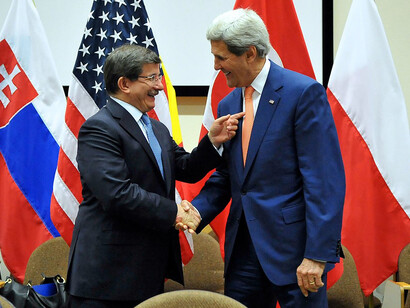
Frankly speaking, I do not agree that the revisionist policies of the AKP have been systematic to the extent expressed by the authors. I do not think that its policies are long-term and calculated. It can be seen that they are preparing a ‘Neo-Ottomanist’ policy in their discourses, especially in Davutoğlu's discourses, but I think that we can evaluate this in terms of Romantic Realism rather than a long-term plan. If we look at the Cyprus War and the Poppy Crisis in Ecevit's Turkey, we see an action taken against external threats, and this is what the AKP is doing. It wanted to show that it could confront the USA and NATO or that it could be truly independent, but it is obvious that this is not sustainable in the long and short term. We can interpret it as political hubris.
In general, to summarize, it can be said that Turkey had a status quo-protective policy before the AKP and made revisionist moves afterwards, but when we make a realistic and forward-looking reading, we can say that the AKP acts in accordance with the concept of status misperception to the fact that it is the very dominant hegemonic power in the country rather than being revisionist. In other words, they acted differently from the previous governments, but I think it is very difficult to say that they did this from a revisionist point of view.
Instead, their approach seems reactive and often shaped by domestic political calculations rather than a grand strategic vision. The emphasis appears to be on momentary gains, electoral consolidation, and symbolic gestures that appeal to nationalist sentiment, rather than a coherent regional doctrine. Therefore, what may seem like revisionism on the surface might in fact be erratic posturing driven by short-term political needs rather than a transformative foreign policy agenda.