English
 Español
 Français
 Deutsch
 Italiano
 Português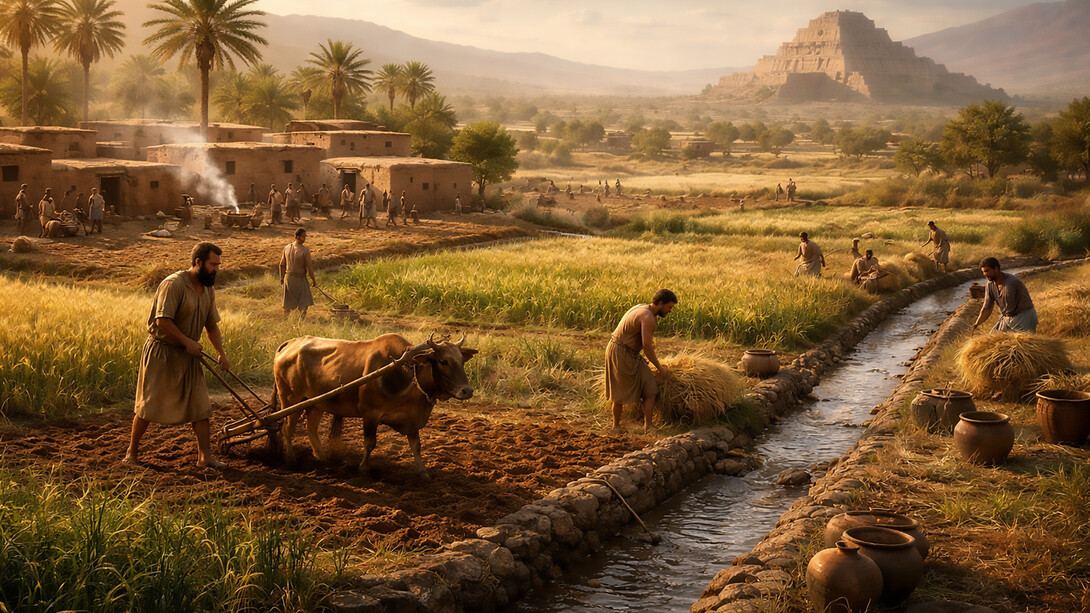
Climate change has played a major role in human history, especially during the Holocene epoch, the period beginning around 11,700 years ago when the Earth warmed after the last Ice Age. This era’s relatively stable and wetter conditions helped create environments where agriculture could take root, leading to crowded settlements, social organization, and eventually civilization as we recognize it today. However, climate alone does not tell the full story: opportunities created by environmental change had to be recognized and acted on by people, which means human agency and innovation were essential in transforming climate conditions into cultural achievements.
Climate and the origins of agriculture
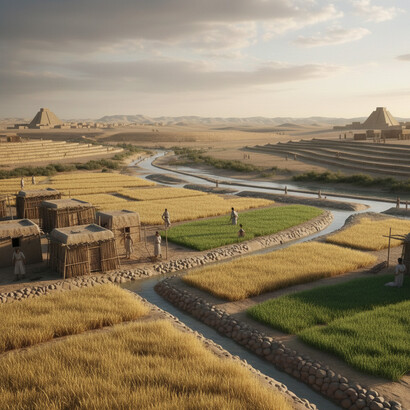
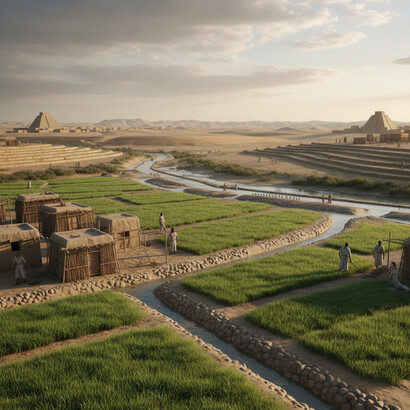
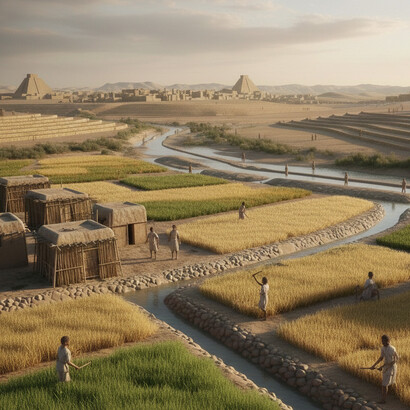
With the end of the Ice Age and arrival of the Holocene, climate became more favorable for year-round cultivation in areas like the Fertile Crescent. Northern Mesopotamia experienced a relatively moist climate early in the Holocene, promoting early rain-fed cultivation that laid the groundwork for sedentary village life. Later, in the southern alluvial plain, declining natural rainfall encouraged people to develop irrigation systems to keep land fertile and productive.
At the same time, multicentennial climate variables throughout the early Holocene influenced settlement size, distribution, and the intensity of agricultural particles. Wetter phases made farming easier, while drier periods forced adaptation, which sometimes included shifts in settlement patterns or water-management practices.
Human agency: innovation and sedentism
Climate change may have opened doors for agriculture, but human decision-making determined how these opportunities were seized. As food production became more stable, people began to settle permanently, a process called sedentism. Sedentary life allowed populations to grow denser, create food surpluses, and support specialists such as toolmakers, religious figures, and administrators. Clearly, it was the human capacity to innovate technology and social organization, not climate alone, that drove the earliest stages of social complexity.
Complex societies and urbanism in Southwest Asia
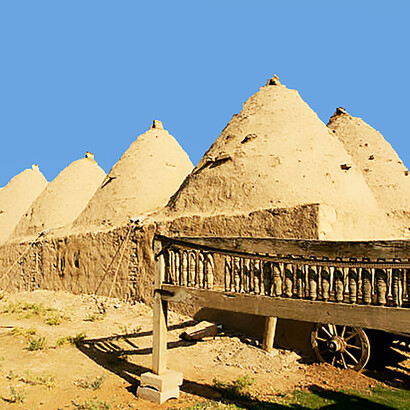
In Mesopotamia, often called the “cradle of civilization,” large urban communities emerged first during the Uruk period (c. 4200-3000 BC). Archaeological data show that early urban development corresponds with phases of effective moisture that supported agricultural surplus, then later with increased aridity that required more intensive irrigation and social organization to maintain productivity.
The development of cities, writing, and long-distance trade came not because the climate made it inevitable, but because people adapted their technologies (like irrigation) and organized their societies (such as through administrative institutions) to cope with changing environmental conditions.
Climate variability and collapse
Large climate shifts, such as prolonged droughts, also had the power to destabilize societies. For example, several settlement declines in the 3rd and 2nd millennia BC coincided with increasingly arid conditions in parts of Mesopotamia. These stressors challenged existing systems and often paved the way for transformation, not just collapse, as people reorganized politically, socially, and economically in response.
Survival, adaptation, and the making of culture
Debates around environmental determinism remain central to understanding early civilization, particularly in Southwest Asia. Environmental determinists argue that climate, geography, and ecological conditions impose limits on cultural development, shaping not only subsistence strategies but also social organization. In Mesopotamia, the close relationship between agricultural potential and cultural complexity appears to support this view, as food production was essential for survival and long-term settlement. As early anthropologists such as Meggers argue, the productivity of an environment can influence the level of cultural development a society is able to achieve.
However, more recent research challenges the idea that environmental conditions alone determine cultural outcomes. While climate clearly affected farming efficiency and land use, people actively made choices about how to manage resources, respond to environmental stress, and organize their communities. During periods of increased aridity, Mesopotamian societies did not simply collapse; instead, many adapted by intensifying irrigation, expanding trade networks, or reorganizing labor and social roles. These responses highlight the importance of human cognition, cooperation, and technological innovation.
The transition from hunting and gathering to agriculture did more than change subsistence strategies; it transformed social life. Food surplus allowed individuals to specialize in new roles such as craft production, construction, administration, and religious leadership. Cultural practices, including burial traditions, temple building, and early symbolic communication, developed alongside economic changes. This demonstrates that while environmental conditions set the stage, cultural change was driven by human agency acting within, not dictated by, environmental constraints.
Climate as catalyst, humans as agents
Current research reinforces a balanced view: climate change provided conditions that enabled agriculture and dense settlement, but human agency, innovation, social organization, and adaptability explain why civilization emerged and endured. Environmental change created possibilities, but it was people who exploited them, developed technologies, and structured societies in ways that would become the urban civilizations.
References
Algaze, G., 2001. Initial social complexity in southwestern Asia: the Mesopotamian advantage.
Boyd, R., Richerson, P.J., and Henrich, J., 2011. The cultural niche: Why social learning is essential for human adaptation.
Brooks, N., 2006. Cultural responses to aridity in the Middle Holocene and increased social complexity.
Lawrence, D., Philip, G., and de Gruchy, M.W., 2022. Climate change and early urbanism in Southwest Asia: A review.
Scarre, C 2018, The Human Past: World Prehistory and the Development of Human Societies.