English
 Español
 Français
 Deutsch
 Italiano
 Português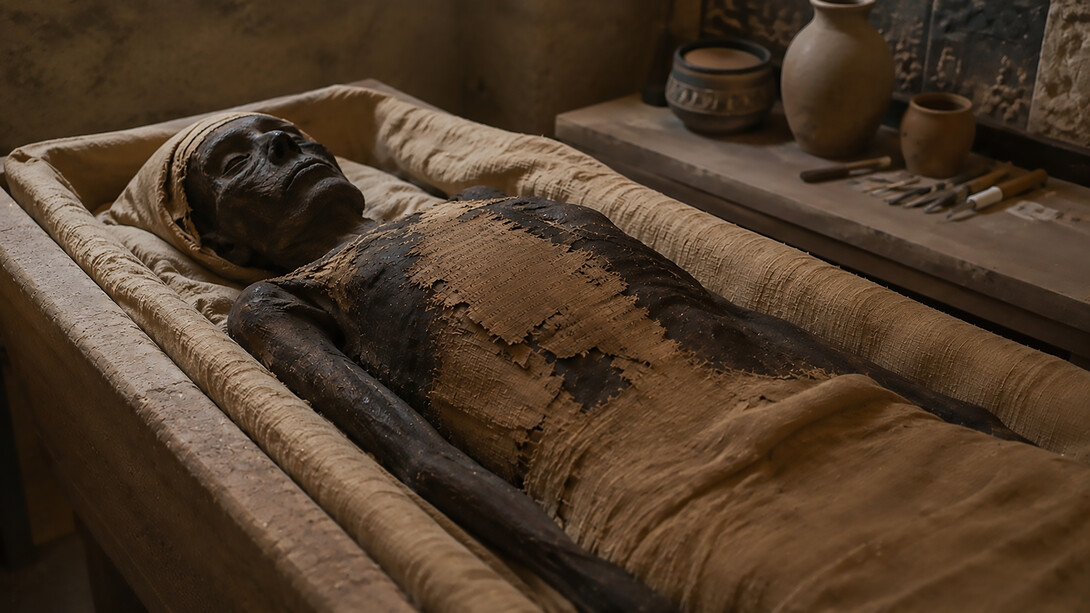
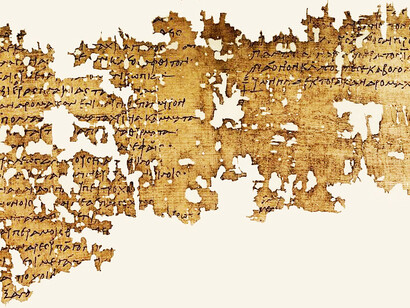
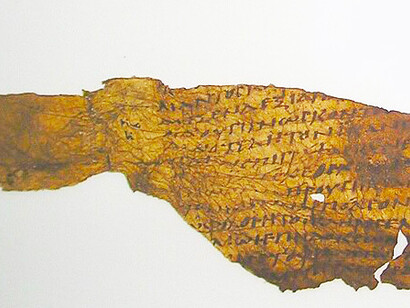
Recent archaeological discoveries often reshape our understanding of the ancient world, but few do so as strikingly as the finding of a fragment of Homer’s Iliad embedded within an Egyptian mummy. Unearthed from the site of Oxyrhynchus, one of Egypt’s most historically rich archaeological locations, this Roman-era mummy, dated to approximately 1,600 years ago, contained a papyrus fragment from Book II of the Iliad, specifically part of the “Catalogue of Ships". This discovery is extraordinary not only because of the text itself but also because of its context: a Greek literary work placed within the body of a mummified individual as part of the embalming process.
This unusual combination of Greek literature and Egyptian funerary practice offers a rare window into the cultural, intellectual, and religious exchanges that defined life in Greco-Roman Egypt. During this period, Egypt was not an isolated civilisation but a dynamic crossroads of cultures, languages, and traditions. The presence of Homer’s Iliad within a mummy suggests that Greek texts were not only widely read but may also have taken on symbolic or even spiritual significance in Egyptian burial practices. This paper argues that the discovery reflects a profound level of cultural syncretism, revealing how Greek literary traditions were integrated into Egyptian ritual life, thereby illustrating the interconnectedness of Mediterranean societies during the Roman period.
Background
To understand the significance of this discovery, it is essential to examine the cultural and historical context in which it occurred, including Egyptian mummification practices, the role of Homer’s Iliad in the ancient world, and the broader environment of Greco-Roman Egypt.
Mummification was a central component of ancient Egyptian beliefs about the afterlife. Egyptians believed that preserving the body was essential for the soul’s journey beyond death. The process involved removing internal organs, treating the body with natron salts, and wrapping it in linen. Alongside physical preservation, various objects were often included within or around the body to aid the deceased in the afterlife. These could include amulets, jewellery, and texts; most famously, spells from the Book of the Dead, which served as a guide for navigating the afterlife.
By the Roman period, Egyptian mummification practices had evolved and, in some cases, incorporated foreign influences. Archaeological evidence suggests that papyri were sometimes used in mummification, either as packing material or as part of ritual practices. However, these texts were typically administrative documents or religious writings. The inclusion of a classical Greek literary text such as the Iliad represents a significant departure from earlier traditions and raises important questions about its intended purpose.
The Iliad, attributed to the poet Homer, is one of the most important works of ancient Greek literature. Composed in the 8th century BCE, it tells the story of the Trojan War, focusing on themes of heroism, honour, fate, and mortality. In the ancient Greek world, the Iliad was not merely a story but a foundational text used in education and cultural formation. Students learned to read and write using Homeric texts, and familiarity with the Iliad was a marker of cultural literacy.
The specific fragment found within the mummy comes from Book II, known as the “Catalogue of Ships", which lists the Greek forces that sailed to Troy. While this section may seem less dramatic than the epic’s central narrative, it was widely studied and copied in antiquity. Its presence in the mummy suggests that the text was accessible and perhaps valued for reasons beyond its literary content.
Following the conquest of Egypt by Alexander the Great in 332 BCE and its later incorporation into the Roman Empire in 30 BCE, Egypt became a melting pot of cultural influences. Greek became a dominant language, especially in urban and administrative contexts, and Greek education spread throughout the region. Cities like Alexandria and Oxyrhynchus became centres of learning, where Greek literature, philosophy, and science flourished.
At the same time, traditional Egyptian religious practices persisted, often blending with Greek and Roman elements. This cultural fusion, known as syncretism, is evident in art, religion, and daily life. For example, deities were sometimes merged or identified with one another, and religious practices adapted to incorporate new ideas. The discovery of a Greek literary text within an Egyptian mummy can be seen as another manifestation of this broader pattern of cultural integration.
The discovery
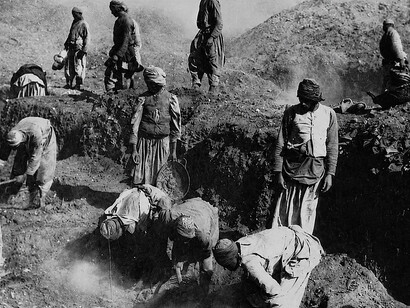
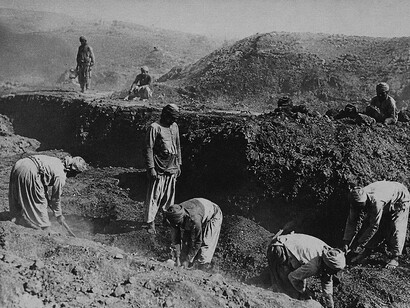
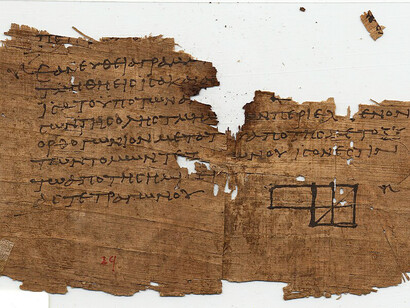
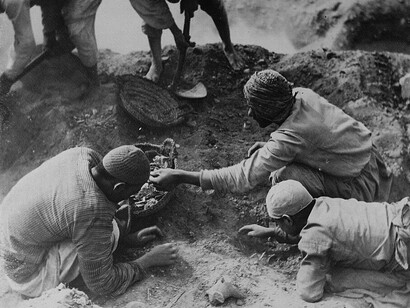
The discovery took place in Oxyrhynchus, an ancient city located in Middle Egypt. Known for its extensive papyrus dumps, Oxyrhynchus has yielded hundreds of thousands of papyrus fragments, including literary, religious, and administrative texts. Many important works of Greek literature have been recovered from this site, making it one of the most significant locations for understanding ancient textual transmission.
The mummy in question dates to the Roman period and was found with a papyrus fragment inserted within its abdominal cavity. Analysis revealed that the text was written in Greek and belonged to the Iliad. Unlike other papyri found in mummies, which are often used as cartonnage (a type of papier-mâché material for masks and coverings), this fragment was placed inside the body, suggesting a deliberate act rather than mere recycling of materials.
What makes this discovery particularly unique is that it represents the first known instance of a Greek literary text being used in this way. Previous finds have included Greek texts in Egyptian contexts, but typically as part of everyday or administrative life, not as components of burial rituals. This raises intriguing questions about why this text was chosen and what it meant to those who placed it there.
Interpretation and theories
Scholars have proposed several theories to explain the presence of the Iliad fragment within the mummy. While definitive answers remain elusive, these interpretations offer valuable insights into the cultural and intellectual environment of the time.
One possibility is that the text was believed to have protective or spiritual value. In traditional Egyptian burial practices, texts such as the Book of the Dead were included to guide and protect the deceased in the afterlife. Although the Iliad is not a religious text in the Egyptian sense, it contains themes of heroism, death, and the afterlife that may have been seen as meaningful or symbolically powerful.
It is also possible that the papyrus was used in a more practical sense, as part of the embalming process. However, the deliberate placement within the body suggests a level of intentionality that goes beyond mere utility. This supports the idea that the text held some form of significance, whether spiritual, cultural, or personal.
The inclusion of a Greek literary text in an Egyptian mummy is a clear example of cultural syncretism. It reflects a blending of traditions in which elements from different cultures are combined to create something new. In this case, Greek literature and Egyptian funerary practices intersect in a way that highlights the interconnectedness of the ancient Mediterranean world. This blending may have been influenced by the widespread use of the Greek language and education in Roman Egypt. Individuals who were educated in Greek literature may have viewed texts like the Iliad as valuable or even sacred. Incorporating such a text into burial practices could have been a way of expressing identity, belief, or status.
The presence of the Iliad also suggests a certain level of literacy and access to education. Not everyone in Roman Egypt would have been familiar with Greek literature, so the individual associated with this mummy, or those responsible for the burial, likely belonged to a social group with some degree of education. This raises questions about the identity of the deceased. Was this person Greek, Egyptian, or of mixed heritage? Were they part of an elite class that valued Greek education? While these questions remain unanswered, the discovery provides evidence of the spread and influence of Greek literary culture beyond its original geographic boundaries.
Broader implications
The implications of this discovery extend beyond the specific case of the mummy and its contents. It contributes to a broader understanding of ancient societies and the ways in which cultures interact and evolve. From an archaeological perspective, the find challenges existing assumptions about burial practices in Roman Egypt. It demonstrates that non-religious texts could be incorporated into funerary rituals, suggesting a more complex and flexible approach to burial customs than previously thought.
Historically, the discovery reinforces the idea that the ancient Mediterranean was a highly interconnected world. Trade, conquest, and migration facilitated the exchange of ideas and traditions, leading to the kind of cultural blending seen in this example. It highlights the importance of looking beyond rigid cultural boundaries to understand how people lived and thought.
For scholars of literature, the find offers a new context for understanding the Iliad. It shows that the text was not only read and studied but also integrated into aspects of life and death in unexpected ways. This expands our understanding of how ancient texts were used and valued.
Despite its significance, the discovery raises many unanswered questions. Why was the Iliad chosen instead of another text? Was this a common practice or a unique occurrence? What was the identity of the individual buried with the papyrus? Further research, including additional excavations and analysis of similar finds, may help to answer these questions. For now, the discovery remains a fascinating but incomplete piece of the historical puzzle.
The discovery of a fragment of Homer’s Iliad within an Egyptian mummy is a remarkable example of cultural intersection in the ancient world. It challenges traditional assumptions about both Egyptian burial practices and the role of Greek literature, revealing a complex and dynamic society in which ideas and traditions were shared, adapted, and transformed.
By examining this find within its broader historical and cultural context, we gain valuable insights into the nature of Greco-Roman Egypt and the ways in which people navigated their identities and beliefs. The presence of the Iliad in such an unexpected setting serves as a powerful reminder that the ancient world was far more interconnected than we often imagine and that even in death, individuals carried with them the influences of the cultures that shaped their lives.
As future discoveries continue to shed light on this period, it is likely that our understanding of these cultural exchanges will deepen. For now, this extraordinary find stands as a testament to the enduring legacy of both Egyptian and Greek traditions and to the surprising ways in which they could come together.
Bibliography
Bagnall, Roger S. Egypt in Late Antiquity. Princeton: Princeton University Press, 1993.
Homer. The Iliad. Translated by Robert Fagles. New York: Penguin, 1990.
Ikram, Salima. Death and Burial in Ancient Egypt. Cairo: American University in Cairo Press, 2003.
Live Science. “Egyptian Mummy Contains Iliad Fragment". 2026.
Phys.org. “Archaeological Mission Finds Iliad in Mummy.” 2026.
Smithsonian Magazine. “Papyrus Fragment from the Iliad Found in Mummy.” 2026.
Taylor, John H. Death and the Afterlife in Ancient Egypt. Chicago: University of Chicago Press, 2001.
University of Barcelona. “Oxyrhynchus Discovery of Homer’s Iliad Fragment.” 2026.
West, Martin L. The Making of the Iliad. Oxford: Oxford University Press, 2011.
Woolf, Greg. Rome: An Empire’s Story. Oxford: Oxford University Press, 2012.