English
 Español
 Français
 Deutsch
 Italiano
 Português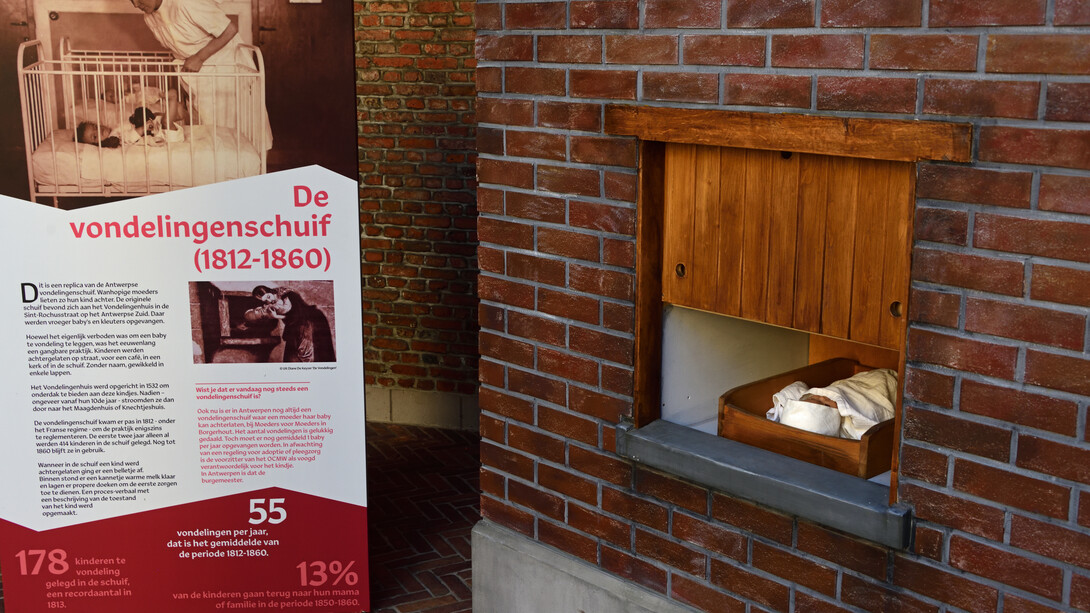
Every year, newborn babies are left in toilets, trash dumps, and other unsafe places. Nearly 70% of abandoned infants worldwide die before they are ever found. Why does this continue to happen, and why do preventable deaths persist despite legal, religious, and social safeguards? Is the policy response to this tragedy a matter of moral approval or moral responsibility? This ongoing tragedy demands a shift away from moral polarization toward evidence-based policies that prioritize the sanctity of life. One such policy response is the baby safe box, a mechanism designed to provide a safe and anonymous alternative for infants at risk of abandonment. Yet critical questions remain: How can such policies be designed to align with cultural values, religious principles, and legal frameworks, particularly in Muslim societies?
This study addresses these questions by examining the development of effective baby hatch policies in Muslim countries, grounding the discussion in cultural, religious, and legal foundations. To contextualize these policy debates, the study traces the historical and global evolution of baby safe box programs. Comparative experiences across countries reveal significant variation in terminology and operational models, shaped by differing traditions, laws, and societal values. Despite these differences, the central objective remains constant: to offer a safe, humane, and life-preserving alternative for infants who would otherwise be abandoned.
The baby box has medieval origins in Europe, using foundling or turning wheels in church-run systems. Among the earliest recorded uses is Milan in 787 by priest Datheus, followed soon after in cities such as Siena (832), Padua (1000), Montpellier (1070), Einbeck (1200), Florence (1317), Nuremberg (1331), and Paris (1362). This concept spread rapidly across Southern Europe during the 15th century. In 1321, Queen Dona Isabel set up a refuge for unparented infants in Santarém, Portugal, known as the Hospital for Innocents. For destitute mothers who can't care for their children, a turning wheel offers a trustworthy and private solution, with the belief that religious organizations will care for and protect those newborns. Thus, over centuries, the system has changed, but the goal of safeguarding newborns has stayed constant.
The discussion of the historical role of baby safe boxes as lifesaving humanitarian mechanisms has now moved to Muslim societies; however, the idea of baby hatches in most Islamic countries is still very much an academic and media-centric discussion. As such, the amount of published, publicly available formal studies dealing specifically with baby hatches is extremely limited and generally focuses primarily on the legality of baby dumping and whether or not baby hatches align with Islamic teachings as they relate to the rights of the unborn. Still, growing scholastic opinion advocates that the importance of preserving a human life (ḥifẓ al-nafs) is a much stronger reason for creating baby hatches than the possibility that they encourage abandonment. Additionally, the argument that creating baby hatches promotes fornication or increases the number of children born outside of marriage has been shown not to be supported by any empirical data.
In addition to stigma toward unmarried pregnant women and victims of rape, several other issues need to be taken into consideration. Many young mothers who abandon their babies are typically without the necessary social support. For many mothers, particularly in low-income communities, several other issues, such as mental health, domestic violence, poverty, and unemployment, are common precursors to abandonment. For many young mothers, as a result of having abandoned their new child, they experience a complex mix of guilt, shame, worry, and anxiety, compounded by psychological and emotional distress.
In many Muslim societies, it is common for unmarried pregnant women to face extreme stigma related to their cultural, religious, and social beliefs. Mothers who are unwed or who are survivors of violence or abuse may have limited access to support services due to cultural expectations or legal constraints on their access to government assistance. For many of these reasons, the stigma associated with unplanned pregnancies, combined with financial instability, creates overwhelming barriers for many mothers attempting to care for themselves and their children.
There are various factors contributing to the stigma surrounding baby hatches, including cultural taboos, attitudes toward unwed mothers, and societal condemnation. However, it is critical that public awareness strategies to prevent infant abandonment take these social stigmas into account. In order to effectively use baby hatches as a solution to address these problems, we must educate society about the seriousness of this problem and the fact that excessive deaths are occurring every year due to infant abandonment. Therefore, baby hatches should not be viewed as a social problem but rather as a means by which we can protect innocent lives.
To accomplish this task, we need to promote greater access to baby hatches and baby incubators in governmental hospitals and in rural areas with a lack of services. This will give mothers who choose to relinquish their infants safely and legally the opportunity to do so without the fear and shame associated with abandoning an infant. Opponents of baby hatches say that this will only lead to more infants being dumped in unsafe locations; however, the benefit to the lives saved from increased access to baby hatches far outweighs the negatives associated with increased dumping.
Importantly, in Islamic law, caring for a child born from an illegal relationship will be rewarded in the same way as taking care of an orphan. A fatwa released by Dar al-Ifta' al-Misriyyah and supported by Dr. Ali Jumuah believes that a child born out of wedlock should enjoy the same respect and protection as an orphan. An illegitimate child should not be held accountable for their mother’s actions because the Qur’anic principle says:
And no bearer of burdens will bear the burden of another.
(Qur'an 35:18).
So while there is religious support for taking care of children regardless of how they entered this world, there is not enough public awareness about what a baby hatch means. If you commit an act of abandoning your child in an unsafe area, you are more likely to face legal consequences than if you take your child to a safe place in a baby hatch. Thus, public education should focus on dispelling false beliefs and clarifying that leaving your child in a designated baby hatch is not a crime.
Consequently, the successful establishment of baby hatch programs requires a clearly written and comprehensive framework to help families with children that are at risk of abandonment. The policies should explain how non-providing agencies and governments work together and create a plan of action to achieve the four major elements necessary to create baby hatches, as follows:
Collaboration & cooperation between government and non-governmental agencies
A comprehensive guide/standard operating procedure (SOP) must be written and reviewed to provide a clearer understanding of the procedures adopted to deal with cases concerning child abandonment and deinstitutionalization (i.e., adoption). Non-Government Organizations (NGOs) have an active role in supporting the government to reduce these issues; improving partnership/cooperation between these two entities will enhance the management of child abandonment cases. Society shares in the responsibility for resolving social issues, and the government should not solely shoulder that burden.
Awareness program for targeted group
At-risk youth represent a significant portion of the maternal population, which makes awareness programs at the educational level essential. School, university, and college representatives need to work with local nonprofit organizations to create preventative education programs and assist their at-risk youth. The focus of these programming initiatives should be to inform young mothers of the negative impact of their decisions and actions on themselves and the people they will raise. By offering assistance and education, young mothers will be better equipped to make informed choices that will have a positive impact on themselves and their families. In addition to the youth, the community and any other interest groups should also actively support awareness programs to eliminate the stigma attached to unwed mothers. As the saying goes, "Hate the sin, not the sinner." The safety and well-being of every newborn is of utmost importance.
Regulatory and legal protection
Laws play a significant role in informing and regulating many aspects of life. Law enforcement serves to punish lawbreakers while also protecting those within the community from harm. Protecting both the mother and the baby from abandonment, therefore, is an essential goal and outcome of enforcing these laws. Creating a law that grants immunity and protection to mothers who have 'abandoned' their babies in a baby hatch allows community members to assist in reducing the issues surrounding baby abandonment. Without the establishment of this type of law, numerous issues could arise. As stated above, one of the reasons why some mothers are willing to abandon their babies is a fear of prosecution under both penal and shari'ah law. Therefore, mothers in this position should be given access to a non-judgmental support system, allowing them to feel secure in making a decision regarding the abandonment of their babies. Similarly, individuals involved in the operation of baby hatches need to be legally recognized in order to carry out the provisions of this law. To establish and operate a baby hatch legally, an appropriate law or provision needs to be developed by governmental authorities without violating moral values and/or laws.
Policy on deinstitutionalization (DI)
To effectively combat infant abandonment, solely implementing a baby hatch policy will not be enough. In addition, governments should pursue a more holistic child welfare strategy that includes the practice of deinstitutionalization (DI). Current dependencies on institutionalized care lead to increased public costs via facility upkeep as well as long-term funding for both children and foster families. Including DI in your plans may decrease these costs and improve the outcomes for children. The partnership of child-centered organizations is critical in facilitating the transition away from institutionalized care and helping inform evidence-based policies. Above all, newborns that are abandoned require immediate safety and a timely transition to nurturing families; therefore, they cannot wait for larger societal changes.
At the end, the answer is not moral approval but moral responsibility. With responsible design, baby hatches can save lives and provide humane options for child protection. Integrated with family- and community-based models, baby hatches provide a compassionate response to abandonment. Baby hatches should be designed not to condone premarital sex but to reflect a commitment to saving innocent lives. Policymakers need to stop debating the morality of baby hatches and create regulations, improve collaborations among agencies, and increase awareness so no child lacks a safe option during a time of crisis.