English
 Español
 Français
 Deutsch
 Italiano
 Português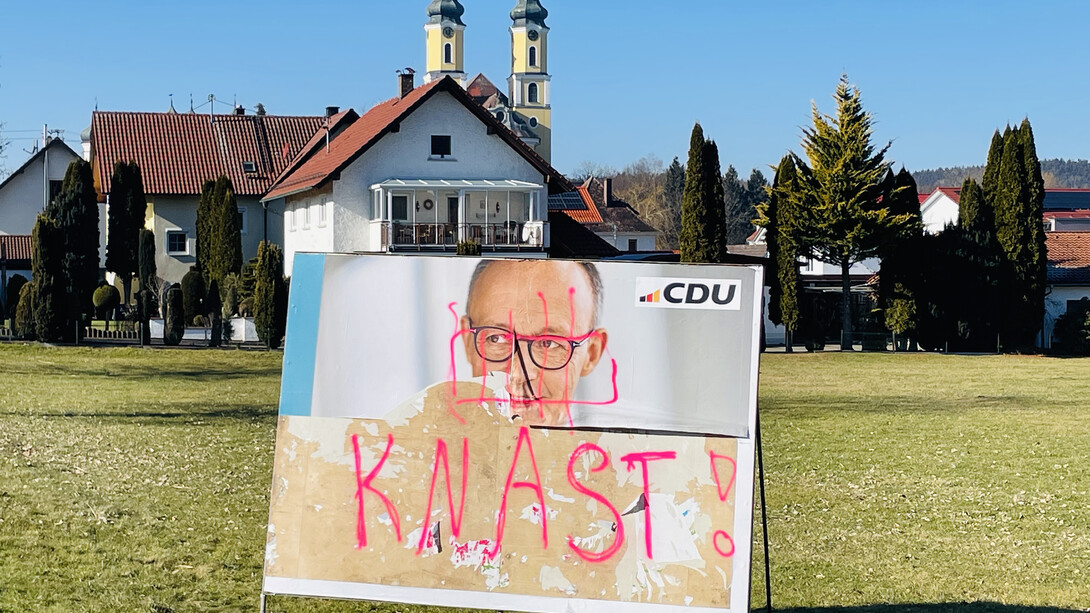
After a controversial federal election in February 2025, which consolidated the far-right's presence in the Bundestag, Germany faced, earlier in May, a historical impasse: for the first time in the Federal Republic's history, no candidate succeeded in gathering the absolute majority in a general election.
Despite being a frontrunner for the chancellery, Friedrich Merz fell just 6 votes short in the first round of votes—a surprising result for the leader of the central-right CDU. Although Friedrich Merz ultimately gathered enough votes in a second round, the narrow margin on which he was elected underscored the fragility of his support, shedding light on the fractures dividing the Bundestag.
The latest federal elections marked a turning point in that regard, showcasing a clear decline of traditional parties in favor of more radical forces. The CDU/CSU and the SPD, which led most of the post-war governments, respectively scored 28.5% and 16.4%, marking their second-worst and worst results since their foundation. On the other hand, the AfD and Die Linke secured substantial electoral gains, nearly doubling their number of representatives within the German Parliament since the last federal elections of 20211. Disavowed by an electorate that experiences a profound sense of stagnation, the CDU/CSU and SPD struck a deal, collaborating to advance key policy issues within the German Parliament.
But with 360 seats in a lower chamber composed of 630 representatives, the Merz administration majority appears rather frail. His elections proved how fickle his alliance with the SPD can be in the face of dividing issues such as immigration or economic policy. And yet, Friedrich Merz has already announced an ambitious program, notably characterized by a greater focus on foreign policy issues.
Whereas the Scholz government was criticized for its relative passivity on driving issues such as the war in Ukraine or the imposition of tariffs, Friedrich Merz seems to be adamant about making foreign policy a key element of his legacy. Following Scholz's lackluster leadership, the new chancellor proclaimed his desire to rekindle the French-German duo as well as intensify Germany's military support to Ukraine. Similarly, building on his experience in the private sector, Merz hopes to strike a bilateral deal with the Trump administration to alleviate the tariffs imposed on his country.
Within Germany, the electoral victory of the AfD looms over what can only be described as a weak majority. Benefitting from a comfortable alliance with the SPD, Friedrich Merz's more conservative CDU may—despite a publicly stated refusal to cooperate with the far-right movement—seek support from the AfD to push forward his program.
Altogether, the new government's goal is crystal clear: to shock Germany out of its stasis by engaging once more with global issues. To achieve that goal, the revitalization of the bilateral relation between Germany and France will prove to be quintessential.
Rejuvenating French-German military cooperation
In an exclusive interview conducted by the German newspaper Die Welt, Friedrich Merz emphasized the necessity to "open a new chapter in the German-French relation2. Celebrating their newfound ''friendship'' in an X post, Emmanuel Macron and Friedrich Merz's first encounter garnered attention from international media outlets, which touted a ''reboot'' of the bilateral relationship. But beyond a symbolic gesture, the new chancellor's visit to Paris served a strategic purpose: to ensure support from the French government for his more pugnacious Ukraine policy.
Far from the idyllic couple under the Gerhard Schröder administration (1998-2005), the relations between the Federal Republic of Germany and the Federation of Russia have hit rock bottom, the former seeing in the latter's annexation of Crimea and war on Ukraine a direct threat to its sovereignty. The appointment of like-minded individuals at the head of the German and French governments therefore serves well in bolstering defensive capabilities in a divided Europe. Since the onset of the conflict, the French president has sought to be at the forefront of diplomatic efforts, regularly conversing and meeting with Vladimir Putin in the hope of deterring him from engaging in further actions.
During his visit to Paris, Merz and Macron thus discussed, at length, how their respective countries could coordinate a common response to the conflict. The two heads of state announced the creation of a dedicated defense council, combining the French and German intelligence and operational resources. They also discussed, in a confidential format, the potential delivery of Taurus cruise missiles to Ukraine, a shipment that could turn the tide for Ukrainian forces constrained to defensive actions. In doing so, Merz clearly stepped over the "red line" drawn by his predecessor, matching Macron's more proactive Ukraine stance.
But despite a broad alignment of the two leaders' positions, their views differed on the conditions to reach a ceasefire. One recurring point of dissension seemed to pertain to the role granted to the United States. Whereas Friedrich Merz desires to continue to rely on the American defensive apparatus in Europe, Emmanuel Macron has repeatedly pushed for European countries to develop their own military capabilities. The appointment of the new chancellor might therefore represent a unique opportunity to revive the transatlantic relationship, damaged by three mandates marked by protectionism and a retreat from European affairs.
The war in Ukraine has also been the subject of bustling diplomatic contacts all over the continent. In the week following his election, Friedrich Merz revived the E3 process—a trilateral cooperation format between Germany, France, and the United Kingdom—and multiplied the diplomatic visits in Warsaw and Kyiv. Relatively overlooked during Scholz’s tenure, the reinforcement of these bilateral ties as part of the war deterrence strategy seems to hold significantly greater importance for the new chancellor.
A weak majority, a hurdle to overcome for the new government
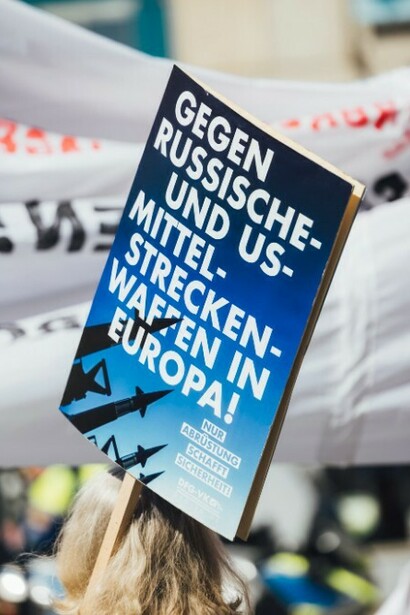
Acclaimed abroad, this renewed involvement in military affairs on the European continent has been received with lukewarm enthusiasm in the Bundestag, where major parties such as Die Linke and Die Grüne often voice their concerns about what they deem a rapid militarization of the country.
After a substantial increase in defense spending approved by the Bundesrat in March 2025, Merz appears determined to make Germany a trusted partner in the elaboration of a more resilient European defense system. In line with demands from the Trump administration, the German Foreign Minister, Johann Wadephul, announced that Berlin would agree to dedicate substantial funds to its military, going as high as 5 percent of the German GDP 3.
Such a dramatic increase would definitely breed tensions within the Bundestag, where the parties from the left fear an erosion of Germany's constitutional pacifism. Boris Pistorius, current Minister of Defence and member of the SPD, has previously voiced his concerns regarding the delivery of the famed Taurus missiles 4, thus signaling a potential rift between the two parties of the ruling coalition. The AfD, as the second political force in the Bundestag, represents a viable alternative for the government to implement its program, despite a clear distancing from the party's values. On the cusp of the legislative elections, Friedrich Merz had already agreed to a concession regarding the immigration policy, playing into the AfD's exclusionary and xenophobic political agenda.
Altogether, the extent of the military support granted to Ukraine represents one of the many challenges the Merz government will have to face in the upcoming months, along with negotiations around tariffs, discussions surrounding the Mercosur agreement, and consultations pertaining to European economic policy. How the new administration balances these demands—both at home and abroad— will determine not only the durability of its agenda but also Germany’s evolving role within Europe and on the world stage.
References
1 Who is Friedrich Merz? Meet Europe’s most powerful leader as US turns its back.
2 Kanzler Friedrich Merz im Interview mit Jan Philipp Burgard, Chefredakteur WELT-Gruppe.
3 Germany backs 5% NATO defense spending target.
4 Les propos de Merz sur les Taurus pour l'Ukraine suscitent optimisme et hésitation.