English
 Español
 Français
 Deutsch
 Italiano
 Português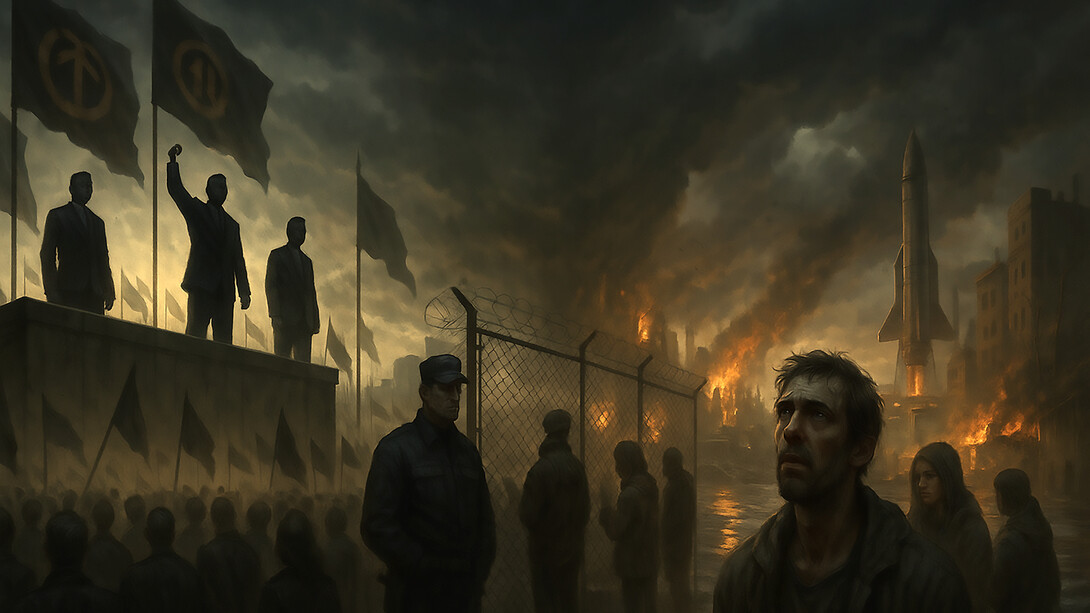
In an era defined by converging crises, authors Naomi Klein and Astra Taylor present a chilling new analysis of our political moment. They emphasize how the tech and political elites seem to agree on creating a world divided between the "savable" and the "unsavable." In their seminal essay, "The Rise of End-Times Fascism," they argue that the governing ideology of the far right, together with, I would say, liberal political parties, has transformed into "monstrous supremacist survivalism" of the fittest and richest. We are reverting to eugenics.
This isn't a simple return to 20th-century authoritarianism. It's a new form of fascism, uniquely adapted to the challenges of the 21st century. This ideology lacks any credible vision for a hopeful future. Instead, it embraces a fatalistic, quasi-religious belief that the world is heading toward a predetermined end. They contend that this dangerous worldview is fueled by an unholy alliance between a contemptuous elite and a frustrated, conspiratorial base who have both abandoned the idea of a shared destiny on a livable planet. The ensuing pages will provide a comprehensive examination of the insights from the article published in the Guardian by Naomi Klein and Astra Taylor, complemented by select observations from McQueen's study on politics and apocalyptic tendencies.
In their essay, "The Rise of End Times Fascism," published in The Guardian, authors Naomi Klein and Astra Taylor explore the evolution of far-right ideology, examining its transformation into a form of supremacism and survivalism. This novel worldview, profoundly influenced by a Christian conception of eschatology, eschews any anticipation of a future, embracing a pervasive sense of fatalism. The text under scrutiny does not proffer a constructive vision; rather, it prioritizes the establishment of "corporate city-states" or "bunker nations," which function as a refuge for a select few. In this context, love and charity are not extended beyond the confines of one's own "bunker," resulting in a convergence of these concepts into a form of end-times fascism.
In contrast to the grand, albeit distorted, visions for the future offered by 20th-century fascism, contemporary fascism, as posited by Klein and Taylor, is characterized by an absence of a positive and credible vision for the future. This dearth of hope renders it a particularly perilous endeavor, as its sole proposition is the survival of humankind in a world undergoing decline.
The authors posit that the contemporary epoch is characterized by novel and unparalleled existential threats that were not fully evident during the rise of European fascism in the 1930s. The billionaire class has identified this moment as one of existential risk, characterized by the potential for a global pandemic, the interconnected nature of our world, the threat of nuclear weapons, and the imminent threat of a climate crisis. This acknowledgment underscores the extraordinary peril confronting us.
Eco's Ur-Fascism in a new guise
The authors establish a correlation between this phenomenon and Umberto Eco's concept of "Ur-Fascism," also referred to as "Eternal Fascism," proposing that a shared ideological foundation links historical and contemporary manifestations of fascism. This framework, delineated by Eco, does not constitute a unified, coherent system; rather, it is a constellation of characteristics that have been identified in a variety of historical and contemporary movements.
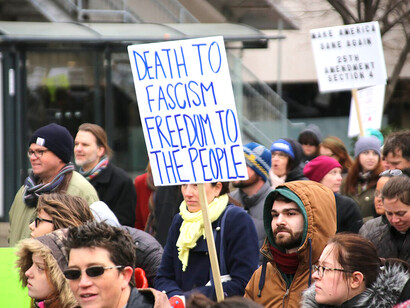
This fascism is characterized by several key features: a cult of tradition that rejects modernity and intellectual progress; an emphasis on action for its own sake, which devalues critical thought and intellectual reflection; and a perception of dissent as treason, which demonizes those who disagree. The phenomenon under scrutiny herein manifests its pernicious influence through the exploitation of two interrelated psychological factors: the fear of difference and an obsessive preoccupation with conspiratorial hypotheses. Furthermore, it fosters a sense of disdain for the vulnerable, glorifies heroism, and perpetuates a toxic masculinity. Additionally, it is driven by a reductive populism that perceives the masses as susceptible to manipulation.
This analysis by Eco provides a robust theoretical framework for comprehending the apathetic, survivalist ideology characteristic of end-times fascism, as described by Klein and Taylor.
The end-times as a political tool
Klein and Taylor's essay identifies three recent factors that have contributed to the escalation in the appeal of this ideology. Firstly, the climate crisis has been a catalyst for the propagation of fear and fatalism. Secondly, the pandemic has served to exacerbate preexisting social divisions and a pervasive sense of vulnerability. Thirdly, the rapid advancement of artificial intelligence has been perceived as a catalyst for societal decline. These developments have engendered a fertile ground for apocalyptic rhetoric, which, according to political scientist Alison McQueen, fulfills a need in times of turmoil.
As McQueen argues in her research, Political Realism in Apocalyptic Times, there is a necessity to comprehend occurrences such as wars, natural disasters, economic collapse, and imminent nuclear conflagration. Apocalyptic narratives are known to simplify the complex threats they describe, rendering them more accessible to the general public. While such rhetoric can offer a "comforting" element of redemption, it also creates a false sense of moral clarity. A doomsday mindset is characterized by the portrayal of political conflicts as a dichotomy between "good" and "evil," or "us" versus "them." When individuals perceive themselves to be engaged in an existential struggle, they often exhibit a heightened propensity to resort to extreme measures—including war, torture, genocide, and nuclear annihilation—to achieve their objectives. This perspective finds a congruence with the exclusionary and violent character of "end-times fascism."
The cult of escape: from bunker to mars
Another central theme of Klein and Taylor's analysis revolves around the alliance between the billionaire class and a disillusioned, far-right base. According to the authors, the tech elite are preparing for an apocalyptic conclusion to life on Earth, a catastrophe propelled by the very carbon emissions their corporate entities generate. These preparations, however, are not intended to ensure the collective survival of humanity; rather, they are focused on ensuring the security and continuity of a selected few. This commitment is evidenced by the construction of subterranean shelters and the funding of projects aimed at establishing a colony on Mars.
However, the genuine apprehension experienced by this elite does not pertain to the prospect of a global collapse itself. Their greatest apprehension pertains to the impending regulation that has the potential to curtail their profits. From their perspective, bureaucracy, environmental laws, and social regulations are the primary obstacles to achieving this goal. The concept of a world in which these obstacles are eliminated is envisioned, ideally by automated systems such as chatbots, which would free individuals to pursue unlimited wealth.
This outlook forges a perverse alliance between these billionaires and a disenfranchised, far-right base. Both groups are united in a "gloomily festive fatalism"—a shared sense of glee at the prospect of an end to economic and environmental regulations. This coalition finds common ground in celebrating mass deportations and dismantling the very systems designed to protect the collective good. It's a politics of abandonment, where both the elite and their followers feel they are freeing themselves from a world they've come to despise.
Building an alternative story
Faced with this nihilistic and destructive ideology, Klein and Taylor do not end their analysis on a note of despair. Instead, they propose a radical form of resistance: a movement rooted in interdependence and belonging, which they describe as an allegiance to "earthly reality." This response directly confronts the politics of abandonment, arguing that the solution is not to escape but to embrace a fierce commitment to "staying here."
This requires more than just political action; it demands a fundamental shift in our collective story. The challenge is to articulate an "alternative story" to the one of individual survival and technological escape. This new narrative must be based on solidarity and community-building rather than on the ruthless logic of the bunker. In short, the authors call for a "politics of commitment"—a deep fidelity to the Earth and to one another, built through open alliances and a shared destiny, right here and now.
References
Klein, Naomi, and Astra Taylor. "The rise of end-times fascism." The Guardian, April 13, 2025.
McQueen, Alison. Political Realism in Apocalyptic Times. Cambridge University Press, 2018.