English
 Español
 Français
 Deutsch
 Italiano
 Português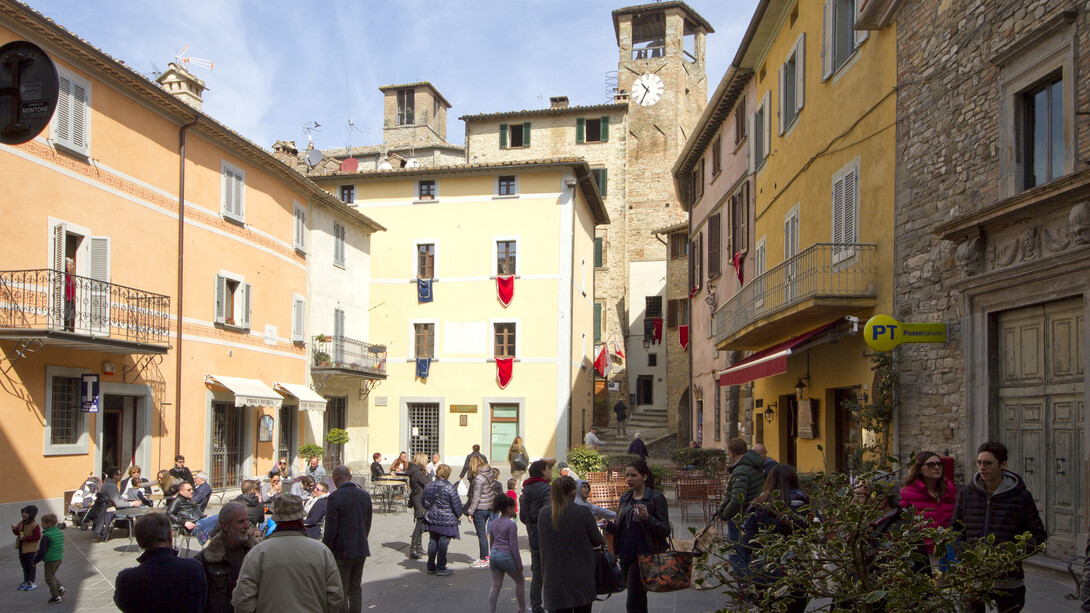
In the previous article, I mentioned that many foreigners have been buying homes in Italy for several years, some to spend a few weeks there, some to retire, and some to open hospitality businesses.
This phenomenon, in addition to the social sharing problems described in the article, brings with it other dynamics that, in my opinion, should be taken into consideration, especially by government bodies, both local and national.
I discussed these issues and how small municipalities manage to survive in a country that, since 2001, thanks to constitutional reform, has established the financial autonomy of local authorities, essentially leaving them in the lurch. Mirco Rinaldi, mayor of Montone, a small, charming, and vibrant Umbrian village, discussed these issues with me and how this process has affected the way small towns and cities manage their real estate, which is detrimental to the younger generations. The picture that emerges is positive in some ways, but it raises questions about the careless management of Italy's real estate assets, which is detrimental to future generations.
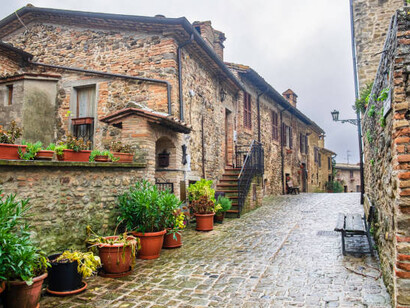
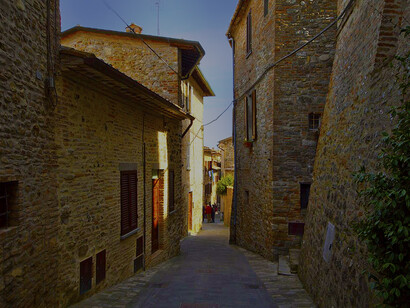
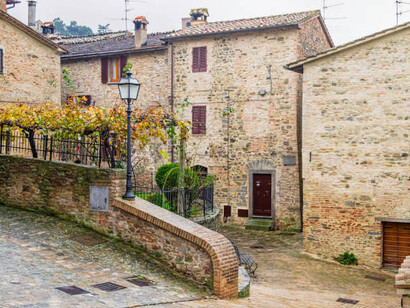
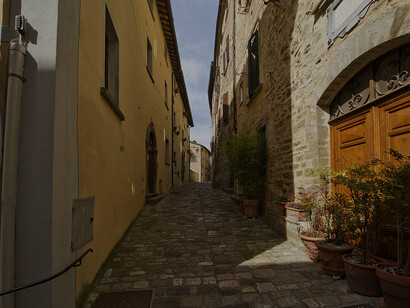
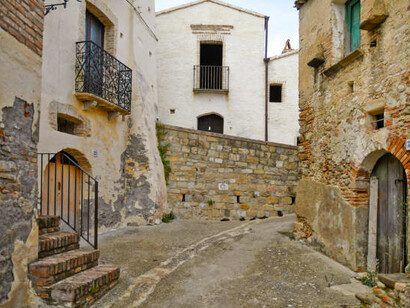
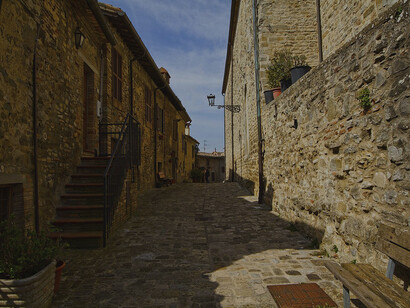
What immediately struck me about Montone, beyond the harmony of its ensemble and the beauty of its buildings, was their near-perfect state of preservation. It seemed as if, rather than having been built a thousand years ago, the dwellings had only been completed yesterday.
Mr. Mayor, how does a town of approximately 1,600 inhabitants enjoy such near-perfect maintenance? Is it the residents' merit, or is it supported by grants?
Rinaldi: After the 1984 earthquake, private individuals received funds to retrofit or improve their homes in the historic center to protect them from seismic shock. However, the municipality of Montone has always been careful to secure funding, as was the administration that preceded me. In the 1980s and 1990s, a special law was passed on landslide-prone areas, and Montone, along with Orvieto, had areas that were on landslide-prone terrain. Thanks to this funding, the municipality redid all the stone pavements in the historic center, all the underground utilities, and more.
Over the years, residents have shown great interest in the historic center, and it was a political choice to keep all services, such as schools, the post office, and the town hall, in the capital and therefore close to the historic center, even though it's challenging, as people prefer the convenience of the city. As a municipal administration, we are always attentive to the various calls for proposals that provide us with funding, which we have always succeeded in receiving over the years, such as the European non-repayable grants CSR (Rural Development Complement) and PSR (Rural Development Programs); the latest one we received is for two million euros to improve a landslide area behind the walls, and there will be a second phase of consolidation of the village of Montone, which is a very important project.
Within the historic center, there are three cultural centers: San Francesco, the museum complex; San Fedele, the theater complex—which also houses the auditorium and music school; and Santa Caterina, with its library and archives. Every year, we seek resources to maintain these spaces, including through maintenance work.
The thing I'd emphasize is that we all work together; Montone is this way also thanks to the citizens who care: if there's a piece of litter on the ground, they don't wait for the sweeper on duty to come by, but they pick it up, thanks to the civic-mindedness of all the residents.
This sense of community is also evident in the associations: there are numerous organizations such as the Pro Loco, the band, the choir, and various sports associations, all of which work in synergy with each other and the municipal administration to bring the village to life, because Montone is a vibrant village.
There are many initiatives and many international events: there's the Umbria Film Festival, now in its thirtieth year, a festival that counts director Terry Gilliam as an active member and honorary citizen; the Festa del Bosco, which has surpassed 40 years of existence; the historical reenactment of the Donation of the Holy Thorn; the marching bands festival created by the Braccio Fortebraccio Philharmonic, which features a wide array of Italian and international bands; and many other events. These events are important because they attract large crowds and raise the profile of the village.
Furthermore, in recent years, we have developed the industrial zone in the hamlet of Santa Maria di Sette—a sizeable hamlet located near the SS3bis (or E45)—with several major companies employing around a thousand people. Added to this are tourism and agriculture, although we too are suffering from depopulation because young people prefer to move to cities where all the services and amenities are available. This is a problem that needs to be addressed, but it is difficult to solve.
She said that an industrial area has developed, which presupposes that it didn't exist before or was very small.
When I was elected, there were two major companies left, one of which closed shortly thereafter. A plan had been put in place for that land, but it never really took off. Then two major companies arrived: Trigano, a French camper van manufacturer that now employs nearly 380 people, and Salpa, which makes ice cream cones and biscuits.
I imagine they didn't land in Montone alone.
Let's say we've done some work on it through incentives: for example, Trigano took over a six-hectare plot of land, where there was an abandoned warehouse right at the Montone exit of the SS3bis. They completely renovated it, and we lowered their municipal share of the IMU (property tax) for three years, because the municipality, in the case of businesses, receives a very small portion of this tax; the rest goes to the state.
At Salpa, however, we proposed the lowest possible cost for municipal land, thanks also to the procurement of resources from the central government to oversee the urbanization works in the area.
The results were clear; we encouraged the companies, and they responded positively. This development was compatible with the beauty of both the landscape and the historic center because the industrial area is close to the E45, which is far from the town and, at the same time, convenient for businesses.
And despite these job opportunities, young people still prefer to move to larger cities.
Exactly. This is because the historic center has become very attractive to foreigners, primarily Americans, British, Australians, Belgians, and Danes, who have purchased homes. With significant financial resources, house prices have risen significantly, making it difficult for a young person to purchase a property in the historic center. In the case of Montone, being located on a hill, leaving the historic center means living on the plains several kilometers from the city center, almost the same distance from larger towns like Città di Castello and Umbertide, for example, where housing is cheaper and where, in any case, jobs can be found.
But do foreigners who have bought a house come here on holiday for a few weeks a year?
Most of them, yes, but some of them have started their own businesses. Some have taken over a farm, others are building agritourism, and still others are running B&Bs. However, in many cases, they stay here for a maximum of two or three months a year, and this isn't very positive for the country and its economy. The government should develop housing policies, which, in my opinion, have been lacking in Italy for too long.
It would probably be necessary to revisit tools developed in the 1960s, such as the Public Housing Plans, and update them. The same goes for public housing, a tool still in force but which should be adapted to current housing needs. In Italy, we have a significant housing shortage, with hundreds of thousands of families on waiting lists, and, conversely, our available housing stock is among the lowest in Europe. Therefore, this tool should be strengthened and updated.
But even if the government promoted new tools for affordable housing, this wouldn't solve the problem of high housing costs in historic city centers, especially for young families—costs that are driven primarily by foreigners who are willing to spend much more than us Italians on their purchases.
The medieval charm of the historic center and the beauty of the farmhouses in the countryside have attracted strong international interest, fueling a highly speculative second-home market. Both foreign buyers and Italian owners (who use their properties only for vacations) have pushed purchase prices to levels unaffordable for the local population.
As a direct consequence, private individuals intending to sell seek maximum profit, making the purchase of a first home almost impossible for those who permanently reside in the municipality.
For us, second homes within the city walls are a problem. In the 1950s and 1960s, many families moved to the cities, leaving many vacant properties. Today, these have become vacation homes, effectively remaining unused for much of the year.
The municipality has made significant efforts to increase the supply of public housing (ERP) by restoring and enhancing valuable historic buildings.
Commendable initiatives have led to the conversion of iconic buildings, such as the former hospital and the former convent of Santa Caterina, into public housing units, many of which are managed by ATER (Territorial Residential Building Companies).
However, demand far exceeds supply. The apartments, although very beautiful because they are the original medieval ones, are practically all occupied. Currently, within the walls, the availability of public housing and residential buildings is zero, effectively eliminating a crucial solution for families unable to afford the inflated prices of the tourist market.
Montone's challenge now is to balance tourist appeal and external market interest with the need to keep the resident community alive, ensuring access to housing for those who live and work in the area.
I'm being provocative and wondering if it wouldn't be a good idea to favor Italians who need and want to buy a home in the historic center over foreigners.
In a certain sense, it almost seems to me that we're selling Italy by favoring those from other countries over Italians for purely economic reasons. This is a more than understandable motivation, I realize, but at a national level, it could risk uprooting Italians from our historic city centers.
The problem in Italy is births, a problem no government has ever seriously addressed, but to respond to your provocation, I also think we need to find something to favor local residents if we don't want to see these villages emptied of Italians and increasingly occupied by foreigners.
It's a different story if they were at least residents. This, from my perspective as an administrator, would be positive. They should all be residents and integrate into the community, into the associations that, as I said, are a deeply felt activity in Montone.
The phenomenon of foreigners buying homes here began in the 1990s, and they flocked here because Tuscany was already overflowing with foreigners. But we're still holding up and hope to continue like this. The problem, in my opinion, as I said before, is the birth rate, so the government needs to do something for these villages and make them attractive, and that means investing in infrastructure—roads, fiber optics, and phone signal. There was the National Recovery and Resilience Plan (NRRP), but I've seen that the mobile phone antennas funded by the program were installed in cities and very few in rural areas, when that's where they should be done. An entrepreneur will never invest in an area without infrastructure; otherwise, they'll never recoup their investment.
Let's also think about the merchants: small shops in small villages can't pay the same taxes as a merchant in Rome or Milan or have the same bureaucracy. Funding small villages should be a priority precisely to prevent their depopulation by Italians.