English
 Español
 Français
 Deutsch
 Italiano
 Português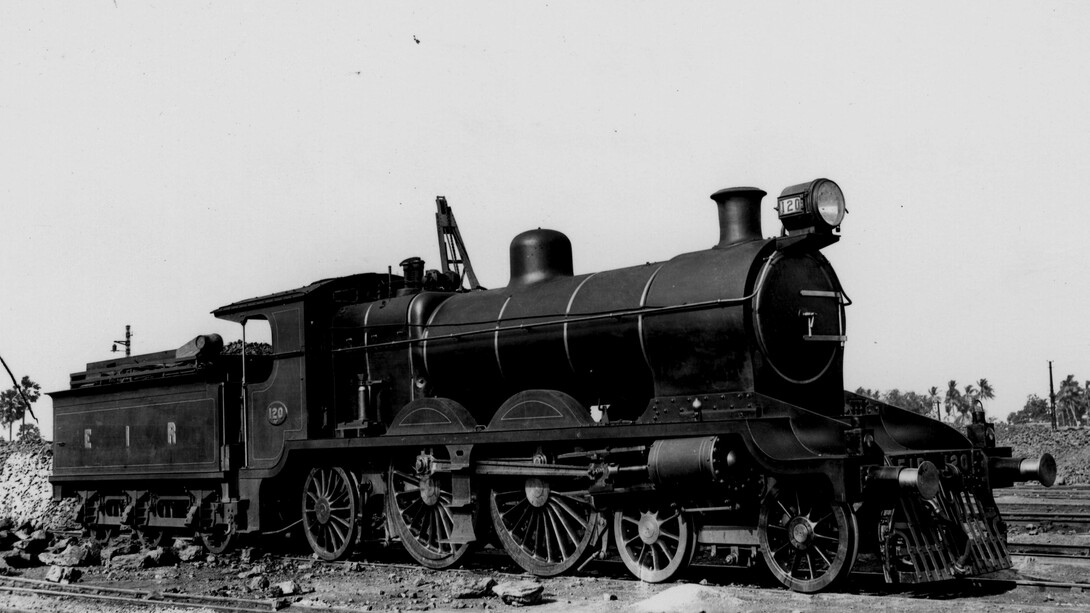
When I first landed in Lusaka, nothing about the wide Zambian sky or the slow, unhurried traffic felt familiar. Yet, as I walked past government buildings with their neat lawns, listened to civil servants switching between English and local languages, and heard people joking about “bureaucracy” and “files stuck somewhere in the system,” I had an odd sense of déjà vu. It felt, in a strange way, like home. As a Pakistani visiting Zambia, I realized that our two countries, separated by a continent, share an invisible thread: the long shadow of the British Empire.
Two distant territories, one empire
Pakistan and Zambia entered the British Empire through different doors. The regions that make up Pakistan were absorbed into British India over the 18th and 19th centuries and by the late 1800s were fully governed as part of the Raj. Punjab, in particular, became the empire’s “model province” after huge canal-colonization schemes and railways transformed it into a major producer of wheat and cotton for global markets. By the 1920s, Punjab alone produced about a third of British India’s wheat and a tenth of its cotton.
Zambia’s story began later, and under a corporate flag. What is now Zambia was stitched together in 1911 as Northern Rhodesia, initially run not directly by London but by the British South Africa Company (BSAC) of Cecil Rhodes. The company obtained mineral and land concessions from local chiefs, claimed ownership of “unalienated” land, and focused heavily on copper mining in the Copperbelt region.
In 1924, after BSAC’s charter was revoked, Northern Rhodesia became a formal British protectorate under the Colonial Office, with its capital moved from Livingstone to Lusaka in 1935. Its economy revolved around copper to such an extent that by the mid-20th century the Copperbelt accounted for around 90% of export earnings and government revenue.
So while Pakistan was a cornerstone of a vast Asian colony and Zambia a “resource frontier” in Africa, both were locked into the same imperial logic: produce raw materials for Britain, under political systems designed to control land, labor, and movement.
Parallel economies of extraction
In Punjab, British engineers dug canals, laid rail tracks, and established “canal colonies” that rewarded loyal landholders while turning peasants into small commercial farmers. Wheat that once rotted in surplus years now travelled by railway to Karachi and onward to imperial markets. Cotton fields fed Lancashire’s mills; taxation and land revenue funded the colonial state.
In Northern Rhodesia, the BSAC and later the colonial government used hut taxes and labor regulations to push Africans into wage work in the mines. Mining firms like Anglo-American and Rhodesian Selection Trust built company towns, rail links to ports, and an economy calibrated to global copper prices.
The result in both places was a distorted development pattern: impressive infrastructure in some sectors, but economies heavily dependent on a narrow range of exports and vulnerable to global price shocks. Today’s debates in Pakistan on “diversifying beyond textiles” and in Zambia on “moving beyond copper” echo those colonial design choices.
Colonial cities, familiar bureaucracies
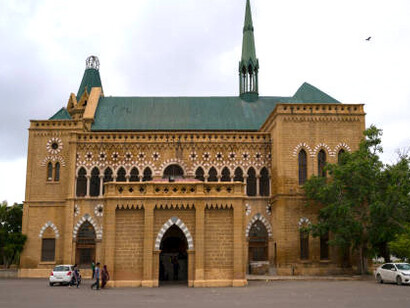
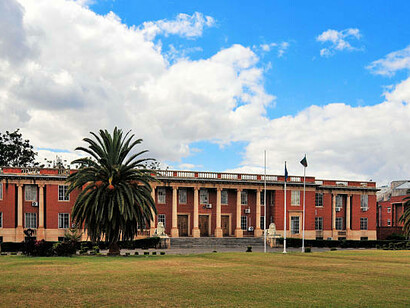
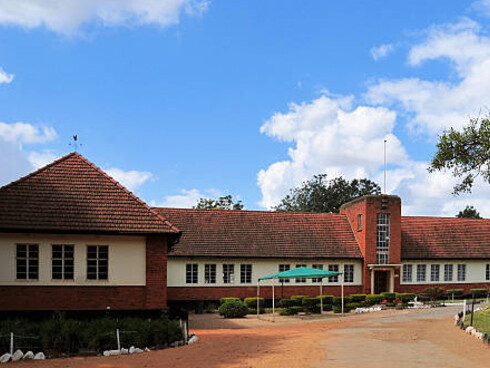
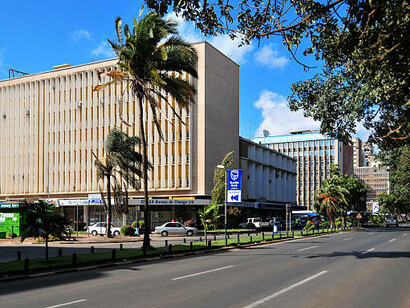
Walking through Lusaka, I was struck by how much the city feels like a cousin to South Asian colonial capitals. Lusaka’s rise as a capital in 1935 followed classic imperial urban planning: an administrative core, tree-lined avenues, segregated residential areas, and markets pushed to the peripheries.
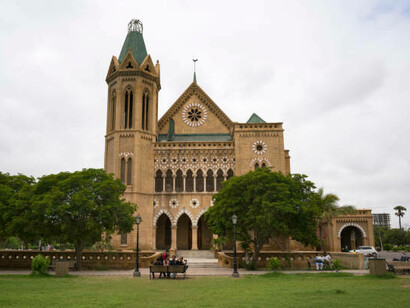
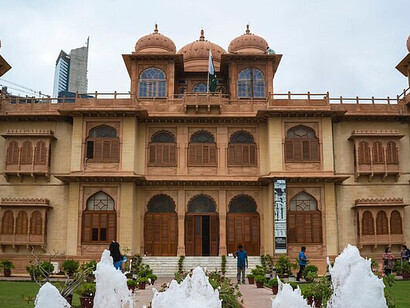
In Pakistan, cities like Lahore, Karachi, and Peshawar carry similar imprints: civil lines, cantonments, railway colonies, and grand colonial buildings surrounded by dense, under-serviced neighborhoods. The British introduced a bureaucratic style that survives almost unchanged: the importance of “files,” the cult of stamps and signatures, and elaborate hierarchies in civil services and courts.
In Lusaka’s ministries and in Pakistani government offices, the grammar of power still feels colonial—English as the language of officialdom, common law traditions in courts, and rigid administrative tiers stretching from capital to village. This is a shared inheritance that shapes everything from how we apply for a business license to how quickly a development project moves.
Meeting in the market: handicrafts as a shared language
Yet some of the most striking similarities between Zambia and Pakistan are not in documents or buildings, but in markets like Kabwata Cultural Village. Kabwata brings together artisans from across Zambia’s provinces, offering wood sculptures, animal figurines, carved nsolo (mancala) boards, drums, woven baskets, colorful fabrics, and beadwork.
As I moved from stall to stall, I kept catching myself thinking, I’ve seen this shape before. A deep wooden salad bowl that could sit perfectly on a Pakistani dining table. Bracelets of smooth round beads, the kind you’d find sold by young boys at Pakistani traffic signals or outside Sufi shrines. Intricate carved patterns that echo the floral and geometric motifs from South Asian woodwork.
Of course, the designs are rooted in different cosmologies; Zambian masks and sculptures reference local spirits, dances, and histories, while Pakistani crafts draw on Islamic geometry, Mughal aesthetics, and regional folk traditions that long predate the British. But the materials and techniques, i.e., carved hardwood polished by hand, beads threaded on simple elastic, and baskets woven from local fibers, felt like a shared vocabulary of the Global South.
Back in Pakistan, handicrafts from Sindh, Punjab, and the northwest—basketry, beadwork, and carved wooden boxes and trays—are part of a craft tradition that reaches back to the Indus Valley and has adapted through the Mughal, colonial, and postcolonial eras. Seeing similar skills on display in Lusaka reminded me that empire moved not only administrators and soldiers but also traders, artisans, and ideas about what “craft” should look like for tourists and export markets.
Hidden south–south connections
There is also a more direct historical link between South Asia and Zambia. During the colonial period, Indian, often Gujarati, traders settled in Northern Rhodesia’s towns like Livingstone and Lusaka, becoming important intermediaries in wholesale and retail trade. They occupied a complicated position in the racial hierarchy: above Africans in colonial thinking but below Europeans, and frequently targets of resentment and discriminatory regulations.
Their presence meant that South Asian textiles, jewelry styles, and commercial practices travelled into Central Africa. Over time, these influences mixed with local traditions. So when I stand in a Zambian craft market and feel a flash of familiarity, something in the curve of a bangle or the rhythm of bargaining, it is not purely imagined. It is, in part, a trace of these long, hybrid exchanges across the Indian Ocean and the African continent.
Beyond sentiment: what shared history demands of us
It is tempting to treat colonial history as something distant and settled: Zambia became independent in 1964, Pakistan in 1947; flags changed, anthems were written, and we moved on. But walking from Lahore’s old city to Lusaka’s craft markets, it is clear how alive that history remains: in our languages, our legal codes, our infrastructure, and even our souvenirs.
Recognizing the shared colonial past of Zambia and Pakistan is not about romanticizing empire or collapsing our differences. It is about understanding how similar tools were used on different continents: railways and roads laid primarily for extraction, bureaucracies built for control rather than service, and economies structured to serve far-away markets. It is also about recognizing the resilience and creativity of people who kept their ways of making, trading, and storytelling alive under those conditions.
When a Pakistani visitor buys a carved wooden bowl or bead bracelet in Lusaka, it is more than a tourist purchase. It is an encounter between two postcolonial histories that were once administered from the same metropole, now meeting on equal footing, artisan to buyer, South to South.
The British Empire once connected our territories in a web designed for London’s benefit. Today, we have the chance to re-weave those connections on our own terms: through solidarity on debt and climate justice, through cultural exchanges, and even through the quiet recognition that a bracelet in Lusaka might remind someone of a market in Lahore. That, too, is a form of decolonization, seeing our reflections in one another, rather than always in the old imperial mirror.
Sources
Trade & Industrial Policy Strategies (TIPS). (n.d.). Zambia.
International Labour Organization. (n.d.). Report from the ILO Research Repository.
Encyclopaedia Britannica. (n.d.). United National Independence Party.
Wanderlog. (n.d.). Official Kabwata Cultural Village page.
Beautiful Zambia. (2017, May). Arts and crafts markets.
Brill. (n.d.). Indian Traders as Agents of Western Technological Consumption and Social Change in Mukuni: Memories of the Sharma Brothers’ Trading Store, 1950s to 1964..
Scroll.in. (n.d.). How Gujarati merchants helped Zambia attain independence.
Zambian History. (n.d.). British India.
Punjab Archives. (n.d.). Colonial era records.
Ali, I. (1988). The Punjab under imperialism, 1885–1947. Princeton University Press.