English
 Español
 Français
 Deutsch
 Italiano
 Português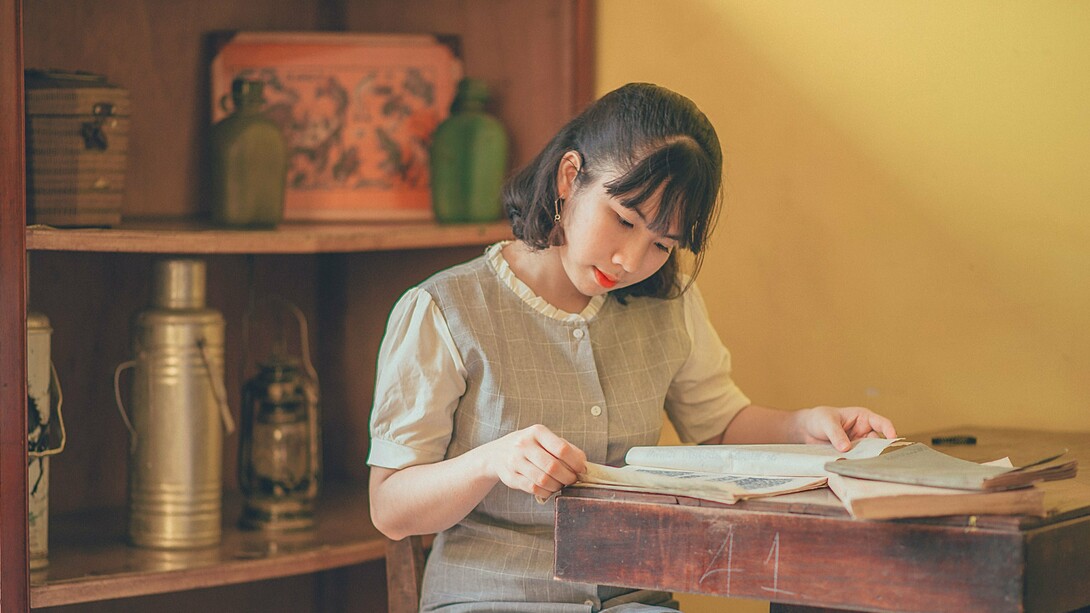
I was genuinely surprised to discover that I was drawn to writing. When I was young, I never imagined that writing would be part of my life. What I knew then was simple: I loved reading. It started with comics—the place where I first learnt to read sounds like HHHMMMPPP and other letters aloud. I can still remember Nong Usteng, our neighbour, smiling patiently as I read in that awkward way. I told him I was not really reading yet; I was just trying to hear the sounds of the alphabet.
Learning under an oil lamp
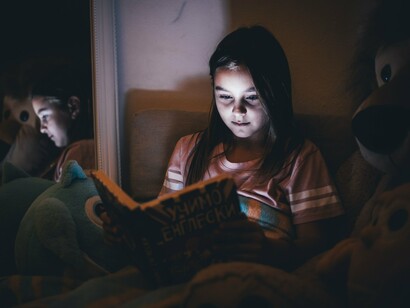
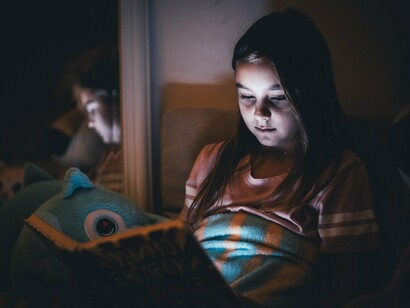
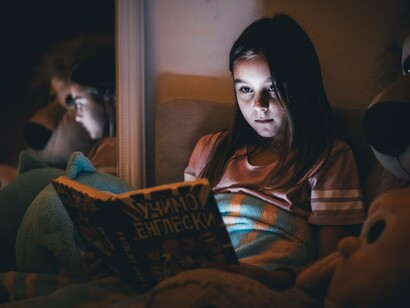
I first learned to read under the faint glow of an oil lamp. Our home had no electricity, and every page I turned meant straining my eyes against a trembling flame. Years later, when I finally became a professional, electricity came into our home—and with it, the luxury of reading without struggle. That memory lingers, reminding me that education is never simply about books but also about the material conditions that make learning possible.
My mother’s encouragement to read
The truth is, my mother could not teach me how to read well because she said there were words she herself could not recognise. Although she only reached Grade 4, she could count well, especially because she needed it for betting on the “last two digits” in the lottery. But one thing stayed with me: she always reminded me that I must learn how to read. Unlike her parents, she said, I was not stopped from reading—and that mattered.
Growing up without books
If you come from a poor family in the Philippines, it is not typical to grow up loving reading. Compared to houses I have seen in countries like Canada, the United States, and in Europe, their homes often have libraries. People spend much of their time reading. I was even surprised when I went to Norway and saw that their public libraries have spaces designed for infants. How can an infant know how to read? The answer is simple: they can touch the books, look at the colours, and become familiar with them. Even as babies, they are introduced to the world of books.
The boxes of books that changed everything
Everything changed one day when my brother brought home boxes of books from the family he worked for. Their child was studying in a private school. I remember thinking, OMG, these books are so nice. They were advanced books that I had never seen in our school.
During my elementary days, I was often absent from class just so I could read them. I could not wait to finish each one. Being absent did not bother me. I was not pressured to be an honours student, although I remember my father saying that being one would be helpful, especially in the higher years. Even though I was absent, I was still on the honours list.
Reading those books enriched my vocabulary compared to those who only relied on the limited books in our school library. Out of curiosity, I also volunteered to watch over the library books just so I could read the fairy tales. If I could not finish them, I sometimes tore out the pages and brought them home, returning them the next day with Scotch tape. I confess this now with a smile, because those books made me obsessed. The desire to know when and how the story would end fascinated me deeply.
Survival before study
As a student, my tuition was free, but I had no money for transportation. My focus was survival, not study. Reading was not a priority—it did not put food on the table. I only began to appreciate the beauty of reading when I started spending time in the public library of Davao City after I became a teacher. That library became a sanctuary, offering me what poverty had long denied: time and space to learn.
This is the reason that I can understand why some students from poor families have problems with reading. I can relate to many of them since I have been in their shoes in those communities without libraries. I even remember when we conducted the research on violence against children in schools; I discovered that there are schools without good books in their libraries. In some areas in Mindanao in the Philippines where conflict existed, students are caught between war and schools, and the explanation is that many of them cannot read well or concentrate on reading because of the armed conflict situation. Some places have no public libraries compared to other big cities like Ormoc City, Davao City or Manila, since it is the capital city.
If the politicians were genuinely concerned, they would invest their resources in creating public schools and libraries instead of corruption or other unnecessary expenses.
My father’s influence and the world of faith
My father, by the way, was a learned man. He reached his third year in college as a scholar at Cebu Normal University and graduated as the valedictorian of his class. I am not bragging; I simply know he was a scholar. He spoke English well, with an American accent. I remember a small book titled America that I used to read when I was young.
Most of the time, he read the Bible and manuscripts written in tiny letters—questions about heaven and where we go after we die. He even wrote a manuscript about a woman who died and went to heaven. Through him, I learned to read the Bible because I was a reader in our small chapel every week. My father was the pastor. The Bible stories fascinated me because they spoke of great people and great acts of faith. When I think about standards of behaviour and greatness, I sometimes feel that no one surpasses them.
Reading and writing in Kazakhstan
Later, when I volunteered in Kazakhstan, my love for reading intensified even more. I had time, and there was a place called Globus, an English centre filled with books. With the cold weather pushing people indoors, reading became the best pastime.
I also brought some of the books I loved and left them there after my one-year service. That year was largely shaped by reading and writing because I was not fluent in the Russian language. My conversations were limited to trainings or to English-speaking people. Reading and writing became my outlet—a way to listen to myself and hear my own voice.
Ten years later, I revisited those journals and decided to publish them in a book titled From Streets to Horizons: A Journey from Street Education to Global Education, which I published on Amazon during my fellowship at the International Sustainability Academy in Hamburg, Germany.
Reading cultures across countries
I cannot help but notice the contrasts. In the United States and Canada, reading is a way of life. Homes have libraries, families regularly update their collections, and students carry bags filled with books.
In the Philippines, I often see my female students come to class with small bags containing only a phone or a makeup kit. Reading here is not yet a habit. It is not yet a culture.
The reality of illiteracy
In my research in Mindanao, I saw schools without libraries and classrooms where students waited for dismissal before gunfire began outside. In mountain areas, teachers came only for part of the week. Children were promoted without ever learning to read or write properly.
In such places, functional illiteracy was not a statistic—it was a reality.
Reading as liberation
Reading is liberating. It humbles us by showing how little we know and pushes us toward lifelong learning.
But reading alone is not enough. For the poor, reading is interrupted by hunger, by work, and sometimes by war. Until we confront these conditions, education will remain unequal.
The discipline of reading at De La Salle University
Later, I went to De La Salle University Manila as a scholar, where reading felt heavy and demanding. You could not enter class without submitting a paper. You had to read constantly.
I still remember our professor, Dr. Lee, saying that the only way to heaven is reading. Maybe that is true. And maybe reading is also the pathway to writing. If you do not read much, how can you write?
Of course, some people read a lot but never write. Perhaps they cannot yet transform what they read into what they feel compelled to write.
The power of academic reading
One thing I appreciated greatly at De La Salle University was our book nook, filled with so many resources that we could read all day.
Our classes were scheduled from 6:00 to 10:00 in the evening, but during the day, we were expected to read extensively and produce articles afterwards. It was there that I truly appreciated the importance of reading journals and academic articles. Later, I realised how powerful reading becomes when writing research papers.
Why I let students read
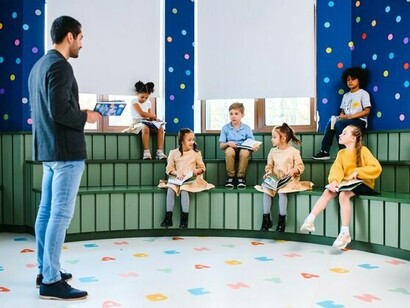
This is the reason that, as a teacher, I am not fond of lectures. I believe that when students read and respond to guide questions and when they write their reflections and reactions to articles, learning becomes stronger.
When students encounter words that speak to them, they begin to realise that they have their own voice—the power to express their thoughts, emotions, and ideas. For me, this makes education truly powerful.
A teacher must be a reader
For me, a good teacher is also a reader. You cannot enter the classroom relying only on your own opinions. Knowledge must come from sources.
Knowledge changes. It is fluid and constantly evolving. The only way we can keep pace with the development of the world is through reading.
As one of my professors once said, “Nothing is new in the world—it is only that you did not read it.”
Reading as escape and discovery
Reading has been a powerful influence in my life. It is something I could do all day. When I began living independently, reading became my way of entertaining myself. I can retire in the library with coffee.
It allowed me to forget where I was and what my reality looked like. Reading made me feel as if I were travelling with the writer, entering different worlds. Sometimes I found myself in the characters, agreeing with their sentiments and feeling their struggles as if they were my own.
From reading to writing
Looking back, I realise that writing did not come to me suddenly. It was born from years of reading—listening to sounds, turning pages, escaping realities, and quietly learning how stories breathe.
Reading did not just teach me words; it slowly taught me how to find my voice.
One quote from a writer stayed with me: “A good writer is, of course, an excellent reader because she is the one who first reads and rereads her own work.”
What people really do not see after the article was published, there are various times spent on reading, re-reading, revising, editing, and being humbled enough to know that there are many words that I do not know or I still need to know. An author, for me, is someone who is humbled enough to accept all these revisions until it satisfies the editor. Someone who endured all the silence until they found the way to express those thoughts or emotions in printed words. The writer really bled and endured the pain of not finding the correct path to express oneself. This makes sense: most of the time a writer will not speak because sometimes after one article, you have released a lot of energy in the words that you use to express yourself clearly.
A journey shaped by books
From oil lamps to libraries, from comics to published research, my journey has taught me that knowledge is both written and lived.
Books gave me a voice, but struggle gave me purpose. And together, they give sense to my existence, the path which I choose to take.