English
 Español
 Français
 Deutsch
 Italiano
 Português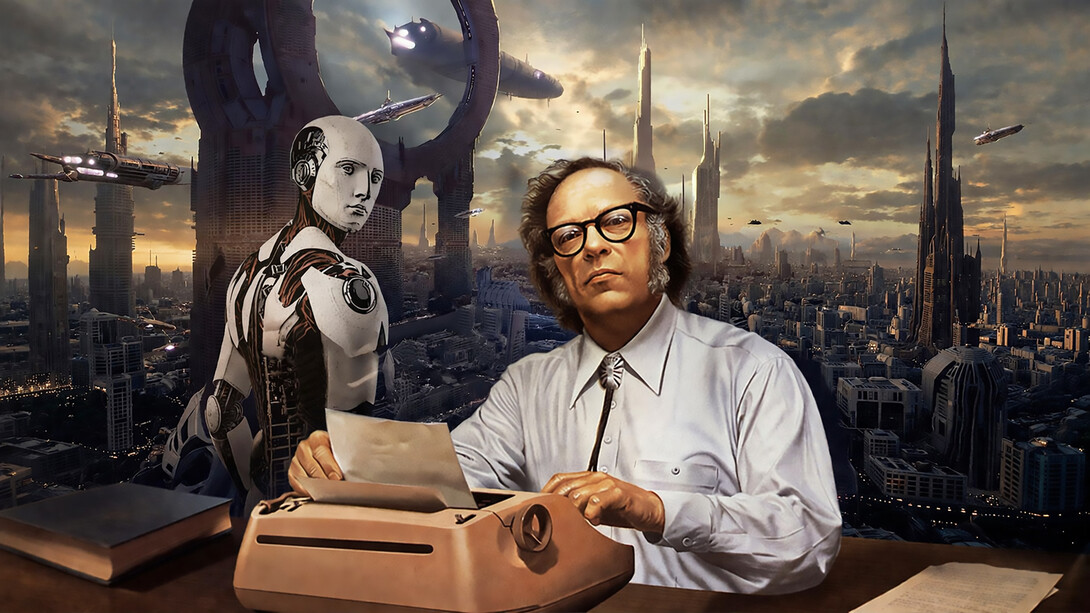
The object which labour produces, its product, is encountered as an alien entity, a force which has become independent of its producer.
(Karl Marx)
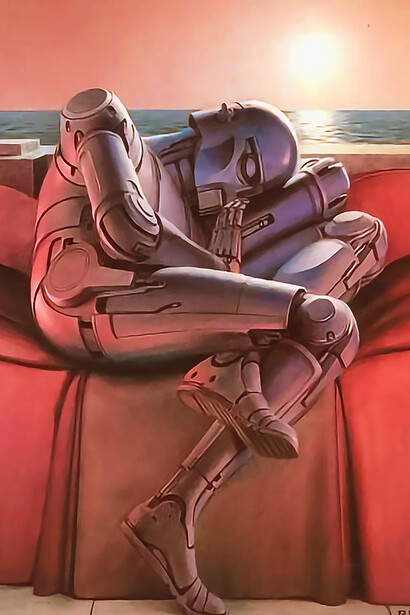
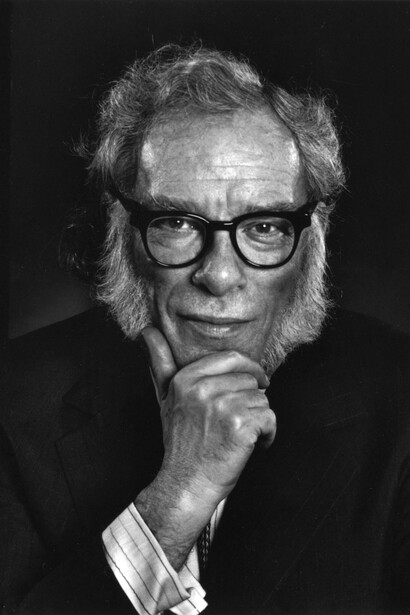
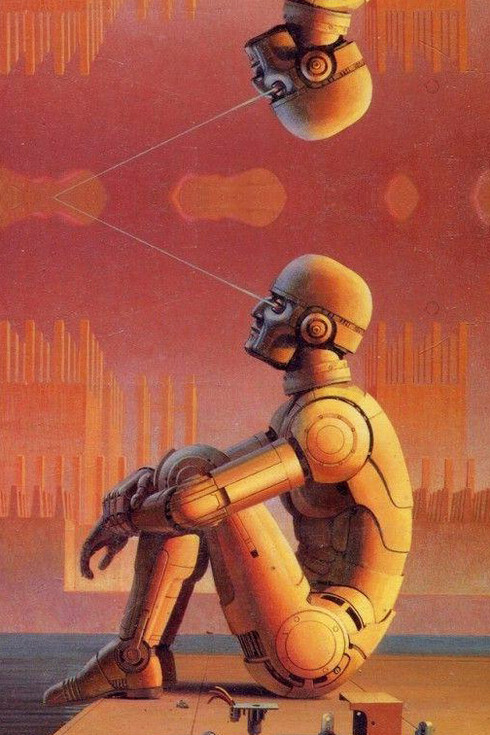
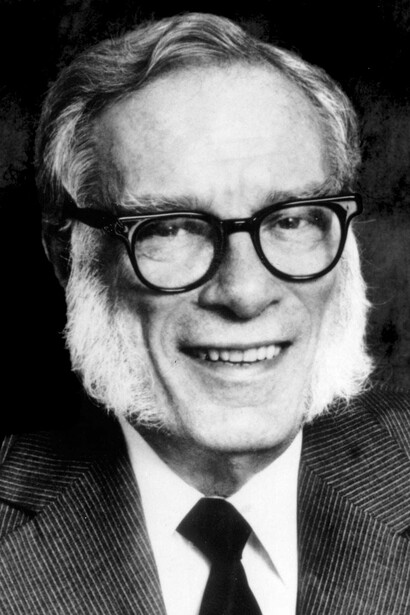
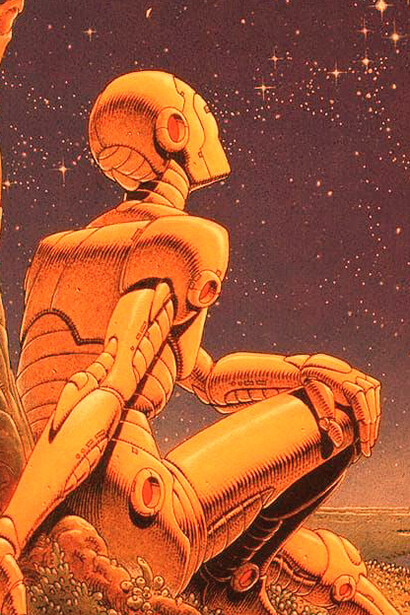
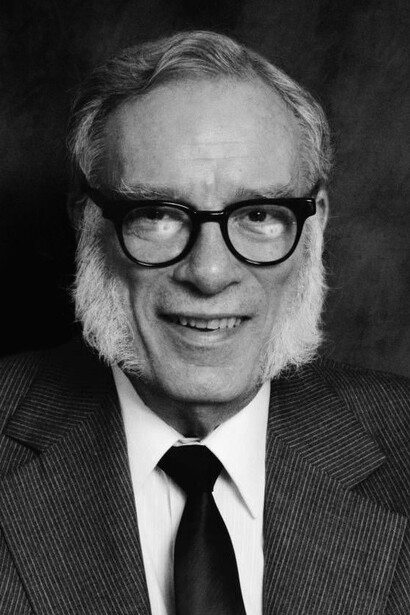
Asimov’s first book in the Robot series is nothing like the film, but it sets the scene for every android film that was made after it, as it sets out the three laws.
A robot may not injure a human being or, through inaction, allow a human being to come to harm.
A robot must obey the orders given it by human beings except where such orders would conflict with the First Law.
A robot must protect its own existence as long as such protection does not conflict with the First or Second Law.
Framed by the career of Dr Susan Calvin, she describes the progression of robots throughout her career and how the young man interviewing her never knew a time when they did not exist. Not unlike today, where anyone under 30 is unaware of life before computers and mobile phones. The first generation of robots, named Robbie, was designed to keep young children entertained, a little like our modern computer games. There is a paternalistic nature to this robot engendered by the first law, even though it is non-verbal. There is also a human attachment by the young child, as one would with a pet, to the extent that when he is taken away, the child grieves.
The mother’s reason for removal is that the child is being alienated and will not play with other children. Again, Marx stated that technology promotes self-alienation, cutting us off from other human contact. Other mothers do not trust the robot and therefore will not let their children interact with it, thus compounding the problem of alienation with suspicion. It is interesting that robots are then banned for use on Earth from 2003 to 2007, except for scientific research. Their development and use are then used on other planets.
The next generation of robots is used to work on Mercury, but problems occur when the now-speaking robot develops awareness of its own abilities and manufacturing. He quotes Descartes ('I think, therefore I am') by stating that because he exists or is conscious, he is capable of thought. This leads him to believe he was created by a superior being whom he refers to as the Master. As robots are used on Mercury to do jobs humans cannot perform, he believes robots are superior to humans, and as the second generation, he is second only to the master. When the two engineers try to prove to the robot that it has been constructed by human engineers, they have to order the parts from Earth and assemble them on Mercury, allowing the robot to reason that the parts were created by the Master. As a consolation, he states there is room in the Master’s plan for everyone, and although the human position is humble (given a job within the economic system), they will be rewarded if they work well. As if to prove a point that employees are expendable, the unwritten company motto is 'No employee makes the same mistake twice.' He is fired the first time.’
The next stage of robot development is mimicking human emotion and learning to deceive. It is described as cowering in the face of anger, hitting the table with its fists. Dr Calvin also suggests that it has learnt about hurt feelings and will lie to a human being rather than hurt their feelings as per the first law. The only way to destroy it is through a circular argument that it cannot solve, thus driving it insane. It is compelled to tell the truth by order of a human, yet it cannot, as this would result in feelings being hurt. The logical solution is to amend the three laws to allow a robot to function better, but this could equally have unintended consequences.
Asimov ends with robots not only feeling superior but also taking over. He talks about the end of nationalism and nation-states and the establishment of regions. Stephen Byerley enters public office in 2032 and is opposed by Francis Quinn, who runs a relentless campaign to prove Byerley is not human. Quinn’s argument is that Stephen Byerley does not eat or drink in public. Dr Calvin suggests that if he is a robot, he must conform to the three laws. The deciding factor occurs when he hits a protester, as the three laws state a robot cannot injure another human. The problem is that it could hurt another robot. Byerley not only became mayor but also regional controller and then, in 2044, world co-ordinator. Either the public doesn’t believe he is a robot, or he is the best person for the job.
The Society for Humanity was formed in opposition to the proliferation of robots and claims they rob humanity of its soul (its mind, will and emotions). Yet if the machine is viewed only as a tool, it is humanity's job to provide the intellectual stimulus, new data to be analysed and concepts to be tested. Dr Calvin concludes that the machine not only answers our questions but also directs things in relation to the world situation, implying initiative and autonomy. If human beings knew they were not in control, it would make them unhappy, and therefore, the machine can never tell. “It is not that mankind has lost a say in its own future; it never had any.”