English
 Español
 Français
 Deutsch
 Italiano
 Português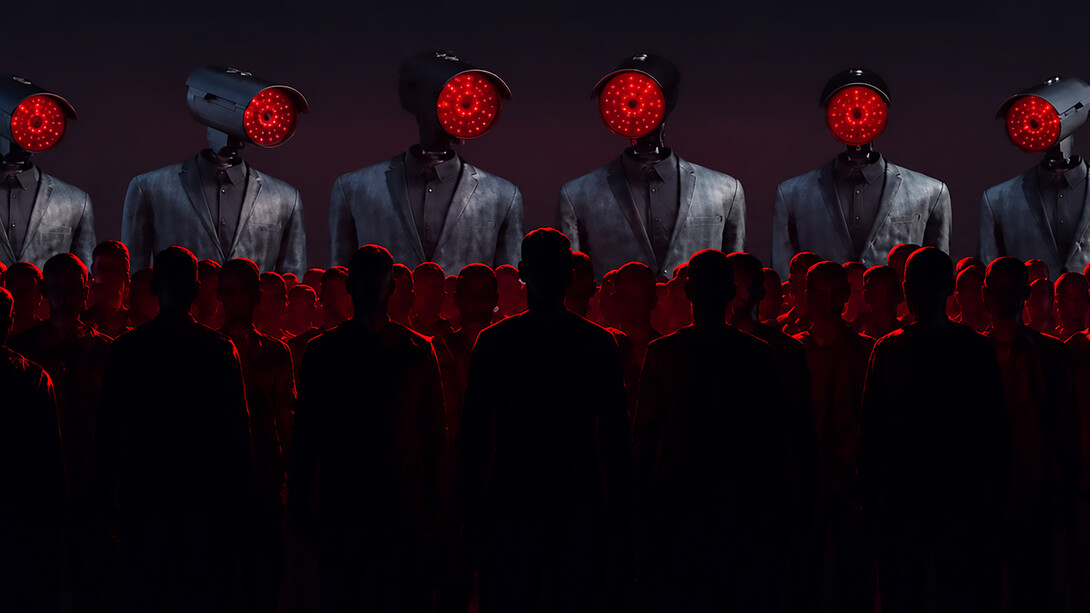
In the labyrinth of the 21st century, a haunting question echoes through the digital corridors of our daily lives: Are we truly the masters of our decisions, or merely pawns on a chessboard designed by invisible engineers? This inquiry is not merely the fuel of late-night debates but a fundamental concern for an awakening global public. As we analyse the sequence of reality and the invisible threads that weave through our daily choices, two figures emerge as ideological lighthouses—or perhaps heralds of doom: George Orwell and David Icke.
In the mid-20th century, Orwell sounded the alarm in his seminal novel 1984, warning of a centralised authority that monitors every pulse of individuality. Today, David Icke picks up those threads, weaving a more complex tapestry. He suggests that Orwell’s "Big Brother" has evolved from a fictional tyrant into a tangible, multi-dimensional system—digital, biological, and political—aimed at the total reprogramming of human perception.
The intersection between Orwell’s grim political fiction and Icke’s shocking metaphysical analyses places us before a chilling mirror: do we already inhabit the era of the "Remote-Controlled Global Mind"?
Social media: the algorithmic telescreens
In Orwell’s Oceania, the "Telescreen" was a mandatory fixture in every home. It was a dual-channel device: it broadcast ceaseless propaganda and simultaneously acted as a surveillance camera. You could dim it, but you could never truly turn it off.
In our current reality, the smartphone has become the evolved telescreen. Unlike Orwell’s device, which was imposed by force, we carry our modern telescreens voluntarily, even paying for the privilege. Platforms like Facebook, X (formerly Twitter), and TikTok have transitioned from tools of connection to engines of "consensus engineering".
Orwell’s "Thought Police" patrolled for dissent through physical observation and informants. Today’s algorithms perform a much more surgical operation. By harvesting data, they create "echo chambers" that feed us information designed to reinforce our existing biases while subtly shifting our worldview. David Icke describes this as the "Five-Sense Conspiracy". He argues that our perception is being trapped within a narrow frequency of the five senses, creating a "phantom reality"—a digital prison where the "human herd" lives without ever realising the walls are made of code and frequency.
Cyber warfare and the alchemy of truth
In 1984, the protagonist Winston Smith worked at the "Ministry of Truth" (Minitrue). His job was the systematic falsification of history—deleting individuals from records ("unpersons") and altering past news to align with the Party’s current agenda.
Today, cyber warfare has modernised this process. The manipulation of truth no longer requires the physical burning of archives. Instead, it involves the infiltration of databases, the deployment of deepfakes, and "ransomware" attacks that can paralyse a nation's infrastructure. In this digital battlefield, truth is not deleted; it is drowned in a sea of manufactured noise.
This digital alchemy aligns perfectly with Icke’s warnings regarding "secret societies". According to Icke, these groups utilise their agents within major tech and political hubs to control the flow of information, ensuring that the global narrative serves a centralised agenda of power. The "Ministry of Truth" is no longer a concrete building in London; it is a decentralised, cloud-based apparatus of psychological warfare.
Global Intelligence and the architecture of control
The influence of global intelligence agencies is a cornerstone of this discussion. Icke frequently cites a statement by former CIA Director Stansfield Turner, who noted that the United States was not just a superpower but a "super-superpower", capable of affecting the welfare of an individual in Cairo or Shanghai through decisions made in Washington.
This geopolitical reach has manifested in what Icke calls the "Hoax of Terrorism"—the idea that certain threats are either manufactured or allowed to flourish to justify draconian legislation and the erosion of civil liberties.
Modern intelligence agencies now utilise "Big Data" to predict social behaviour. By analysing millions of data points from social media, they can identify potential dissent or "pre-crime" movements before they even materialise. This is the ultimate realisation of the Party’s dream: a world where the authorities don't just watch you through the window; they watch you through your own thoughts and digital footprints.
Modern case studies: the matrix in action
To understand the gravity of this synthesis, we must look at contemporary examples:
The Cambridge Analytica Scandal: This was a live-action demonstration of "Reprogramming Reality". By harvesting the data of millions, a private firm was able to micro-target psychological vulnerabilities to sway political outcomes. It was the "Global Mind" being nudged by invisible hands.
Social Credit Systems: In several nations, we see the emergence of systems that grade citizens based on digital behaviour. Disloyalty to the "Party" (the state) results in the loss of travel rights or access to services—a literal application of "Big Brother is watching you."
Hybrid Wars: The use of disinformation and economic sabotage to bring nations to their knees without firing a single shot is the modern version of Orwellian perpetual war. It is a war designed to keep the population in a state of constant fear and dependence.
The battle for the space between your ears
As we synthesise Orwell’s classic literature with Icke’s contemporary critiques, a central theme emerges: the most significant battlefield of the 21st century is not the land, the sea, or the air. It is the "space between your ears".
We are entering the era of "soft fascism". Unlike the 20th-century versions, this fascism doesn't always wear a uniform or carry a club. It is wrapped in the convenience of an app, the excitement of a viral trend, and the illusion of choice. We are being steered from the cradle to the grave by algorithms that suggest what we eat, what we wear, and ultimately, how we perceive our own existence.
The "Ministry of Truth" is now the "Electronic Cloud". It stores our memories, predicts our desires, and shapes our future. However, the goal of exploring these dark themes is not to induce paralysis or fear. On the contrary, it is to trigger a "consciousness shock".
Conclusion: breaking the matrix
The path to liberation begins with the realisation that the "Telescreens" only have power if we accept their narrative without question. Recovering "individual sovereignty" requires the courage of a Winston Smith—to hold onto objective truth in the face of a lie—and the boldness of a David Icke to question the very nature of the reality presented to us.
The strength of any system of control lies not in its weapons, but in the ignorance of the governed regarding their own power. As Orwell famously noted, and as Icke echoes today: "In a time of universal deceit, telling the truth is a revolutionary act."
The confrontation today is "Awareness vs. Programming". If you can maintain your critical faculty and if you can decode the mechanisms of manipulation used against you, you have already taken the first step out of the digital prison. Reclaim your consciousness, own your truth, and do not allow the "Global Mind" to swallow your unique spark.
Glossary of terms
Big brother: the enigmatic symbol of absolute authority in 1984; the state that never sleeps.
"Big brother is watching you": a psychological tool to instil the belief that privacy is non-existent.
The global mind (Remote-Controlled): The manipulation of public consciousness via technology and propaganda.
Thought police: the apparatus that punishes "thought-crimes" or dissent against the official narrative.
The five-sense conspiracy: David Icke’s theory that humanity is trapped in a narrow sensory reality to facilitate control.
Ministry of truth: the institution dedicated to the falsification of history and information.
Cyber warfare: digital attacks used to disrupt infrastructure or steal state secrets.
Ransomware: malicious software that encrypts data for extortion.
Secret societies: hidden elites allegedly directing global events from behind the scenes.
Stansfield Turner: former CIA director associated with agency reforms and controversial secret activities.
The Hoax of terrorism: the theory that threats are exaggerated to justify the restriction of freedoms.
Big data: massive datasets analysed to predict and influence human behaviour.
Reprogramming reality: the process of altering societal values to create a "new truth".
Battle for the "Space between your ears": The psychological war for control over human thought.
Soft fascism: authoritarianism enforced through technology, economics, and media rather than overt violence.
The electronic cloud: virtual data storage that centralises information and surveillance.
Telescreens: devices in 1984 that both broadcast propaganda and monitor citizens.
Consciousness shock: a moment of sudden realisation that breaks through indoctrination.
Paranormal secrets: phenomena beyond current scientific explanation, such as telepathy or non-physical entities.
Hidden elite: secret groups directing global policy away from democratic oversight.
About the authors
George Orwell (1903–1950): Born Eric Arthur Blair, Orwell was an English novelist and journalist whose experiences in the Spanish Civil War fuelled his lifelong battle against totalitarianism. His work remains the definitive critique of power and language manipulation.
David Icke (1952–): A British author and public speaker who transitioned from professional football and journalism to researching "metaphysics" and global politics. He is a prominent figure in alternative research, focusing on the "hidden elite" and technological control.
Sources
1984 by George Orwell.
The Trigger: The Lie That Changed the World by David Icke.