English
 Español
 Français
 Deutsch
 Italiano
 Português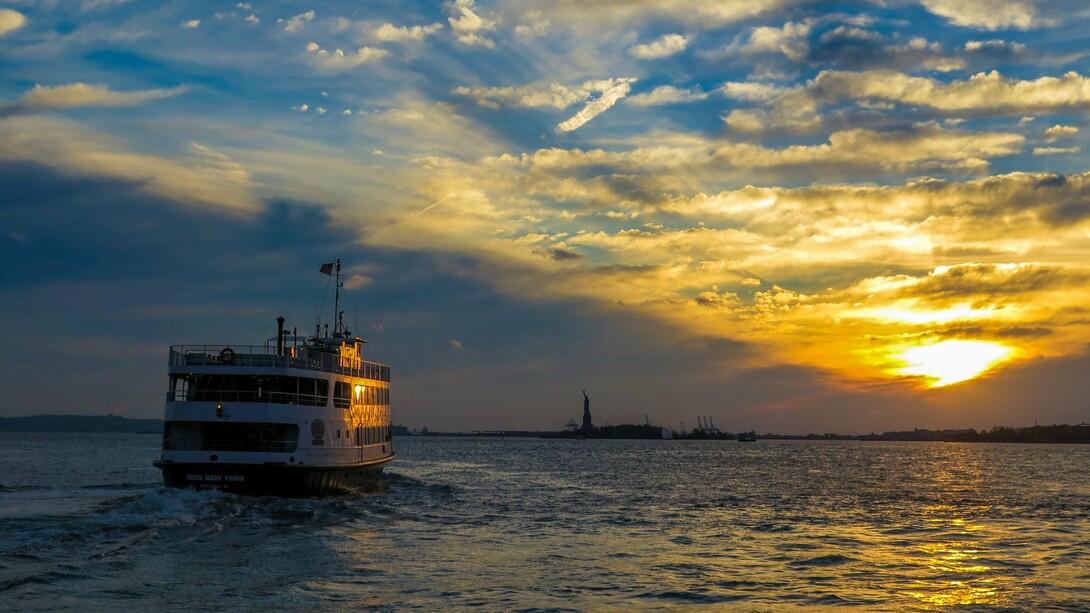
Arrival: learning to see home from afar
My journey in the United States did not begin as a tourist’s experience—it began in the quiet, complicated spaces where stories of displacement unfold. Working with refugees there reshaped how I understand migration, belonging, and the fragile idea of home.
I was assigned as a fellow at a 20-year-old non-profit organization serving refugees and immigrants in Minnesota. The organization is called WISE (Women’s Initiative for Self-Empowerment), located in Saint Paul, Minnesota. It serves girl clients, parents, and families of various immigrants and refugees in Minnesota, who are mostly from Vietnam, namely ethnicities like Hmong, Karen, and Karenni, and those from Africa, like Somalia, Ethiopia, Liberia, Lebanon, and other countries with which the USA has had war before or even now. I find that Minnesota is a space for Refugees and they are highly visible wherever you go. Being in Minnesota allowed me to understand the various cultures and enjoy their food, music, and festivities.
I used my time to explore these spaces that I think not all will be able to observe in their lifetime. I went to different fairs and festivals, usually organized by the local churches or school board, where I could pray with them and understand what God they believe in. This made my weekend ritual, usually listening to different ways of preaching, praying, and even encountering for the first time a female priest in the Orthodox Catholic Church. As a Catholic from the Philippines, it is like a dream to find a woman priest. For me, as a gender advocate, it is something that I highly appreciate.
My experience in Minnesota has been one of my greatest cultural encounters with diversity, war, the refugee world, and displacement. I have seen the value of culture as if it created the human distinctions, and really, I agree with my sociology teacher that culture is an iceberg that we do not see, and it is easy to make judgments of what is the visible tip of an iceberg but not consider the bottom part. I think with people who are not well exposed to different cultures, that is what usually happens because we make interpretations of something that we do not understand.
We also do not have the patience to dig deeper into cross-cultural experience. I think countries that are richer usually have this idea that it is their culture that we need to adapt and embrace, instead of looking at it in the two-way streets that we both can cross and meet in the intersection of life.
In my field of work as a social worker assigned to refugees. I met people who had crossed oceans not out of desire, but necessity. Their stories of leaving their war-torn countries made them feel like torn lovers. A country that you love, but a country that you need to let go of because it is no longer safe for you to live. It is clear that they left their country half-heartedly, and the willingness to come back is always there.
They arrived in a country known for opportunity, with systems designed to support them—yet many carried an ache that no policy could address. Even in safety, they longed for the homes they left behind. I have encountered people who are not willing to establish eye contact out of fear. People who are always looking forward to going home but need to accept that the USA is their new home. A country in which they do not own or choose to live.
It was in listening to their stories that I began to understand: no nation is perfect, yet there is only one place we instinctively call our own. And perhaps, no one ever dreams of becoming a refugee. It is not a status that everybody would like to achieve. It is not something that everyone desires or likes to be achieved. Is peace only possible in that country that wants to leave?
A gift and a story that stayed
One day, my director handed me a book—Lifted. It told the story of her mother, a woman from Liberia whose life unfolded like a testament to both suffering and strength. Despite losing her husband and two children, she endured. She rose. She served.
She had risen from a difficult childhood to become the wife of a president, only to lose him to assassination during a civil war. Forced into exile, she became a refugee in the United States. But her story did not end in loss—it transformed into purpose. Her mother is her great inspiration, and she went on to lead the Women’s Initiative for Self-Empowerment (WISE), dedicating her life to helping others rebuild theirs.
When my director told me, “Instead of collecting certificates, maybe you need to write a book,” something shifted in me. That gift became more than a story—it became a quiet challenge to reflect, to write, and to remember. It is even what inspired me to keep on writing because I do not want to keep carrying stories in my head and let them remain unshared and unknown. It is too much for one’s heart like mine.
Doctors without titles
Working with WISE allowed me to work with a sister organization that works with refugee physicians. I was invited to some of their sessions and even facilitated a meeting with foreign-trained professionals—doctors from Somalia, Tanzania, Iraq, Egypt, Burma, and beyond. Their credentials were impressive. Their journeys, even more so.
But in the United States, they were no longer recognized as doctors.
They spoke of difficult certification exams, endless bureaucratic processes, and subtle but painful forms of discrimination. Many had traded hospital corridors for grocery aisles, taxis, or warehouse jobs—working not in the field they had trained for, but wherever survival was possible.
Some spoke of depression. Others of quiet resilience.
One doctor from Ethiopia asked a question that lingered in the room long after it was spoken:
“Can someone just explain how American doctors think? We do not want to compete. We just want to become doctors again and serve.” I believe it was a pure desire to practice a profession and even to serve a country or people not of their own.
In that moment, we made a simple but powerful agreement: no matter their current roles, we would continue to call each other “Doctor.”
Because dignity does not disappear when recognition does.
Borders, belonging, and the human pot
Later, I would hear political statements about borders—about how a nation must define itself by what it keeps out. And I could not help but think of the people I had met—those who had already crossed those borders but were still searching for belonging within them.
In places like Minnesota, the story of migration is layered. Once home to Scandinavian settlers, it is now shaped by new waves of refugees from across the world. Like New York City and other parts of the country, it reflects a deeper truth: the United States is, and has always been, a nation of arrivals—though not without the displacement of those who were there first.
People often describe it as a “melting pot.” But I began to think of it differently—not as something that dissolves differences, but as a human pot, where identities coexist, collide, and sometimes resist blending.
Race, labels, and categories—“Black,” “White,” “people of colour”—all point to an unfinished conversation about who belongs and what it means to share humanity.
However, also in America, I have witnessed how a country is so divided that even sitting in a bus from one race to another is a difficult thing. For instance, a white woman was sitting, but a Black woman would not sit next to her. In this country, people are classified as white, usually the superior, black, and people of colour. Such classification made us all rethink what is deep inside us. Does the human heart have a different colour too?
Libraries, learning, and what we carry
Beyond migration, another observation stayed with me during my time in North America.
It seemed to me that even the birds there had books.
In homes across the United States and Canada, libraries were not luxuries—they were part of everyday life. Shelves filled with books, constantly updated, exchanged, and read. Students carried heavy bags—not with gadgets, but with pages.
Reading was not an obligation. It was a culture.
And I could not help but compare this to experiences back home in the Philippines. I remembered students walking into class with small bags holding only a phone or a makeup kit—no books, no reading materials.
Reading is a quiet revolution. The more you read, the more you realize how much you do not know. And that realization does not weaken you—it deepens your hunger to learn.
Yet in some communities I had worked in, particularly in parts of Mindanao, schools had no libraries at all. Classrooms had bare walls. In some areas, children simply waited for the clock to strike three—not for learning to end, but to go home before conflict began.
Functional illiteracy was not surprising. It was visible.
Education, I realized, is not just about access—it is about environment, culture, and value.
The other thought I have is if they keep on reading, do they also read how the world was changing? Do they know about global citizenship? I was given the chance to give a short lecture at the University of Minnesota Duluth and some other universities in Saint Paul and in Wisconsin, and then I realized that my lecture usually started with the Philippine map because I need to pinpoint where I am coming from because many of the American students do not know where the Philippines is, which is ironic that our students are all interested in knowing about the USA.
Although I recognized that having such cross-cultural sharing between one country and another is important for continued sharing and understanding of where, who, and what kind of people are living across the world. Our lack of understanding leads us to a lack of empathy, if not hatred, for one another. It is too ironic that we wear jeans, read in English, and yet we are not clearly understood.
I attended some activities by the Lutheran church in Minnesota, some activities like circles of peace, usually attended by Black people expressing their feelings, opinions, and sentiments about living in America and their feelings of discrimination. The good thing about this space is that one can be heard and express their unconscious thoughts. A safe space for them.
In my thoughts, I keep on asking who is more discriminated against, the people of colour or the Black people? And if that is the case, how do white people feel about it?
Ellis Island: where stories begin again
My time in Minnesota led me to visit Ellis Island in New York. An island that accepted the first American migrants.
Standing there, I felt the weight of history. Millions had passed through those halls—each carrying fear, hope, loss, and possibility. It was not just a place. It was a threshold between worlds.
In that space, everything I had seen and heard came together.
Migration is not just movement across borders. It is the unfolding of human stories—of resilience, identity, survival, and hope.
And behind every statistic is a person searching for something deeply simple, yet profoundly complex:
A place to belong. A place to be recognized. A place to call home.
Closing reflection
Travel, I learned, is not always about destinations. Sometimes, it is about the people who allow you to see the world differently.
And in the vast, complicated human pot we all inhabit, perhaps the greatest lesson is this:
We are all, in one way or another, searching for dignity, for understanding, and for home.